← Explore the cityBRATSK / PEOPLE & PLACES

Luge in Bratsk.

Pikhtovy Ridge, a coaching tradition and the route to Olympic medals: how a construction city became a centre of luge.

Building the Pikhtovy Ridge track

On 11 June 1971 the city executive committee adopted Decision No. 280 to build a luge track. Ivan Naymushin’s Bratskgesstroy order followed on 13 August. The sporting project drew on the organisational experience of major construction: the slope, chute and supporting facilities had to be prepared quickly.

The federation’s history places intensive work from September and completion of the main chute works by 20 November. The track entered the city’s life in December; its anniversary is marked from 25 December 1971. Students assisted, and future athletes helped prepare the ice. The facility grew from the same urban community that built factories and housing.

A luge course requires carefully related straights and bends. Speed depends on profile, ice, sled preparation and the athlete’s actions. Sliding in a specialist chute is consequently different from recreational sledding on a hillside. The rapid-construction story describes an organised sporting achievement. It does not turn the facility into an unrestricted walking or recreational area. Understanding the engineering helps explain both the construction effort and the training that followed.
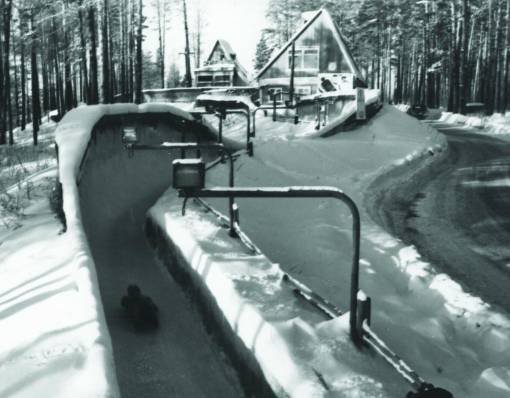
From the Olimp school collection published by the federation on 28 December 2021 for Bratsk luge’s fiftieth anniversary. Photograph date and individual identities are not specified; no particular competition is asserted.
≤2021

The ice chute at Pikhtovaya

From the Olimp school collection published by the federation on 28 December 2021 for Bratsk luge’s fiftieth anniversary. Photograph date and individual identities are not specified; no particular competition is asserted.

Фотограф не указан; материал СШОР «Олимп» / Photographer not stated; supplied by Olimp school · Федерация санного спорта России / Russian Luge Federation
Перепечатка с активной ссылкой / Reuse with an active source link · Original ↗
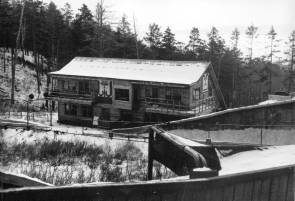
From the Olimp school collection published by the federation on 28 December 2021 for Bratsk luge’s fiftieth anniversary. Photograph date and individual identities are not specified; no particular competition is asserted.
≤2021

A building beside the track

From the Olimp school collection published by the federation on 28 December 2021 for Bratsk luge’s fiftieth anniversary. Photograph date and individual identities are not specified; no particular competition is asserted.

Фотограф не указан; материал СШОР «Олимп» / Photographer not stated; supplied by Olimp school · Федерация санного спорта России / Russian Luge Federation
Перепечатка с активной ссылкой / Reuse with an active source link · Original ↗
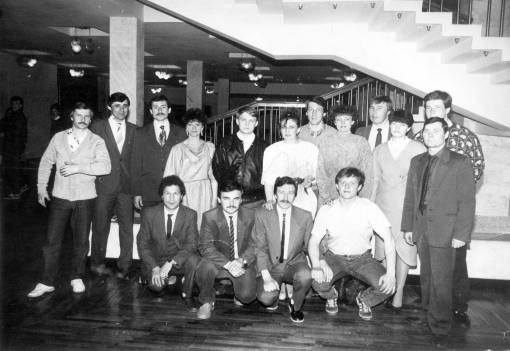
Coaches and the first victories

A track alone does not create a sporting school. Coaches, regular recruitment, equipment preparation and competition are also needed. Vyacheslav Velichko occupies a central place in Bratsk’s account. Local sporting recollections associate him with coaching development and the preparation of future leaders; the federation also names Yuri Tarakanovsky among the early coaches.

Bratsk athletes won Russian and Soviet competitions during the 1970s. Sources single out Tatyana Korneva, who worked at the repair and engineering plant. Her biography recalls the industrial setting in which training and working life often developed together.

Continuity came from daily work seldom visible in a finish-line photograph: physical preparation, learning the start, practising course sections and analysing errors. Athletes needed technical understanding and precision at speed. The whole environment matters to the city’s history, rather than only a medal table. It enabled an early sequence of successful performances to develop into a lasting tradition. Coaches and supporting staff belong in that account alongside the competitors whose names reached the results sheets.

From the Olimp school collection published by the federation on 28 December 2021 for Bratsk luge’s fiftieth anniversary. Photograph date and individual identities are not specified; no particular competition is asserted.
≤2021

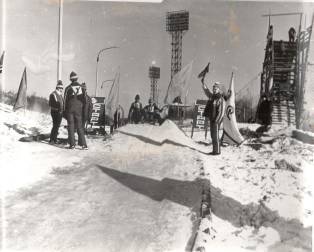
People beside the luge track

From the Olimp school collection published by the federation on 28 December 2021 for Bratsk luge’s fiftieth anniversary. Photograph date and individual identities are not specified; no particular competition is asserted.

Фотограф не указан; материал СШОР «Олимп» / Photographer not stated; supplied by Olimp school · Федерация санного спорта России / Russian Luge Federation
Перепечатка с активной ссылкой / Reuse with an active source link · Original ↗
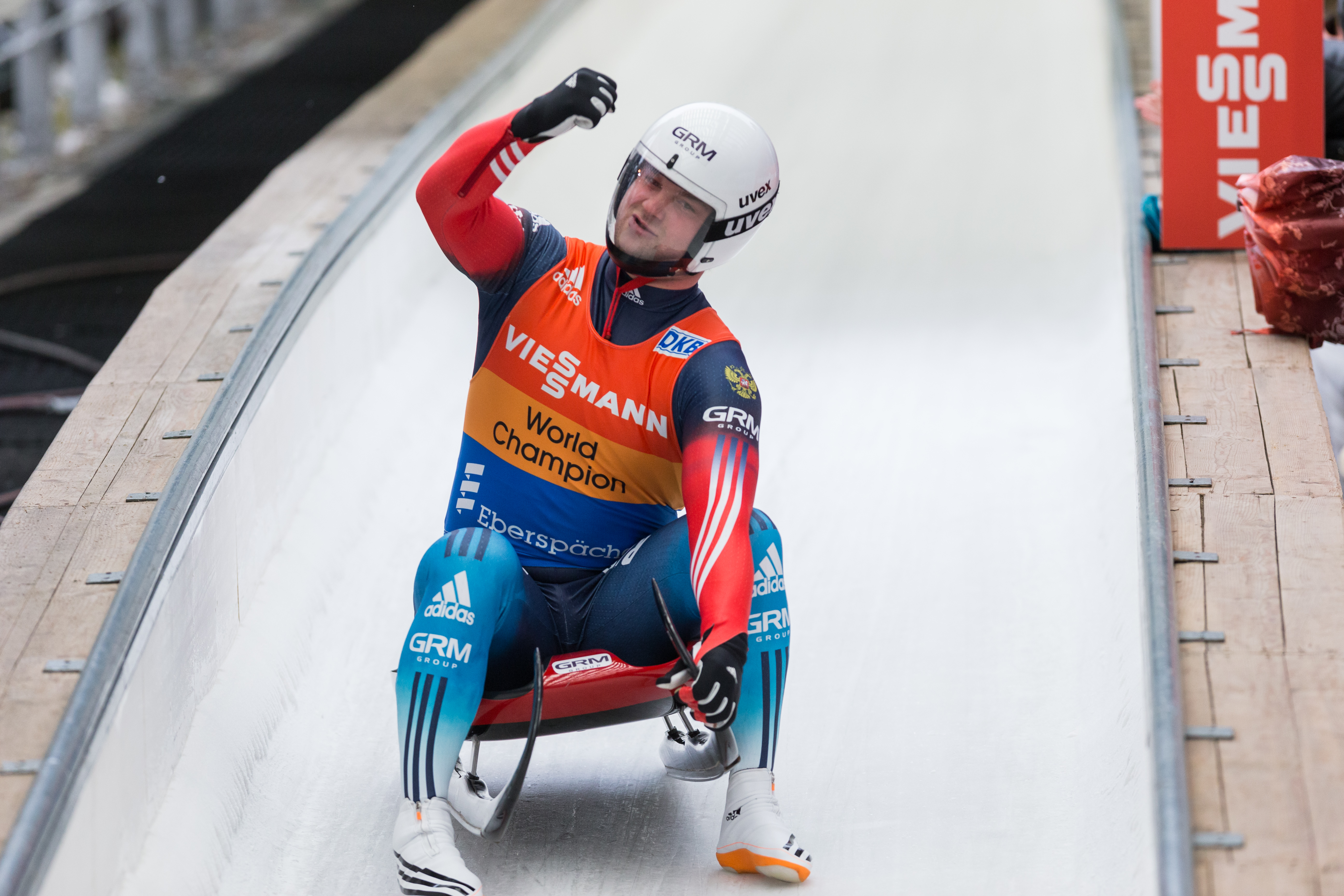
From the Olimp school collection published by the federation on 28 December 2021 for Bratsk luge’s fiftieth anniversary. Photograph date and individual identities are not specified; no particular competition is asserted.
≤2021

A group photograph from the school archive

From the Olimp school collection published by the federation on 28 December 2021 for Bratsk luge’s fiftieth anniversary. Photograph date and individual identities are not specified; no particular competition is asserted.

Фотограф не указан; материал СШОР «Олимп» / Photographer not stated; supplied by Olimp school · Федерация санного спорта России / Russian Luge Federation
Перепечатка с активной ссылкой / Reuse with an active source link · Original ↗

Valery Dudin: Sarajevo bronze

Valery Dudin won the men’s singles luge bronze medal at the 1984 Sarajevo Olympics. It is one of the leading international achievements associated with Bratsk’s school. The Olympic record specifies both event and placing: luge, rather than bobsleigh, and an individual competition.

Precision matters in a city connected with several sliding sports. Luge, bobsleigh and skeleton share a high-speed ice-course setting but differ in equipment, athlete position and rules. Their results should not be merged into an undefined Olympic biography.

Dudin’s story also includes coaching. Passing on experience connects an international result to later generations. For a school, a medal becomes both a memory and an example of a professional route from first practice through competition to working with young athletes. Biographical sources differ about Dudin’s birthplace. This page defines his Bratsk connection through his sporting and coaching history rather than using a disputed detail to construct a local-born-champion narrative. A city can be formative in a person’s career without being its place of birth.

Why the school matters beyond the track

During the 1980s Bratsk hosted competitions and training camps, and its school continued beyond 1991. The federation associates Albert Demchenko, Alexandra Rodionova and other athletes with that tradition. Individual results need checking by discipline, year and official record, while keeping birthplace, training location and regional representation distinct.

The facility experienced rebuilding and fires over its long life. Infrastructure conditions differed between periods: an archival image of a competition complex does not establish present access. Current training arrangements should be checked with the operating sports school and organisers.

In the city’s family memory the subject extends beyond elite sport. Training sessions, journeys to competitions, coaches and parents sustained a community. Recollections of first lessons and of the people preparing ice and equipment belong beside medallists’ biographies. Such evidence explains how international ambitions became part of ordinary urban life, linking the original construction project with generations who encountered the track as children rather than as builders.

From the Olimp school collection published by the federation on 28 December 2021 for Bratsk luge’s fiftieth anniversary. Photograph date and individual identities are not specified; no particular competition is asserted.
≤2021

An athlete at the start

From the Olimp school collection published by the federation on 28 December 2021 for Bratsk luge’s fiftieth anniversary. Photograph date and individual identities are not specified; no particular competition is asserted.

Фотограф не указан; материал СШОР «Олимп» / Photographer not stated; supplied by Olimp school · Федерация санного спорта России / Russian Luge Federation
Перепечатка с активной ссылкой / Reuse with an active source link · Original ↗

Useful links

Russian Luge Federation ↗

Sources & further reading

Checked on 18 October 2026. The main chronology ends in 1991; later events and photographs carry their own dates.