Origins
A winter camp below the rapids
Maxim Perfilyev’s party establishes a winter camp below the Bratsk rapids. It precedes the 1631 fort, not the founding of the modern city.
Read the full story ↗From a wooden fort to a city that transformed the Angara. People, events and everyday life, decade by decade.
Explore the timeline↓OUR STORY BEGINS BEFORE THE CITY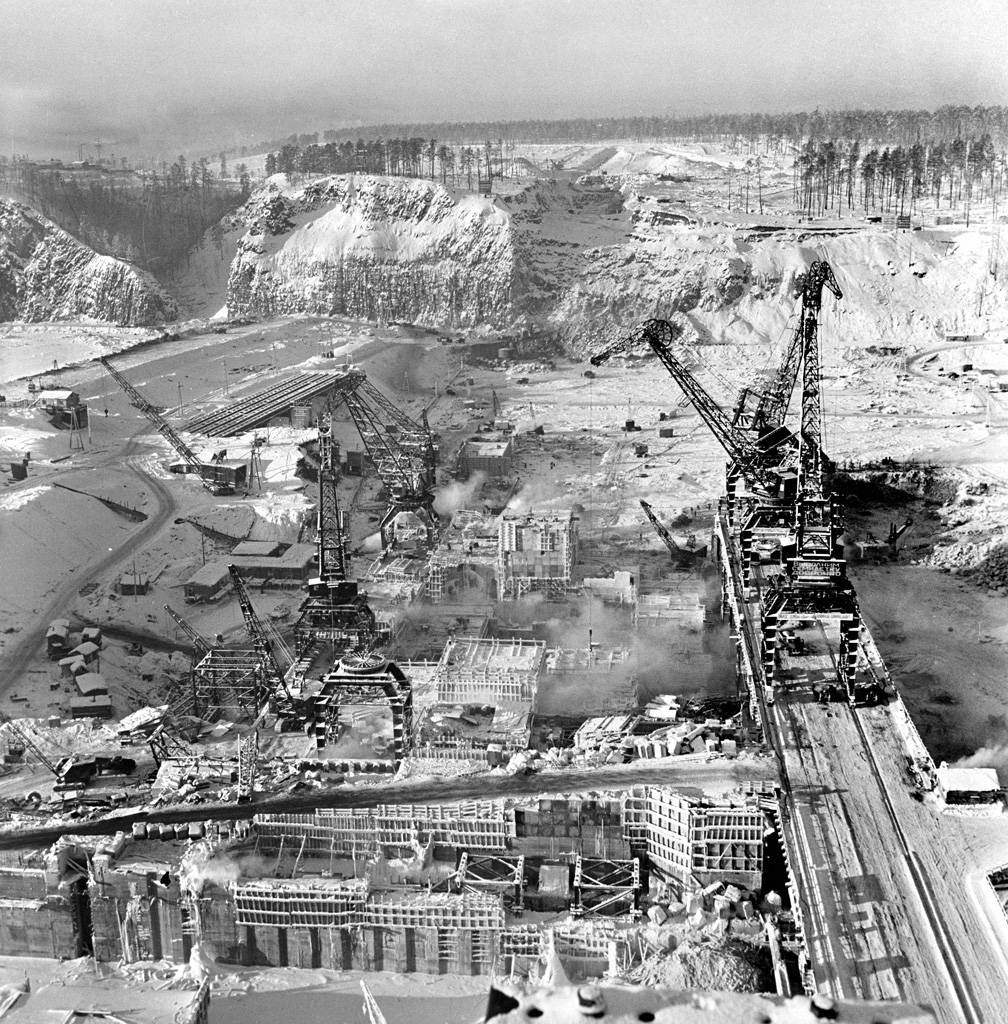 АНГАРА
Between those dates lie a riverside settlement, trade routes, exile, a school and an ironworks. Before them, the history of the Angara’s Indigenous peoples. After them, a dam, a new reservoir, resettlement and a new city. This is where those stories meet.
About the scope and sources ↗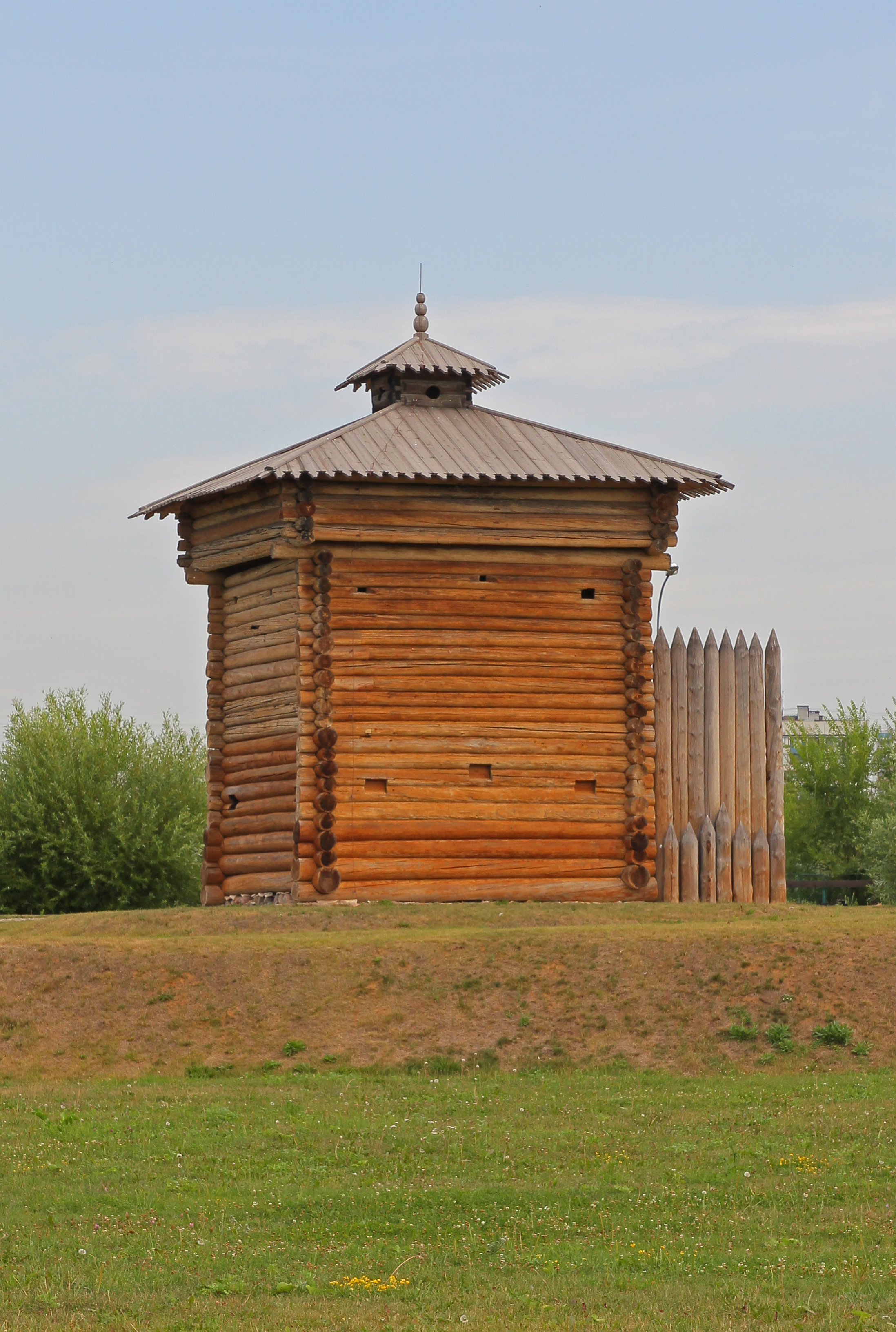 01
01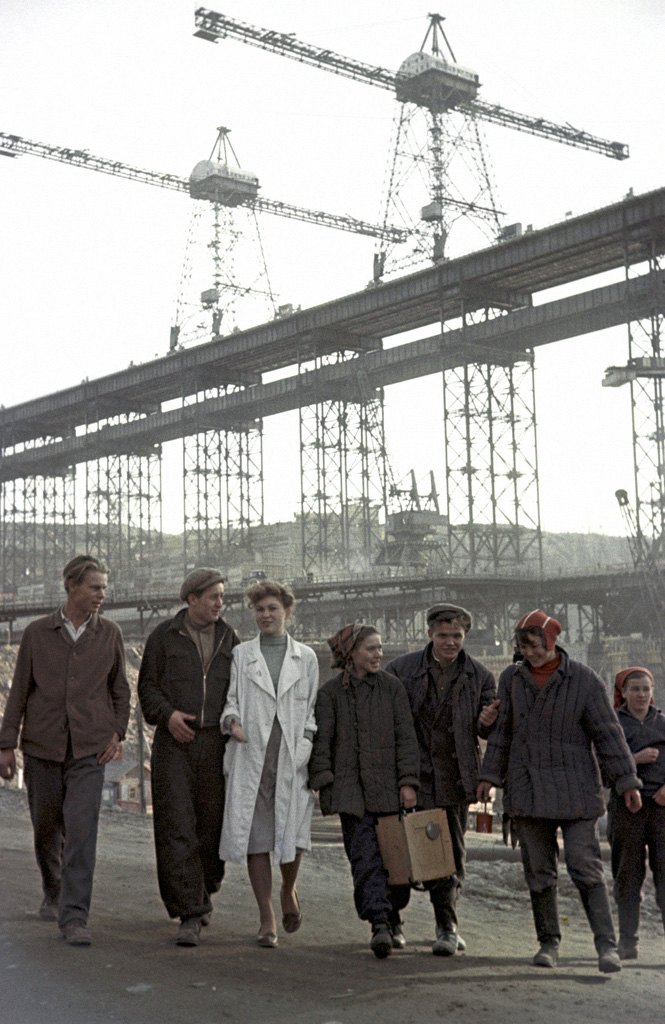 02
02Photographs: tower in Kolomenskoye (2011), A. Savin; dam builders (1960), A. Bushkin / RIA Novosti. Licences and originals in the photo archive.
Fort and exile. Construction and resettlement. Districts, schools, factories, culture and perestroika.
Read the stories ↗By decade · open a chapter
Maxim Perfilyev’s party establishes a winter camp below the Bratsk rapids. It precedes the 1631 fort, not the founding of the modern city.
Read the full story ↗These were Buryat and Evenki lands, not an empty map. Pyotr Beketov reaches the Oka mouth and collects fur tribute.
Maxim Perfilyev’s expedition establishes Bratsk Ostrog, a fortified outpost of Russian expansion along the Angara.
Read the full story ↗The early forts become sites of conflict with local Buryat groups. Reconstructions differ on destruction and rebuilding dates; this was not an uninhabited wilderness.
Read the full story ↗A. A. Pavlov identifies a new fort on the right bank of the Oka in 1636. This scholarly reconstruction must not be silently merged with the commonly cited 1648 relocation.
Read the full story ↗The fort moves to the right bank of the Angara, far from the modern city’s familiar streets.
Read the full story ↗Dmitry Firsov relocates the fort near the Oka mouth. Researchers continue to refine the history of its early sites.
Read the full story ↗Archpriest Avvakum is confined here twice during his Siberian exile.
Read the full story ↗Notes to Pyotr Godunov’s Siberian map describe a twelve-week journey from Yeniseisk to Bratsk Ostrog.
Nikolai Spathari’s embassy passes through the fort on its journey to China.
Merchants buy flour here for Yakutsk. The river is a trading route, centuries before the reservoir.
Read the full story ↗Evert Ysbrants Ides’s embassy visits on both the outward and return journeys to China.
The chronicle records a major flood. Long before the dam, the Angara shapes daily life.
A postal relay is organised in the Bratsk district, with local peasants supplying transport.
The source groups these years together: river transport, livelihoods and taxes. It gives no exact year for early iron-ore reports.
The chronicle reports a shortage of literate people in the Bratsk ecclesiastical district.
The local chronicle records July frost and destroyed crops in the Bratsk district. For a farming settlement, the short summer could determine food supplies.
Read the full story ↗Notes by the Swiss observer Regnier appear in Augsburg, including local traditions. This is the publication year, not an established date of a visit to Bratsk Ostrog.
Read the full story ↗Returning from Siberian exile, Alexander Radishchev passes through the fort and records it in his diary.
Read the full story ↗The Bratsk commissariat is established, administering an area much larger than the settlement itself.
A canal is proposed around the Padun rapids: navigation remains an engineering challenge.
Pyotr Mukhanov lives here in forced settlement after penal servitude. Exile becomes part of the village’s history.
Read the full story ↗Construction begins on the ironworks and foundry on the Dolonovka. Long before aluminium, local production relies on ore, wood fuel and water.
Read the full story ↗The Nikolayevsky ironworks makes its first smelts, long before the Soviet construction era.
Read the full story ↗A three-year parish school opens in the village, with places for thirty pupils.
Read the full story ↗Aleksander Czekanowski settles in Padun and studies the geology of the Angara valley.
Read the full story ↗Funding from Alexander Sibiryakov supports a survey of the Angara navigation route.
Nikolai Vitkovsky conducts archaeological excavations near Bratsk Ostrog.
The Nikolayevsky ironworks halts production, depriving workers and families of their income.
New authorities emerge at the Nikolayevsky works after the February Revolution. Soviet rule reaches the Bratsk district by year’s end, followed by changing regimes and war.
Read the full story ↗Engineer Andrey Velner’s expedition surveys the Angara as a potential source of power.
The Nikolayevsky works is nationalised and district soviet institutions take shape. Local revolution is far from settled as Siberia’s military and political situation changes that summer.
Read the full story ↗Partisan units fight Kolchak’s forces along the road and near the Nikolayevsky works. They take Bratsk in December; publications give conflicting dates for the day.
Read the full story ↗Velner prepares a report for GOELRO on Angara water power and its industrial use.
Rural cooperatives provide seed loans and credit and arrange produce purchases. Behind political change remain practical questions: how to sow the fields and sell the harvest.
Read the full story ↗After Irkutsk Governorate is abolished, Bratsk district becomes part of Tulun Okrug. This is the rural district, not the future industrial city.
Read the full story ↗Bratskoye has 177 households and 887 residents. The industrial city is still in the future.
A hydrometeorological station is established in Bratsk to observe river levels, discharge, ice, temperature and weather.
Read the full story ↗Collective farms are organised in the district. The chronicle describes armed clashes and mobilisation of local activists; its ideological labels require critical reading.
Read the full story ↗A district newspaper launches in July: eight hundred copies, five kopecks per issue.
Fire destroys the school housing a museum collection. District authorities decide to use a church building for temporary classes.
Read the full story ↗The chronicle records a club, library, hospital and outpatient clinic. War brings military service, supply work, farming and aid collections.
Read the full story ↗Women in the district knit 1,700 pairs of woollen mittens and socks for the front.
Read the full story ↗Post-war decisions prepare transport and construction infrastructure for the future industrial region. The city’s history cannot be reduced to the dam alone.
Read the full story ↗A Mosgidep expedition begins surveying the site of the future hydroelectric station.
Bratskoye becomes an urban-type workers’ settlement. City status follows in 1955, while resettlement of old Bratsk ends later.
Read the full story ↗A tent camp grows near the Padun rapids. Temporary accommodation becomes a settlement with its own institutions, on land destined to be flooded.
Read the full story ↗The Bratsk hydroelectric project is approved. Managers, machinery and workers arrive, while housing and roads must be built alongside the works.
Read the full story ↗The dam project’s production base and workers’ housing grow on the right bank. The settlement later takes the name Gidrostroitel.
Read the full story ↗The dam and city are declared an all-Union construction project. Arrivals from across the country transform the scale and composition of the local population.
Read the full story ↗Bratsk receives city status. Construction settlements begin forming a new urban landscape.
Read the full story ↗New Padun is built beside the old village and Green Town, on ground above the future reservoir. The old name survives residents’ relocation.
Read the full story ↗A library opens in a prefabricated barrack on Khabarova Street in Padun, stocked with help from libraries across the country.
Read the full story ↗A distance-learning consultation centre opens for engineering and construction students, laying the foundation for local higher technical education.
Read the full story ↗The right-bank channel is closed from the ice to create a construction pit. This is distinct from the final closure of the Angara in 1959.
Read the full story ↗Bratsk airport opens for regular passenger flights, adding air travel to the life of the rapidly growing city.
Read the full story ↗The masterplan separates industrial and residential areas. Microdistricts develop around retained taiga, while distances between settlements shape urban life.
Read the full story ↗The first concrete is laid in the dam foundation as preparatory work gives way to the main structures.
Read the full story ↗A settlement for power-station and construction-industry workers begins, initially known as New Town. It becomes one of Greater Bratsk’s distinct residential centres.
Read the full story ↗The Plekhanov timber-transfer base moves to Zyaba Bay as the reservoir is prepared. Sukhoi develops there; incorporation into the city comes well after 1991.
Read the full story ↗The river is diverted through temporary openings in the dam, a different engineering stage from the ice operation of March 1957.
Read the full story ↗The eighth microdistrict’s first two-storey residential building opens. Behind the vast project are individual housewarmings.
Photographers document the dam and its builders: a work in progress, not yet a monument to an era.
Read the full story ↗After its station building is constructed, Osinovka station is renamed Gidrostroitel. Relocated Zayarsk households form a residential area across the railway.
Read the full story ↗The chronicle records the completion of old Bratsk’s evacuation: homes, families and institutions move out of the future reservoir basin.
Read the full story ↗This date becomes the reservoir’s commemorative birthday. Filling was a process, not the instantaneous creation of a full reservoir.
Read the full story ↗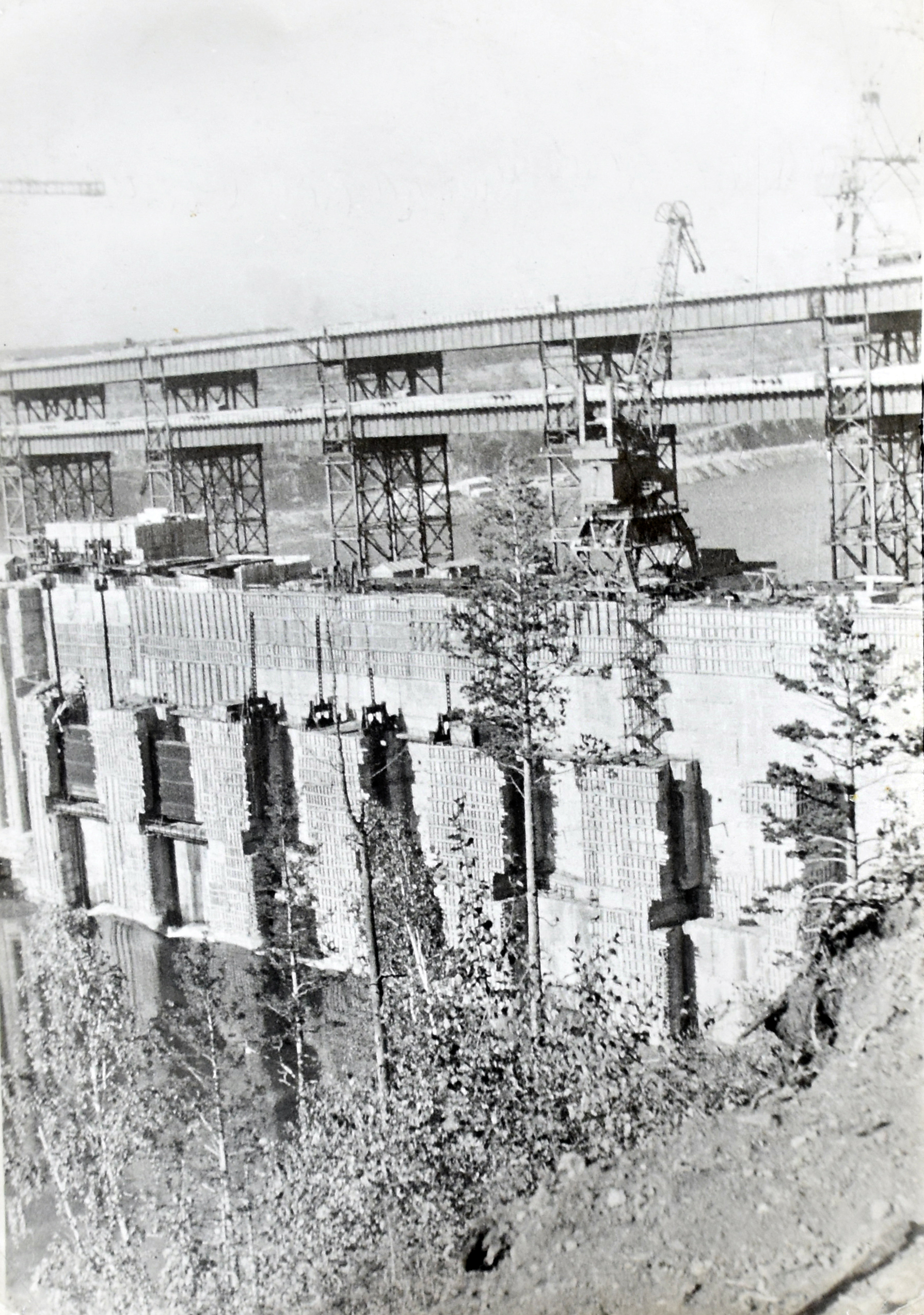
The first generator delivers electricity. Filling the reservoir transforms the Angara landscape and the lives of riverside communities.
Read the full story ↗Bratsk television centre makes its first test transmissions, creating another connection between the scattered districts.
Read the full story ↗The city’s first large-panel apartment building is occupied. Panel construction becomes one way to replace temporary accommodation with permanent microdistricts.
Read the full story ↗The new central residential district gains familiar street names: Mira, Podbelskogo, Komsomolskaya, Yuzhnaya and Kirova. These belong to the new city, not the flooded village.
Read the full story ↗The station’s central control room enters service. Completing the project means creating an operating control system as well as a concrete dam.
Read the full story ↗The Bratsk timber complex takes shape, linking timber processing with pulp and paper production. Its separate commissioning stages cannot be reduced to one founding date.
Read the full story ↗Freight and passenger trains cross the crest, making the dam part of the transport connection between the banks.
Read the full story ↗Road traffic opens across the dam, providing an important everyday connection between the city’s separated parts.
Read the full story ↗The Bratsk aluminium plant produces its first aluminium. River power becomes metal.
Read the full story ↗The final generating unit comes under load. Permanent commissioning of the complete complex follows in 1967.
Read the full story ↗The Bratsk hydroelectric complex enters permanent operation, then the world’s largest hydroelectric station.
Read the full story ↗The Bratsk photography club holds its first exhibition at Lesokhimik Palace of Culture, showing over eighty works.
The puppet theatre opens with Merry Little Bears. Its distinct history begins well before the later drama theatre.
Read the full story ↗Bratsk and Japan’s Nanao sign a sister-city agreement, establishing international civic ties long before 1991.
Read the full story ↗The luge track opens. It hosts the first USSR championship two years later; Bratsk’s Valery Dudin wins an Olympic medal in 1984.
Read the full story ↗Tatyana Korneva wins the women’s title at the first national luge championship on Pikhtovaya Hill.
Read the full story ↗The Padun urban administrative district is created, covering several residential settlements. The district is not identical to Padun settlement itself.
Read the full story ↗Trolleybus service opens between the market and the timber complex, connecting the city’s daily journeys.
Read the full story ↗A third traction substation and additional routes enter service. The transport story continues beyond the ceremonial first journey.
Read the full story ↗The Bratsk branch of Irkutsk Polytechnic becomes an independent industrial institute. University status belongs to a later period.
Read the full story ↗The Central urban administrative district is created from the area previously recorded as the city’s undivided part.
Read the full story ↗An Evenki exhibition joins Angara Village, a museum preserving the region’s wooden architecture and cultures.
Read the full story ↗The Bratsk luger wins bronze at the Sarajevo Winter Games, an achievement of the school’s Soviet era rather than its later twenty-first-century successes.
Read the full story ↗The drama theatre opens in Padun with The Relay, performing in an adapted wooden building.
Read the full story ↗The first named Angara express reaches Anzebi station, connecting Bratsk and Irkutsk.
Read the full story ↗A new cinema opens with The Cold Summer of 1953. Perestroika reaches the city through the screen.
Read the full story ↗A new cinema welcomes its first audience. Bratsk’s cinema history involves distinct buildings, districts and opening dates.
Read the full story ↗The Ryabikov house museum welcomes its first visitors. A preserved building connects the new city with the old settlement’s history.
Read the full story ↗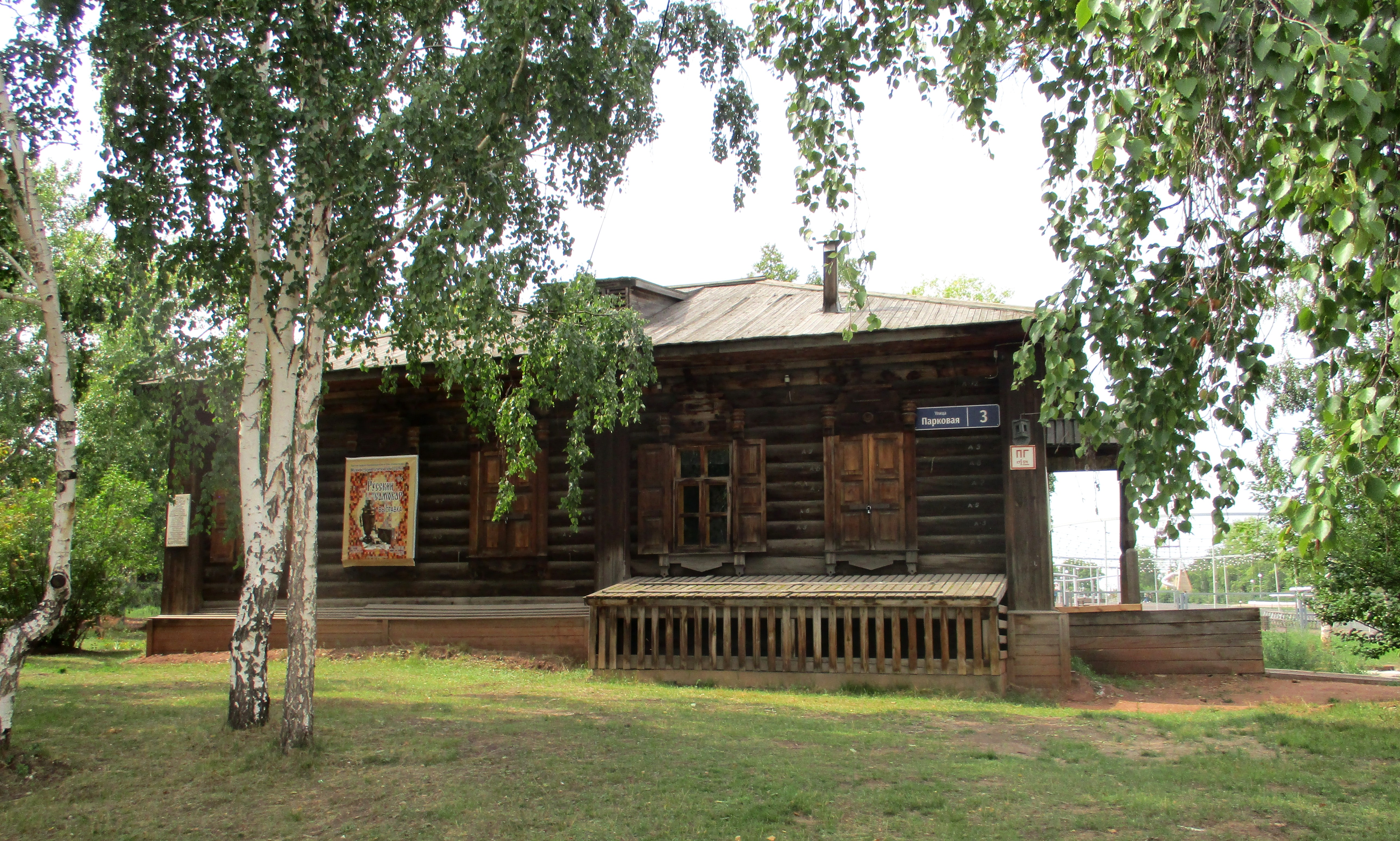
The industrial institute opens the city’s first technical lyceum as local education enters a new decade.
Read the full story ↗A state museum association with several branches is established. Preserving history has become a distinct part of the city’s life.
Read the full story ↗Following Nikolai Ryzhkov’s speech, the central retail organisation sells thirteen times its usual amount of salt.
Read the full story ↗Bratsk television resumes broadcasts on Channel Seven, initially with recorded video programmes.
Read the full story ↗Industrial smog blankets the city. The chronicle records that only a strong wind finally disperses it.
Read the full story ↗The Bratsk local history society is founded, creating another way to preserve the city’s memory.
Read the full story ↗No matches. Try another name, year or topic.