Industry
Construction through the lens
Photographers document the dam and its builders: a work in progress, not yet a monument to an era.
Read the full story ↗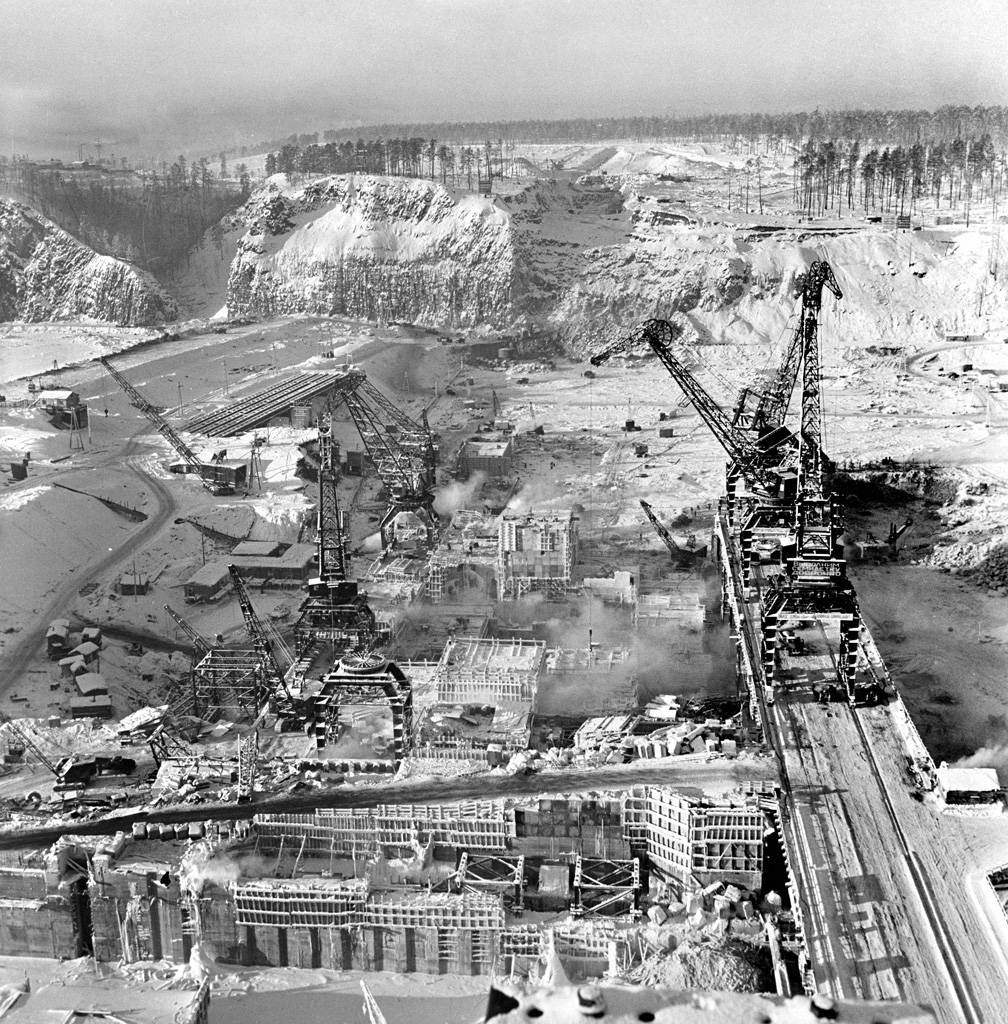
Selected events and details from published sources. A curated selection, rather than an exhaustive chronicle.
Photographers document the dam and its builders: a work in progress, not yet a monument to an era.
Read the full story ↗After its station building is constructed, Osinovka station is renamed Gidrostroitel. Relocated Zayarsk households form a residential area across the railway.
Read the full story ↗The chronicle records the completion of old Bratsk’s evacuation: homes, families and institutions move out of the future reservoir basin.
Read the full story ↗This date becomes the reservoir’s commemorative birthday. Filling was a process, not the instantaneous creation of a full reservoir.
Read the full story ↗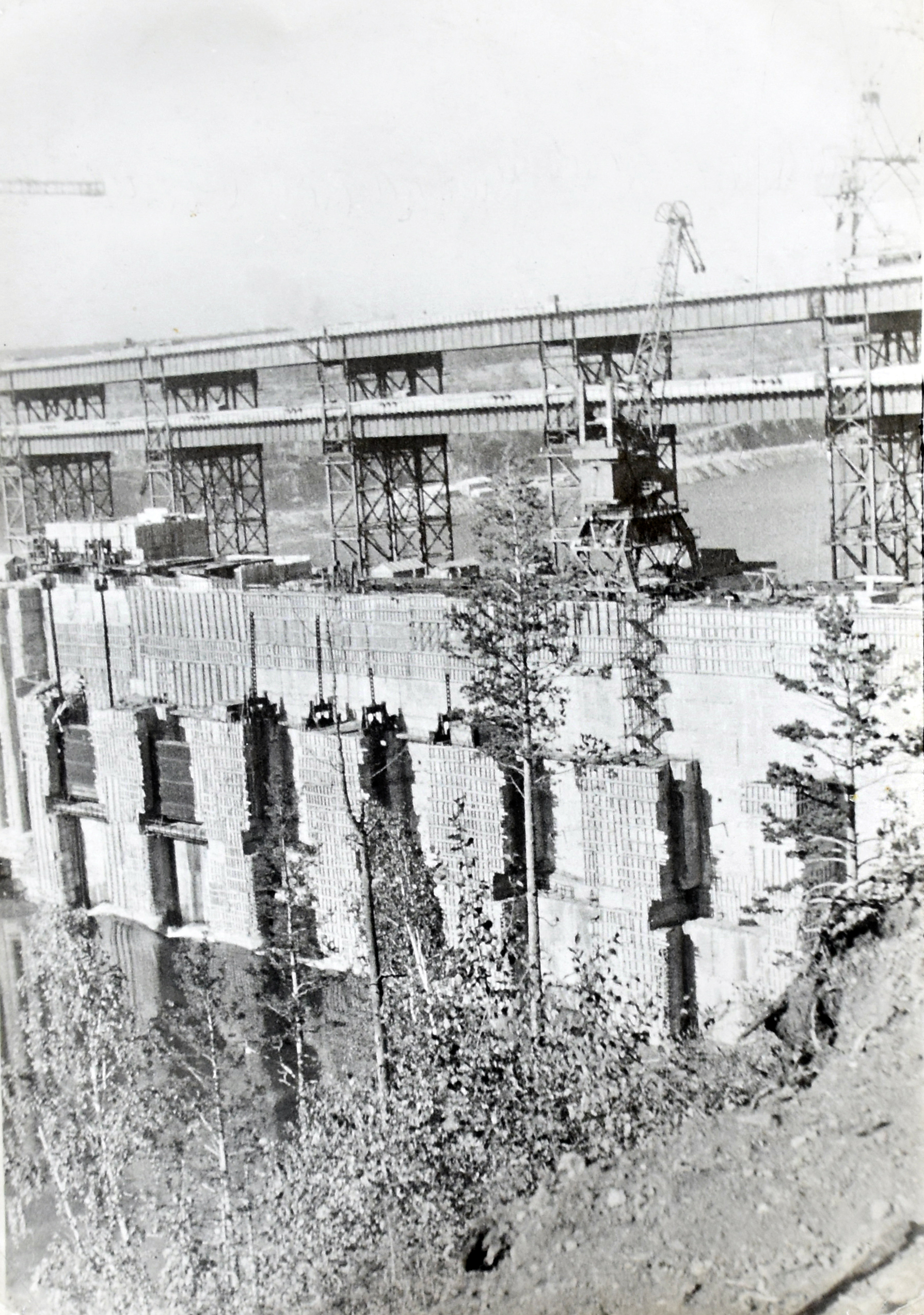
The first generator delivers electricity. Filling the reservoir transforms the Angara landscape and the lives of riverside communities.
Read the full story ↗Bratsk television centre makes its first test transmissions, creating another connection between the scattered districts.
Read the full story ↗The city’s first large-panel apartment building is occupied. Panel construction becomes one way to replace temporary accommodation with permanent microdistricts.
Read the full story ↗The new central residential district gains familiar street names: Mira, Podbelskogo, Komsomolskaya, Yuzhnaya and Kirova. These belong to the new city, not the flooded village.
Read the full story ↗The station’s central control room enters service. Completing the project means creating an operating control system as well as a concrete dam.
Read the full story ↗The Bratsk timber complex takes shape, linking timber processing with pulp and paper production. Its separate commissioning stages cannot be reduced to one founding date.
Read the full story ↗Freight and passenger trains cross the crest, making the dam part of the transport connection between the banks.
Read the full story ↗Road traffic opens across the dam, providing an important everyday connection between the city’s separated parts.
Read the full story ↗The Bratsk aluminium plant produces its first aluminium. River power becomes metal.
Read the full story ↗The final generating unit comes under load. Permanent commissioning of the complete complex follows in 1967.
Read the full story ↗The Bratsk hydroelectric complex enters permanent operation, then the world’s largest hydroelectric station.
Read the full story ↗The Bratsk photography club holds its first exhibition at Lesokhimik Palace of Culture, showing over eighty works.
The puppet theatre opens with Merry Little Bears. Its distinct history begins well before the later drama theatre.
Read the full story ↗