From the village school
A three-year school opened in the village in 1850. The November 1934 school fire also destroyed a museum collection housed there; classes temporarily moved into a church. Education and memory preservation long depended on individual buildings and people.
Books in a builders’ settlement
On 8 December 1956, a library opened in a prefabricated Padun barrack, supported by libraries across the country. Other residential areas gained their own branches. Their network reveals how scattered settlements developed a shared cultural life.
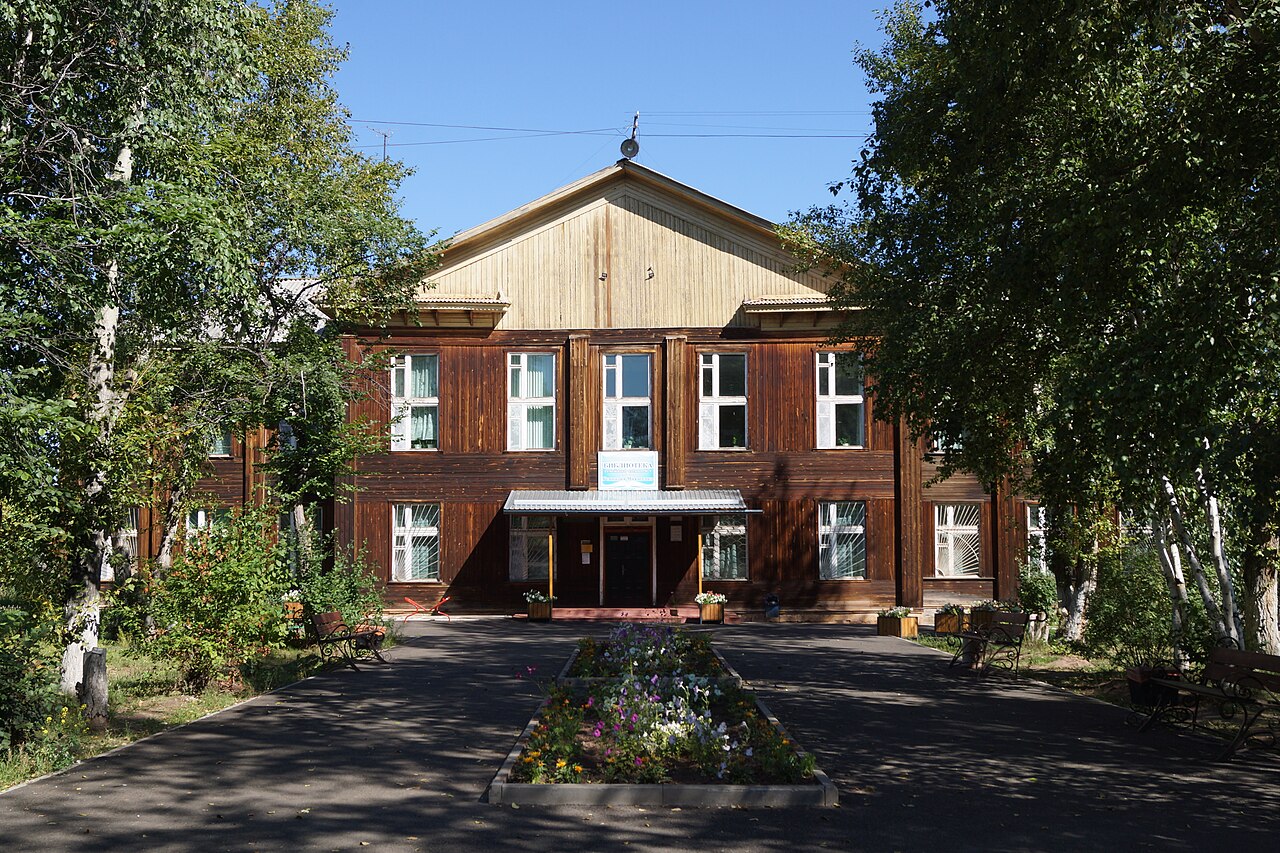
Mikhasenko Library, Padun
16 August 2020. The wooden building of the G. Mikhasenko Family Reading Library in Padun.
Vasily Astanin · Wikimedia Commons
CC BY-SA 4.0 · Original ↗
Engineering education in stages
A consultation centre opened in 1957, a general technical faculty in 1961 and full-time study in 1964. The institution later became a branch of Irkutsk Polytechnic and, in 1980, the independent Bratsk Industrial Institute. A technical lyceum opened in 1990.
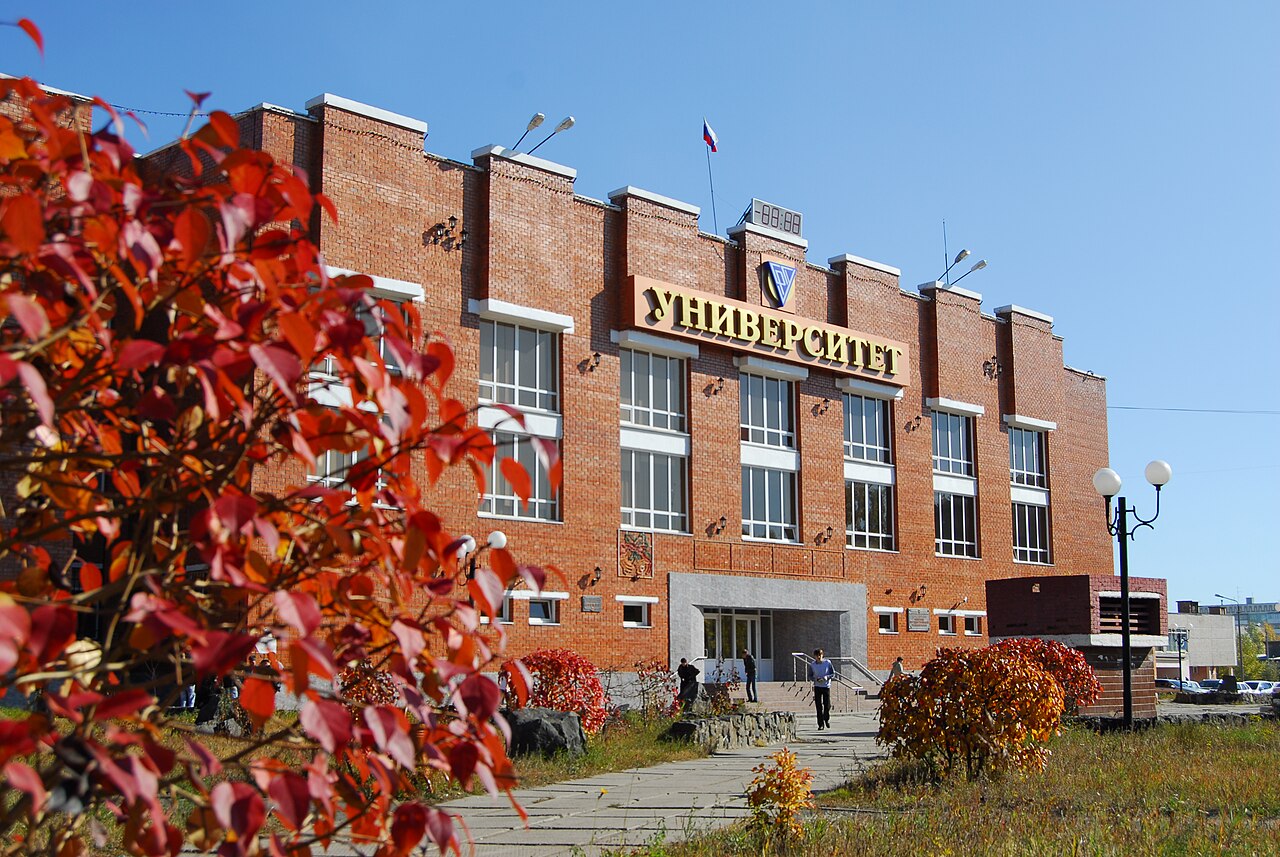
Bratsk State University, Energetik
28 September 2010. Building 3 of Bratsk State University in Energetik.
UgrumovaEV · Wikimedia Commons
CC BY-SA 4.0 · Original ↗
Institutions that made a city
The library network preserves the names of Gennady Mikhasenko, Yuri Chernykh and Viktor Serbsky, linking reading with residents’ biographies. Technical education trained specialists for industry, while schools and libraries helped families establish lasting lives in the city.
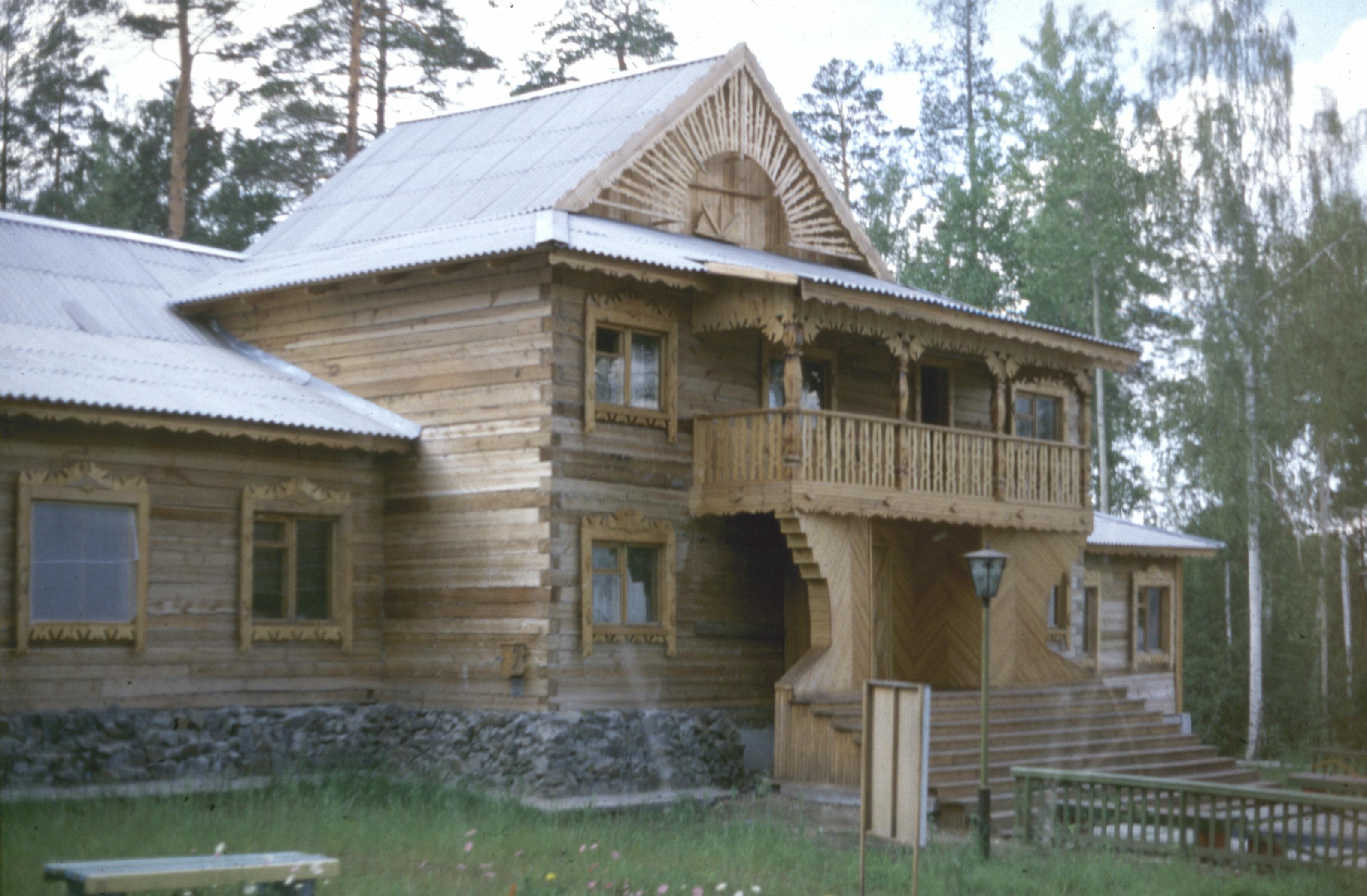
A House of Pioneers in 1981
Summer 1981. Identified by the photographer as a House of Pioneers in Bratsk. The exact address is unverified; no match to a present-day building is claimed.
CTHOE · Wikimedia Commons
CC BY-SA 3.0 · Original ↗