From its first 200 students in 1957 to a university serving northern Irkutsk Region. People, buildings, engineering, research, the library and student life: a 44-chapter history of Bratsk State University, BrSU (БрГУ).
44 CHAPTERS / ABOUT 22 MIN READ
1957
Higher education begins in Bratsk
1979 / 1980
Order / independent institute begins
2004
The present university name
>700 000
Library items, early 2025
Article contents +
A university in Energetik
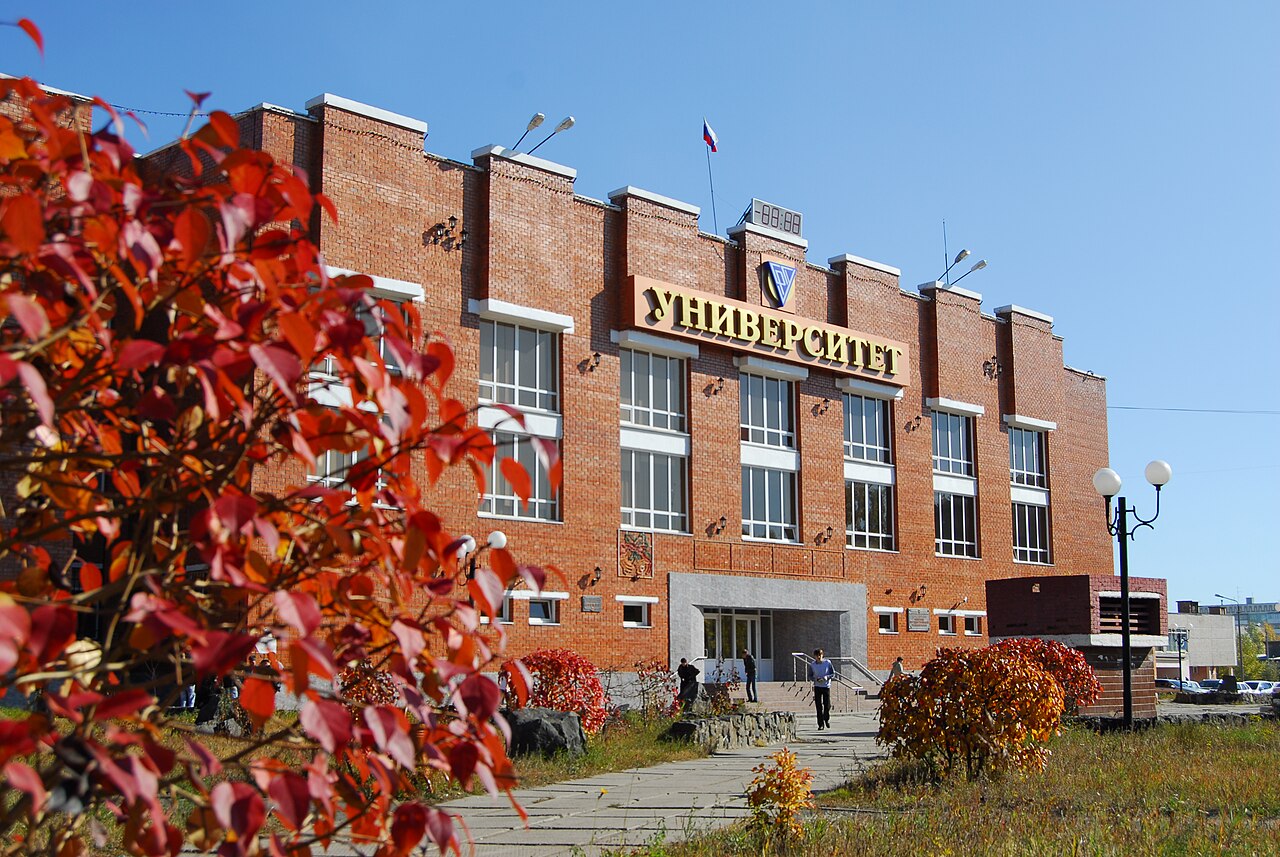
Bratsk State University has a precise city address: 40 Makarenko Street, Energetik. Its physical presence extends beyond one building. Teaching blocks, workshops, residences and sports facilities form an academic neighbourhood. The official property list also names Pogodayeva, Studencheskaya and Solnechnaya streets, revealing how an educational institution gradually acquired the infrastructure of everyday life.
Location matters in a city whose residential areas are separated by substantial distances. University life involves journeys between classrooms and accommodation, proximity to woodland and familiarity with Energetik. Reading the campus alongside Bratsk’s urban history explains the institution through its buildings and routes, as well as through changes in its name.
2010
Bratsk State University, Energetik
28 September 2010. Building 3 of Bratsk State University in Energetik.
1957: higher education comes to the construction site
The university traces higher education in Bratsk to 8 June 1957, when an order established a consultation point of the Irkutsk branch of the All-Union Correspondence Civil Engineering Institute. The university museum’s account names an initial 200 students. This was not yet an independent university: it provided engineering education close to people’s workplaces.
That arrangement mattered in a city under construction. Enterprises and neighbourhoods were already being built, while qualified specialists had to be trained alongside them. The educational institution emerged within that process rather than after it. Its historical beginnings therefore precede the legal establishment of an independent institute.
Klavdia Popova: building an educational institution
Klavdia Popova became the first head. Trained as a chemist, she graduated from Perm Pedagogical Institute in 1950 and worked at Bratsk School No. 4 from 1955. Her move from school teaching to organising higher education shows the close relationship between educational levels in the young city.
She led the consultation point and subsequently the general technical faculty until 1969. Those titles conceal practical work: recruiting teachers, finding rooms and arranging classes around different working schedules. Such tasks transformed an administrative decision into functioning education. Popova was the organiser and head of the early units; describing her retrospectively as rector would give her an office that did not yet exist.
German Kuznetsov headed the faculty in 1969–1973, followed by Klavdia Petrova in 1973–1974. Petrova had previously led Yelabuga Pedagogical Institute. These stages connect the original consultation point with the later branch.
Correspondence study was the starting model of higher education in Bratsk, rather than a later addition to full-time teaching. The present correspondence-and-accelerated faculty traces its history to the 1957 intake. It names L. Rogova, O. Borozdin, L. Kalashnikov and others among the early organisers and teachers of study alongside employment.
The model suited the city. A worker could remain at an enterprise while learning the theoretical foundations of a profession. Practical industrial questions and academic subjects met within one person’s experience. New programmes and attendance modes developed later, but the opportunity to gain a qualification while remaining part of Bratsk’s working life retained an importance of its own.
A general technical faculty and the first full-time graduates
The current official history dates the general technical faculty of Irkutsk Polytechnic Institute to 1961 and the beginning of full-time teaching to 1964. The first full-time intake covered five specialities: construction and road machinery, motor transport, industrial and civil construction, heating and ventilation, and water supply and sewerage.
June 1972 brought the first full-time graduating group: twelve motor-transport engineers. This milestone is distinct from earlier graduates in other modes of study. The subject list reflects the practical needs of a growing city: construction required transport, heat, water and functioning machinery as well as buildings.
In November 1963 Bratskgesstroy handed over a new teaching building; the faculty then had 850 evening and correspondence students. A second block followed in 1968, designed for 1,200 full-time students. By the early 1970s the teaching base included two blocks, more than thirty laboratories, a gym and a ninety-flat building for staff.
These facilities answered interdependent needs. Recruiting teachers required housing as well as classrooms; engineering needed laboratories; student life needed sporting space. The campus was being assembled as a complete environment. Its material history thus intersects with Bratskgesstroy’s resources and the city’s ability to attract teachers and retain future graduates.
Nikolay Yatsenko and the move towards independence
Nikolay Yatsenko arrived in Bratsk in 1974. A specialist in automotive testing with a doctorate in technical sciences, he developed engineering education for the Bratsk–Ust-Ilimsk industrial complex and BAM construction. He recruited teachers, expanded research facilities and led the movement from faculty to branch and then to independent institute.
From January to July 1980 he served as acting rector of BrII. His university biography connects organisation with scholarship: departmental development accompanied automotive research. Recollections of his work emphasise that a functioning higher-education institution needed a research community of its own, as well as a teaching timetable.
Retrospective sources date branch status to either 1974 or 1975. The current university history uses 1974, while recollections of Yatsenko use 1975. We retain that disagreement rather than inventing an exact order date.
BrSU’s basic-information page gives 20 February 1979 as the organisation’s creation date. This was the date of RSFSR higher-education ministry order No. 99. The order itself, however, prescribed transforming the Bratsk branch of Irkutsk Polytechnic Institute into Bratsk Industrial Institute from 1980. The legal decision and the beginning of the independent phase therefore refer to different moments.
A subsequent order, No. 314 of 4 June 1980, addressed faculties and departments. This sequence explains the apparent contradiction between short accounts. BrII emerged through a decision, organisational restructuring and a new academic phase, rather than through a single instantaneous event.
After Yatsenko’s initial acting period, Oleg Martynenko led the institution from 1980 to 2003. His tenure encompassed the development of an independent institute and its transition to a technical university. Sergey Belokobylsky became rector in 2003 after progressing in Bratsk through teaching, departmental leadership, a deanship and a vice-rectorship.
Leadership changed against an accumulating material and academic base, but each tenure belonged to a different institutional stage. Martynenko headed the industrial institute and BrGTU; the present university name arrived under Belokobylsky. Earlier consultation-point and faculty heads should be recorded separately because their offices and organisational responsibilities differed from those of a rector.
The institute opened Bratsk’s first technical lyceum in 1990. In 1999 Bratsk Industrial Institute became Bratsk State Technical University; in 2004 it took the name Bratsk State University. These names mark successive stages of one educational history, rather than three unrelated institutions.
The changes accompanied a broadening of disciplines and qualification levels. Economics, humanities, education and master’s study developed alongside engineering. The name on a graduate’s diploma consequently depends on the period of study. References to BrII, BrGTU and BrSU can all be correct when the dates of individual educational biographies are preserved.
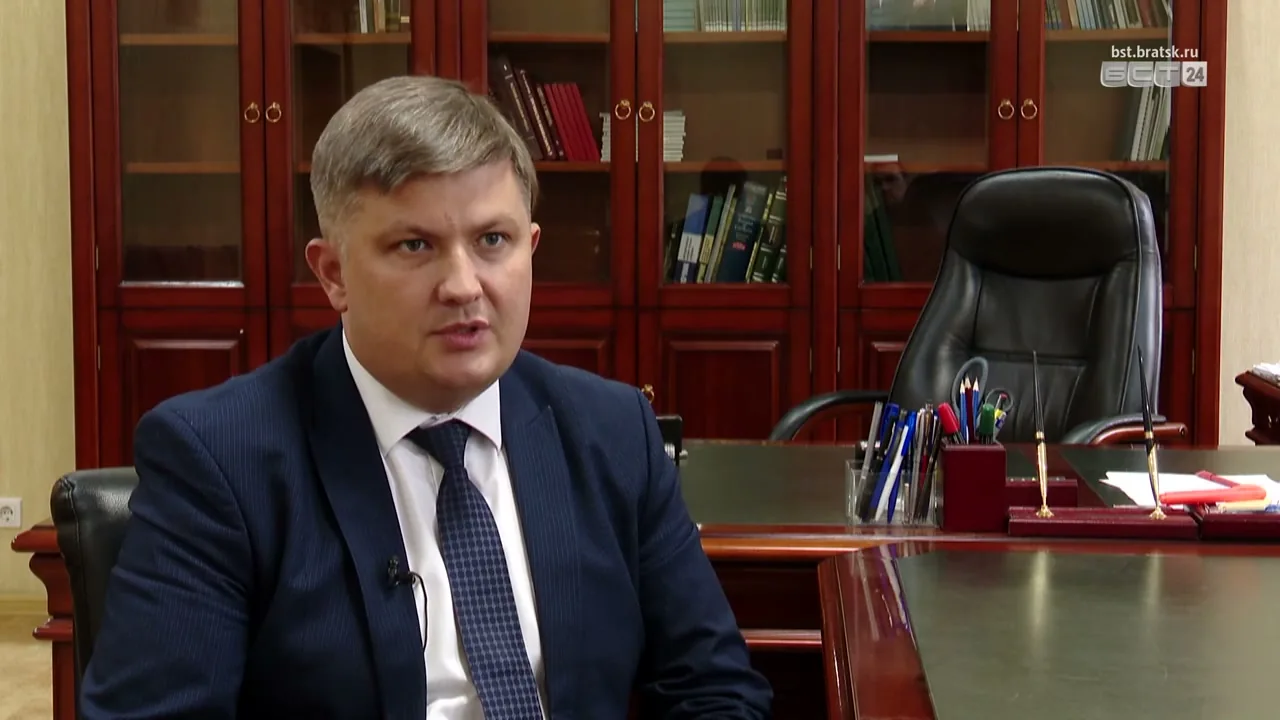
Garik Gasparyan, formerly dean of the forest-industry faculty, became acting rector on 29 May 2018. Ilya Sitov’s leadership period began in 2019. A university conference was followed by ministerial confirmation for a term starting on 20 November 2019.
A ministry order dated 18 November 2024 confirmed Sitov for another five-year term. The current leadership page identifies him as rector when checked in October 2026. Election at a university conference and ministerial confirmation are connected but separate events, so their dates should remain distinct in the institutional chronology.
2024 · сюжет / report
BrGU rector Ilya Sitov
Ilya Sitov in his office during an interview about the university’s preceding five years and its plans. A still from a BST report published on 21 November 2024 (01:25). The source does not specify the exact filming date.
The university museum’s chronology dates the fourth teaching block to January 2005. It describes the first block’s reconstruction in stages: an initial phase opened for 1 September 2009, with completion and an enclosed connecting passage in 2011. Campus building did not end with Soviet-era expansion.
University buildings must change alongside equipment and teaching practices. A new laboratory needs appropriate space and services; a connection between blocks changes everyday winter journeys. Renovations therefore belong to educational history. They explain the physical conditions experienced by different generations of students and teachers.
The university lists four subject-based faculties: Economics and Construction; Power Engineering and Automation; Transport Systems and the Forest Complex; and Humanities and Education. Separate faculties organise master’s study and correspondence or accelerated learning. These represent different organising principles: subject, qualification level and mode of attendance.
The names also outline Bratsk’s economic development. Energy, construction, transport and forestry reflect industrial expansion, while education and the humanities address the needs of an established city. Today’s arrangement should not be projected backwards onto the Soviet institute: departments have repeatedly merged and changed names. The official structure page references an order dated 9 October 2026; earlier periods require their own contemporary records.
The Faculty of Economics and Construction was established on 1 September 2020 by merging the civil-engineering and economics-and-management faculties. Its institutional history also describes a return to an earlier arrangement: until 2004 these fields belonged to a combined engineering-and-economics faculty. Training in construction economics connected the calculation of a structure with the organisation of its delivery.
Bratsk itself makes the relationship understandable. A building needs structural design together with decisions about resources, schedules and expenditure. The faculty describes specialised laboratories and a structural-testing block among its facilities. Learning therefore involves physical specimens and measurements, alongside drawings and plans of the finished building.
The energy department traces its origins to a unit created on 30 January 1970. Its teachers included Ivan Denisov, a participant in the design of Bratsk HPP and a Lenin Prize recipient. Electrical-network enterprises, the dam, Bratskgesstroy, the timber complex and the aluminium plant helped develop its facilities. This offers a particularly clear example of industry and higher education supporting one another.
Electrical and industrial-thermal engineering were combined into the present energy department in 2021. Their subjects remain distinct: stations and electrical networks on one side, industrial heat processes on the other. Both have an immediate practical relevance in a city whose production depends on electricity and heat.
2024 · сюжет / report
The Faculty of Power Engineering and Automation
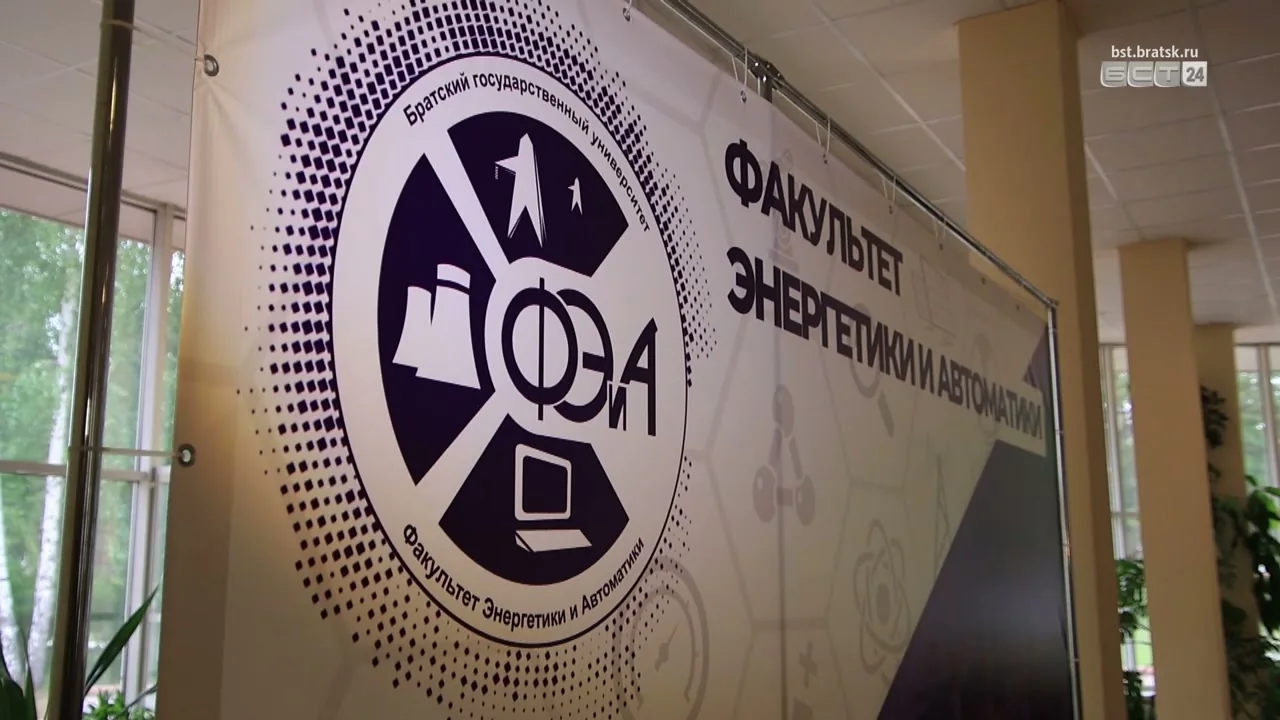
The Faculty of Power Engineering and Automation display in a university corridor. A still from a BST report published on 21 November 2024 (00:55). The source does not specify the exact filming date.
The Faculty of Power Engineering and Automation has a 35/10 kV teaching and research transformer substation. It connects textbook diagrams with the arrangement of an actual electrical installation. The faculty lists it alongside laboratories, computer rooms and lecture theatres: a future power engineer needs both calculation skills and an understanding of equipment.
A corporate teaching and research centre named Energetika has operated at the faculty since 1 October 2011. Its creation followed cooperation with EuroSibEnergo, with additional programmes developed alongside industry specialists. This provides a concrete route through which workplace requirements enter university education. Working laboratories are not unrestricted visitor attractions; access should be arranged with the university.
2026 · сюжет / report
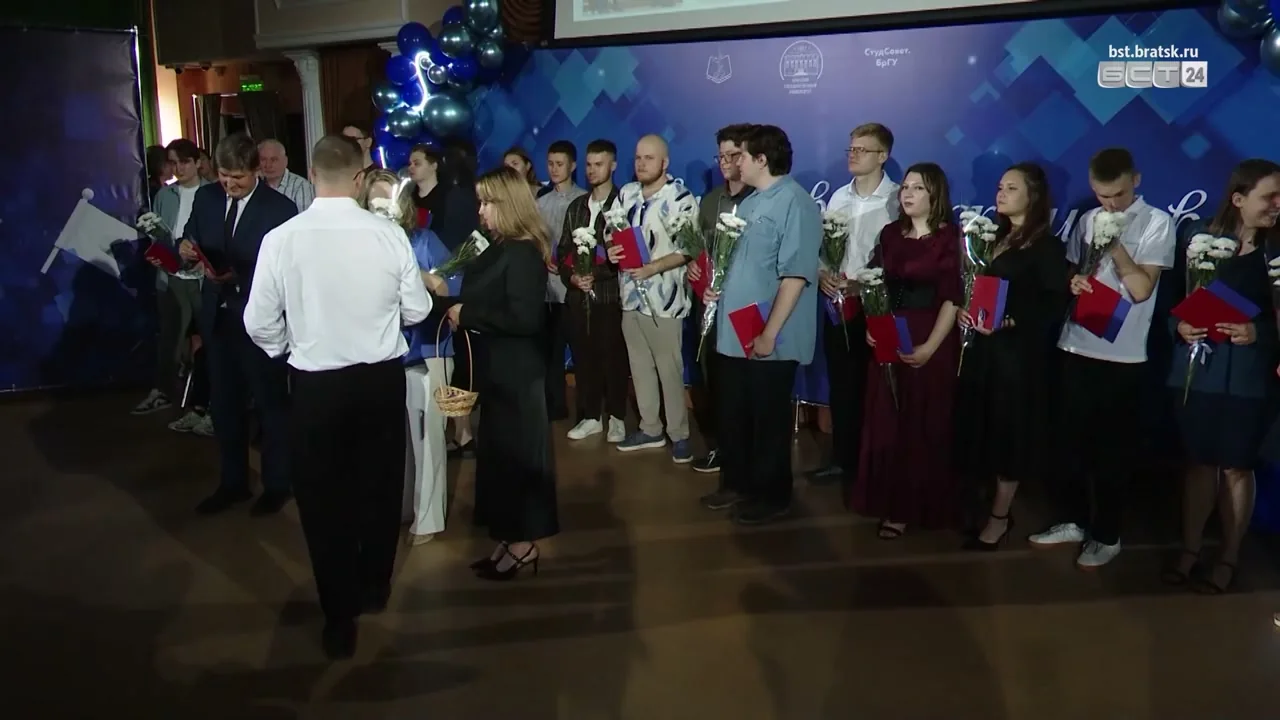
Power Engineering and Automation graduation
Participants in the Faculty of Power Engineering and Automation graduation ceremony on stage. The report covers the graduation of 66 specialists. A still from a BST report published on 8 July 2026 (00:40). The source does not specify the exact filming date.
The production-process automation department was created in 1981 under rector Oleg Martynenko. Its first laboratories addressed process measurement, local automatic-control systems and computing. Specialist recruitment began in 1985, followed by the first graduating cohort of process-automation engineers in 1989.
Its present name, Control in Technical Systems, reflects a broad field. Installing a sensor is only a beginning: engineers must obtain reliable data, describe how an object behaves and choose an appropriate control action. In an industrial city this links education with the dependable operation of equipment. The department’s development demonstrates how computing and measurement grew into an identifiable professional discipline within the institute.
The present Department of Informatics, Mathematics and Physics dates from 1 September 2020. It combined the informatics-and-applied-mathematics and mathematics-and-physics departments. Its published provision includes applied mathematics and informatics, together with information systems and technologies at bachelor’s and master’s levels.
A much longer history of fundamental teaching lies behind the merger. Mathematics and physics were essential to the earliest engineering groups; dedicated computing programmes developed later. That continuity matters in a technical institution, where programming meets modelling, measurement and data processing. These disciplines converge whenever a physical or industrial problem must become a computable model and a functioning information system.
The Faculty of Transport Systems and the Forest Complex was formed on 1 September 2020 by combining the mechanical-engineering and forest-industry faculties. Its subjects bring together forest resources, machinery, manufacturing, transport, ecology and physical education. Behind this varied collection lies a production chain: forests require study, renewal, harvesting, transport and processing.
Transport is especially visible across northern territories. Roads and equipment connect settlements and industrial sites; the condition of machinery affects the operation of the wider system. The faculty’s history therefore complements the story of Bratsk’s timber complex. It reveals the educational infrastructure required alongside mills, raw materials and railway tracks.
The base department for Forest Resource Regeneration and Processing was established on 1 February 2012 by merging wood-processing and forest-engineering departments. A forest-machinery department joined it in 2018. The sequence of names alone shows that university forestry extends well beyond harvesting.
The department’s published resources cover practical placements, research and an experimental furniture-design and production laboratory. Between growing a forest and producing a finished object lie questions about timber quality, equipment, manufacturing and material use. This changes the scale of the city’s industrial story: the forest complex begins in an ecosystem and ends with a product, while professional education must connect those stages.
The construction and road-machinery department began in May 1978, initially led by Lev Kalashnikov. Its first engineers in construction and road machinery and equipment graduated in 1980. Hydraulics and hydraulic drives, together with machine components, featured among its early laboratories.
Buildings and the dam dominate memories of Bratsk’s construction, but neither could have been created without equipment to move earth, lift structures and build roads. This field offers a machinery-centred perspective on the city’s development. A machine becomes a system of interdependent components that must be calculated, maintained and suited to operating conditions, rather than simply a vehicle visible in an old construction photograph.
The Department of Manufacturing and Transport was created on 23 May 2018 by merging manufacturing technology and motor transport. Its description of the automotive pathway includes production, modernisation, operation, servicing and repair. These are stages in a machine’s life cycle, rather than a course in driving.
The connection between the subjects is practical. A component must be designed and made, used within a mechanism, monitored and eventually repaired or replaced. University training considers those tasks alongside the organisation of technological processes. Within Bratsk’s industrial history, this represents less conspicuous but continuous work: keeping vehicles and equipment functioning after the great construction projects have ended.
The present Department of Ecology, Life Safety and Physical Culture was formed in 2020. Its environmental provision spans several levels, including a master’s programme titled Environment and Human Health. The combination places environmental conditions alongside human wellbeing, while individual research questions still require their own methods.
The subject has particular resonance in Bratsk, where industrial activity, woodland, the reservoir and environmental quality all belong to the city’s history. Research depends on observation, measurement and meaningful comparison. The existence of an ecology department should not be confused with a claim that the university has resolved every local environmental problem. Its contribution lies in educating specialists and developing ways to investigate those problems.
The Faculty of Humanities and Education broadens the university’s story beyond engineering. Its present structure connects law and foreign languages with history, education and psychology. A city needs more than industrial specialists: schools, social institutions and the study of its own past also require professional education.
These disciplines help explain the transition from an industrial institute to a university with a wider academic remit. The change concerned the questions addressed by staff and students, as well as the name displayed on a building. There is a direct connection with local memory: university historians publish research on Siberia, its towns and its people, providing material for further discussion of the region’s past.
The education-and-psychology department was established in 1994 and became a graduating department for its specialist programme in 2000. On 1 September 2016 it merged with history and political science to form the base Department of History, Education and Psychology. History teaching at the institution, however, long preceded that reorganisation.
Several lines of development meet here: training schoolteachers, investigating the past and studying how people learn and work. Together they connect the university with the renewal of the city’s educational environment. Graduates who become teachers pass knowledge to another generation; researchers describe the processes around them. The university thus contributes both to present employment and to the city’s ability to understand and continue its own history.
The Faculty of Master’s Training was organised in December 1999. Its first intake followed in 2000 in Construction. The chronology shows an educational model changing gradually, with a distinct level of advanced work developing alongside established engineering qualifications.
The faculty page presents pathways in construction, energy, engineering, forestry, economics, ecology, information technology and education. A master’s dissertation requires students to formulate a problem and defend the outcome. It also allows an academic trajectory to continue within Bratsk: a first degree can lead to further work with a laboratory and supervisor. The exact selection of programmes and attendance modes belongs to the admissions documents for the relevant year.
The postgraduate and doctoral administration supports the development of researchers and academic teachers. Its published subject list includes mathematical modelling, ecology, structural engineering and materials, systems analysis, electrical power, machinery, forest technologies, economics, psychology, history and education. The range reveals how far the institution has expanded from its first consultation point.
Postgraduate study matters beyond an individual educational biography. It helps the university develop future researchers and teachers for its departments. Different fields require different experiments, sources and forms of proof. The general word research therefore conceals a more specific infrastructure: laboratories, archives, models and sustained work on carefully defined questions.
The university describes nine principal research fields. They include Eastern Siberian energy and technical systems, computer-based information processing, regional economics and humanities research on Siberia and the Far North. Research connects with teaching specialisms while retaining its own questions and outcomes.
For 2021–2025 BrSU reports 15 monographs, 90 textbooks and teaching publications, 3,883 research articles and 106 conferences. These are the institution’s own figures for a defined period, rather than an independent quality ranking. They indicate work beyond a normal teaching timetable: writing, discussion, verification and publication of new results.
The shared-equipment centre was created on 10 September 2008. It makes a research instrument base available for different projects rather than confining each device to one teaching group. The published inventory includes vibration analysers, a thermal imager, measuring instruments, material-inspection equipment and a temperature chamber.
This infrastructure makes applied research easier to understand. Discussing the reliability of a mechanism or the properties of a material requires reproducible measurements. Different questions call for different devices and procedures. The centre publishes access arrangements, services and activity records; an inventory entry does not mean visitors may operate equipment independently or arrive without arranging access.
Bratskstroyexpert: testing materials and structures
Bratskstroyexpert operates within the university’s testing infrastructure. Its published services include concrete-mix design, making and testing specimens, measuring strength and water resistance, and investigating aggregates and soils. Another area concerns the examination of buildings and structures. It is a practical meeting point between academic subjects and construction work.
In a northern city, a material’s performance cannot be judged by appearance. Moisture, freezing, density, strength and ground conditions all matter. The testing list reveals how many measurable characteristics lie behind the familiar word concrete. A university laboratory turns this aspect of the built environment into a subject of measurement, calculation and professional responsibility.
BrSU’s technical centre connects automotive expertise with diagnostics and servicing. Its official page describes work involving the design, maintenance, diagnosis and repair of equipment, alongside separate information about passenger-car roadworthiness inspection. It lists an address at 34a Makarenko Street and the inspection operator’s documents.
This relatively modest practical facility matters to the university’s story as much as a ceremonial building. It demonstrates engineering knowledge moving beyond classrooms to address an everyday urban need. Services and operating arrangements can change: a historical article explains the centre’s role, while appointments and current conditions should be checked through the centre itself.
The competence-development centre supports people involved in research and technical projects, including the interregional Baikal research-and-education network. In December 2022 it delivered a 36-hour Comprehensive Timber Processing programme. Its first graduating group comprised 50 participants from several organisations in Irkutsk Region and Buryatia.
Further programmes in 2023 addressed timber and wood-waste processing. Subjects included composite materials, additional raw-material streams and the energy use of woody biomass. This is university education for established professionals and researchers. The history of forestry training continues through a practical question: how to use timber more completely and turn production residues into a useful resource.
BrSU publishes Systems. Methods. Technologies and Problems of Socio-Economic Development of Siberia. The first concentrates on technical subjects; the second addresses economic, historical and social processes. Proceedings of Bratsk State University provides additional subject series associated with university conferences.
For readers, these are more than titles in an institutional list. Journal archives provide a route from an overview to an individual investigation, its authors, evidence and conclusions. They contain work on technical systems, regional economics and Siberian history. Publishing reveals another university function: alongside teaching established knowledge, the institution provides a place where new research results can be presented and examined.
At the beginning of 2025 the library reported more than 700,000 items: over 500,000 printed and over 200,000 electronic publications. Its own electronic library contained approximately 3,000 titles. These are explicitly dated figures, rather than a claim that the collection remains unchanged indefinitely.
Alongside lending, the library provides a WEB-IRBIS catalogue, access to full-text resources and a National Electronic Library reading room. This is essential infrastructure for independent work. Engineering calculations, historical investigations and dissertations all begin with finding and checking information. The catalogue also serves local-history readers seeking a particular book or article about Bratsk.
The student research association is a voluntary organisation whose participants work with academic mentors. Its tasks include supporting investigations and publications, organising research events and connecting faculties with one another and with associations at other universities. Its governing regulation was approved on 29 April 2022.
The arrangement matters because it moves students from listening to participating. They acquire a question of their own, discuss methods, prepare a presentation and answer challenges to their findings. A conference can become a first experience of explaining results beyond a familiar class. It also connects students from different disciplines who might otherwise meet only in shared introductory courses.
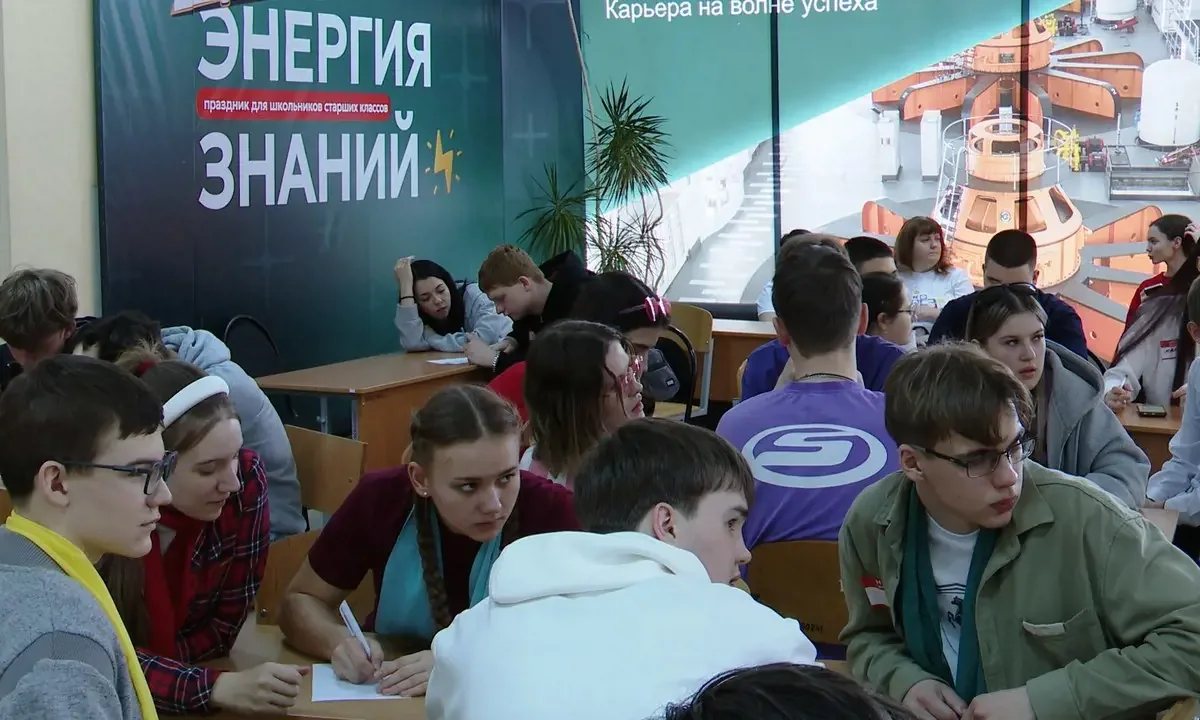
2026 · публикация / publication
School pupils at BrGU’s New Energy competition
School pupils working in teams at the 11th New Energy competition hosted by BrGU. Photograph from a BST report of 14 April 2026; the exact shooting date is not specified.
In the university newspaper’s sixtieth-anniversary issue, Alexander Dubrovin identifies as a BrGTU graduate. Andrey Chernyshev recalls entering BrII in 1991 and the teachers who influenced him. Such testimony establishes a connection with public figures without relying on assumptions based on birthplace alone.
Vladimir Pashkov provides another documented example: he completed economics and enterprise management at BrII in 1996 after earlier naval education. These trajectories show the institution supporting initial training and later professional change. Offices named in old anniversary publications remain contemporary to those publications, rather than automatically describing a person’s current role.
University publications confirm that Alexander Zubkov graduated from BrSU’s mechanical-engineering faculty and defended his diploma with honours in June 2009. In an educational history, this is a fact in its own right: a prominent sporting biography also includes completed engineering study.
The connection is therefore more specific than a famous athlete appearing as an honorary visitor. Zubkov was a faculty graduate. Sporting titles in old congratulatory newspaper articles should not be copied uncritically into a present-day reference; this section records the verified educational episode, while his sporting career requires its own chronology of results and subsequent decisions.
The university’s account of student work brigades includes construction, agriculture, service work and other fields. A veterans’ gathering on 25 October 2018 recalled Soviet brigades and the work of later generations on roads, university facilities and educational projects. These recollections describe a particular tradition, rather than an identical experience shared by every student.
The university separately dates the formation of educational brigades from 2002 and the development of subject-specific brigades from 2012. Such work brought together earnings, practical skills and collective responsibility. In a city shaped by major building projects, the brigade provided another way for a student’s personal story to intersect with the wider history of labour and territorial development.
Student representation and everyday university life
The student council is a representative body through which learners participate in university discussions. Its published remit brings educational quality and research together with cultural events, social support and sport. Its role is broader than arranging a single celebration or concert.
Everyday university life involves many small decisions: raising a concern, building a team, proposing an activity or representing a student viewpoint. These skills are rarely visible in a list of academic subjects, yet they form part of learning to act independently. BrSU’s story would be incomplete without this environment. A campus consists of relationships among its users as well as classrooms and laboratories.
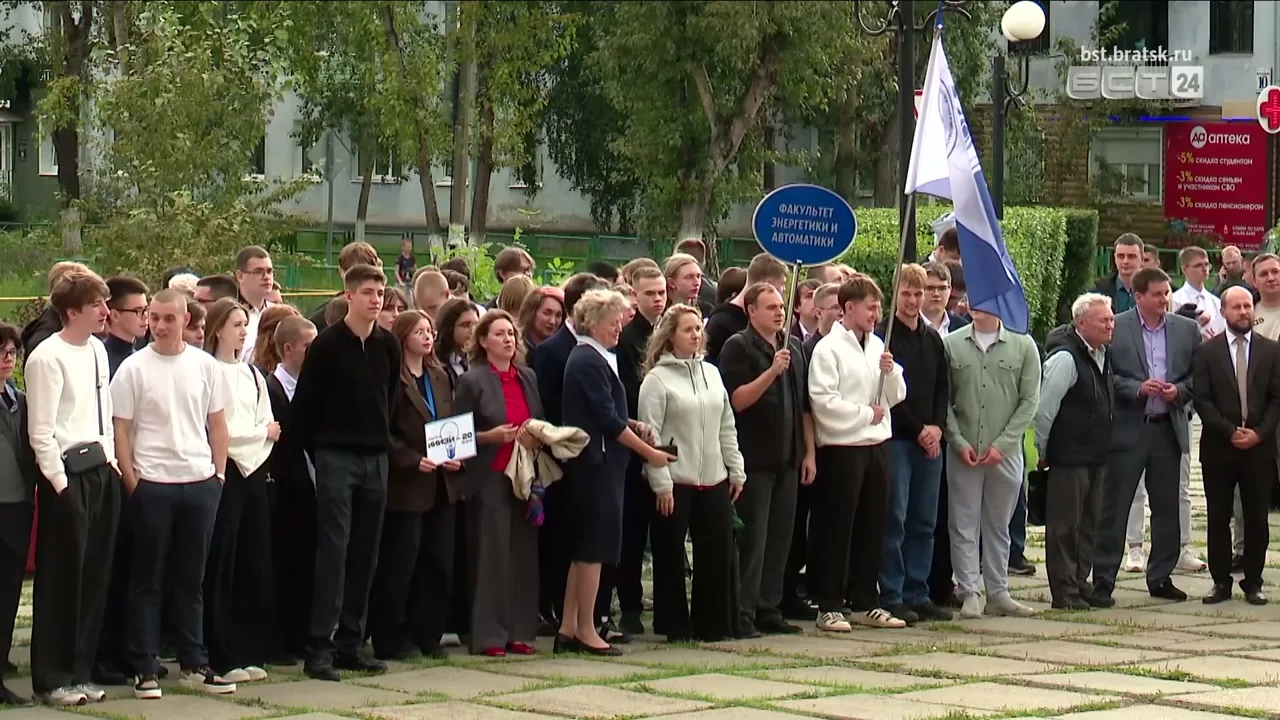
2026 · сюжет / report
First-year students outside a BrGU building
Participants in the first-year welcome event outside a university building. A still from a BST report published on 2 September 2026 (00:35). The source does not specify the exact filming date.
BrSU’s student sports club is named Sila, meaning strength. Its published programme includes recreational sport and participation in competitions at several levels. The 2026 university games plan names darts, swimming, table tennis, volleyball and futsal. A calendar must be distinguished from completed results: a scheduled competition does not establish that a team won it.
Sport creates another form of contact across courses and disciplines. A team comes together through training and shared performance rather than an academic register. This part of campus life connects the institution with the city’s sports facilities and events. It adds an experience that graduates may remember as vividly as examinations.
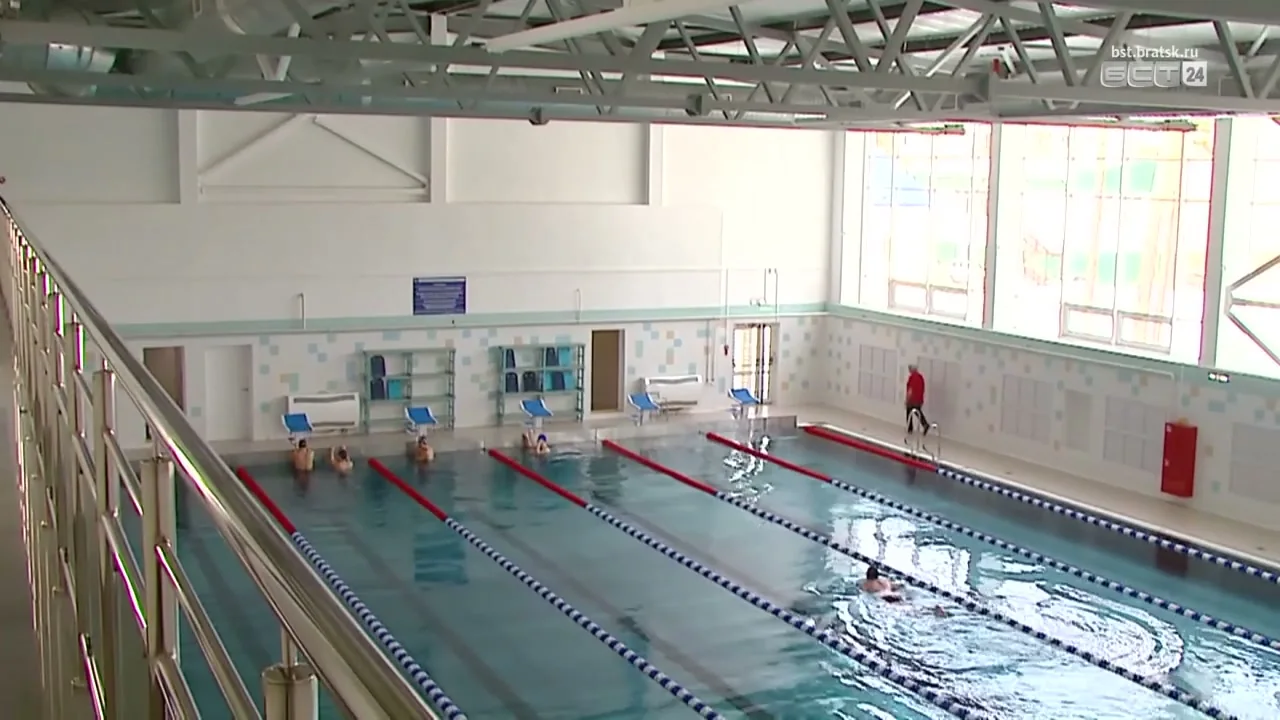
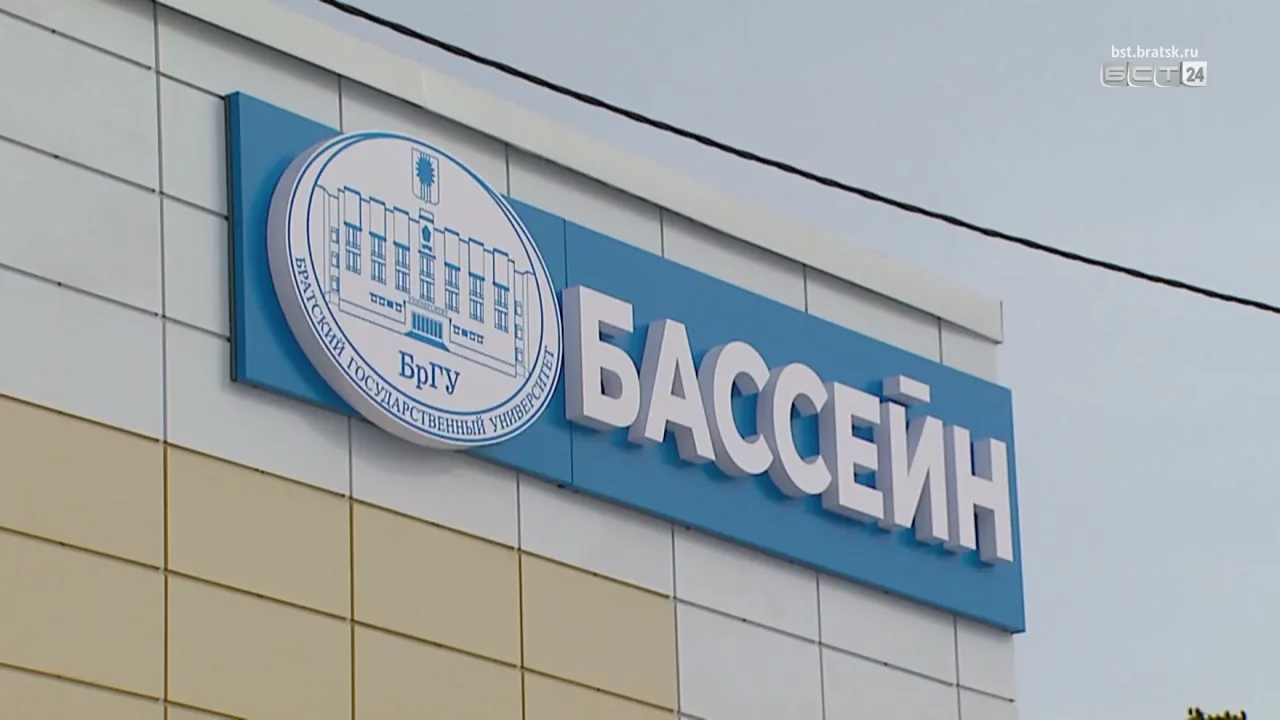
BrSU’s swimming pool is a distinct campus facility with a 25 by 16 metre basin and six lanes. Its official description gives a variable depth of 1.2–1.8 metres, changing rooms, showers and facilities for visitors with reduced mobility. Preparation of the construction site began in September 2019.
The building illustrates university infrastructure serving purposes beyond compulsory teaching. A sports facility needs engineered systems and continuous maintenance just as a laboratory does. This article explains the scale of the building; session schedules, visiting rules and current charges should be checked with the pool itself. Reprinting an old tariff as a current price would make the guide less useful.
2024 · сюжет / report
Inside BrGU’s swimming pool
The swimming lanes inside the university pool. This is an operating sports facility, rather than its 2019 construction site. A still from a BST report published on 21 November 2024 (00:65). The source does not specify the exact filming date.
The BrGU pool sign on the sports building’s façade. A still from a BST report published on 21 November 2024 (01:00). The source does not specify the exact filming date.
The current admissions accommodation page describes two residences: No. 1 at 8 Studencheskaya Street and No. 4 at 19 Solnechnaya Street. They use a sectional arrangement, with bathroom facilities shared between two rooms and kitchens on the floors. This concerns the present student offering and should not be confused with the complete historical property inventory.
Accommodation changes the geography of educational access. Students from elsewhere need somewhere to live as well as a place on a programme. Kitchens, study spaces and domestic facilities become part of the educational environment. Allocation and charges are governed by university documents, so the existence of a residence is not an automatic guarantee of a room for every applicant.
BrSU’s relationship with school pupils begins before application day. Its pre-university provision includes exam preparation and the Energoclass project, combining advanced study of examination subjects with orientation towards electrical and thermal power engineering. Pupils can encounter the substance of a future discipline before becoming students.
Lyceum No. 1, established in 1990 in connection with the local higher-education institution, forms a separate part of this story. It is a school organisation rather than a university faculty. Our dedicated article examines its origins, educational model and achievements. Keeping the institutions distinct reveals the wider educational route without confusing school results with university degrees or research.
2026 · сюжет / report
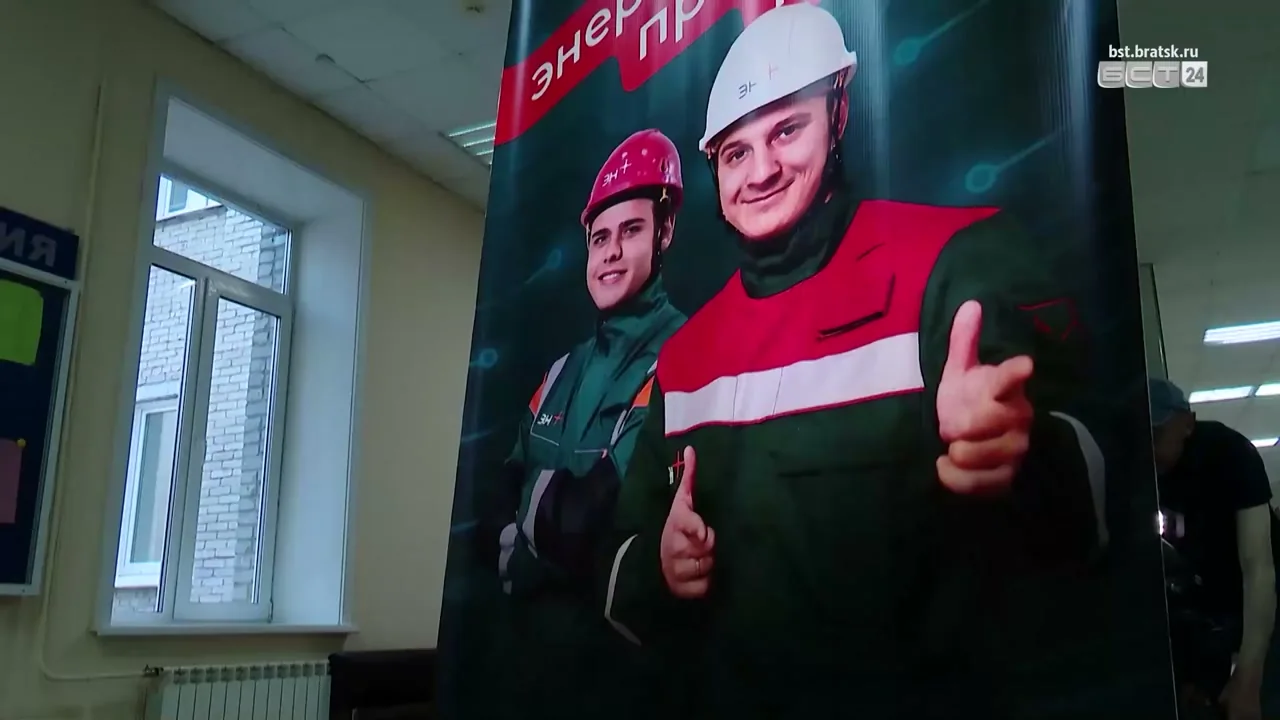
Power engineering in the university corridors
A careers display in BrGU in a report about admissions and power-engineering education. A still from a BST report published on 25 June 2026 (00:20). The source does not specify the exact filming date.
Serving northern Irkutsk Region and the BAM corridor
BrSU defines its mission beyond Bratsk’s municipal boundaries, addressing northern Irkutsk Region and the Baikal–Amur Mainline corridor. Its development programme for 2023–2032, approved in February 2024, connects education, research and workforce development across that large territory.
The institution’s history can therefore be read as a response to changing regional needs. Teaching first had to be organised beside construction projects; an independent institute and research community followed; later developments broadened disciplines and forms of study. Future outcomes of the programme must be judged through completed work. Its geographical ambition nevertheless explains why a university in Energetik matters well beyond the edges of its campus.
2026 · сюжет / report
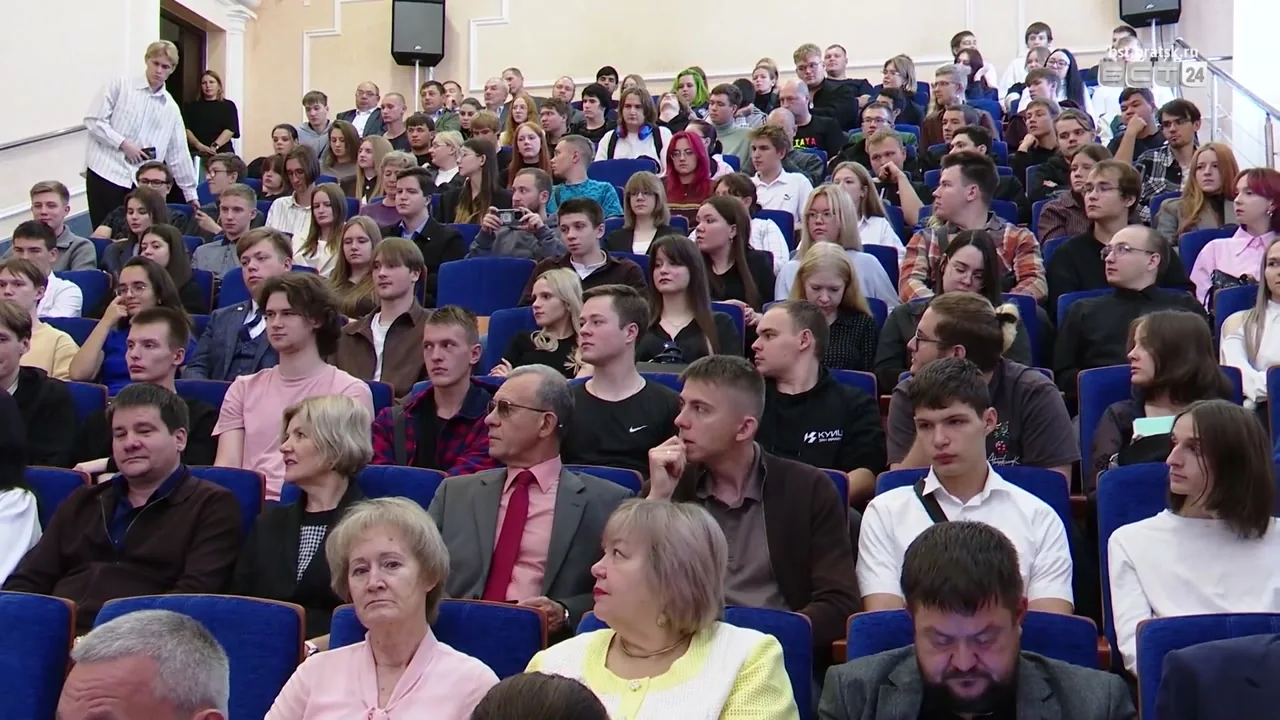
An engineering-education meeting at BrGU
A full lecture theatre at BrGU during a meeting with Federation Council representatives about engineering education. A still from a BST report published on 25 September 2026 (00:55). The source does not specify the exact filming date.
This institutional history continues beyond 1991. Dates, figures and offices retain their reference periods; checked on 19 October 2026. Retrospective sources differ over the faculty’s creation in 1960/1961 and branch status in 1974/1975. The main chronology follows the current university history; the 1979 order and transformation from 1980 are distinguished separately. Check admissions and visiting arrangements with the university.