← Explore the cityBRATSK / PEOPLE & PLACES

Top 50 surprising facts about Bratsk.

Trains on a dam, a “Siberian gecko” from space, travelling fort towers, Olympic luge and engineer-poets. Fifty researched stories revealing the city’s surprising connections.

50 FACTS / ABOUT 13 MIN READ
50

Facts with sources

1631

The first fort is founded

1955

Modern Bratsk receives city status

4 500

Megawatts of installed hydro capacity

Article contents

Bratsk HPP spent five years as the world’s largest

After its eighteenth and final generating unit started in December 1966, Bratsk became the world’s largest hydroelectric station by installed capacity. It held that position until 1971. This is a dated historical record: the station still operates, while the global ranking has changed. In the 1960s, Bratsk helped redefine the scale of hydroelectric engineering.
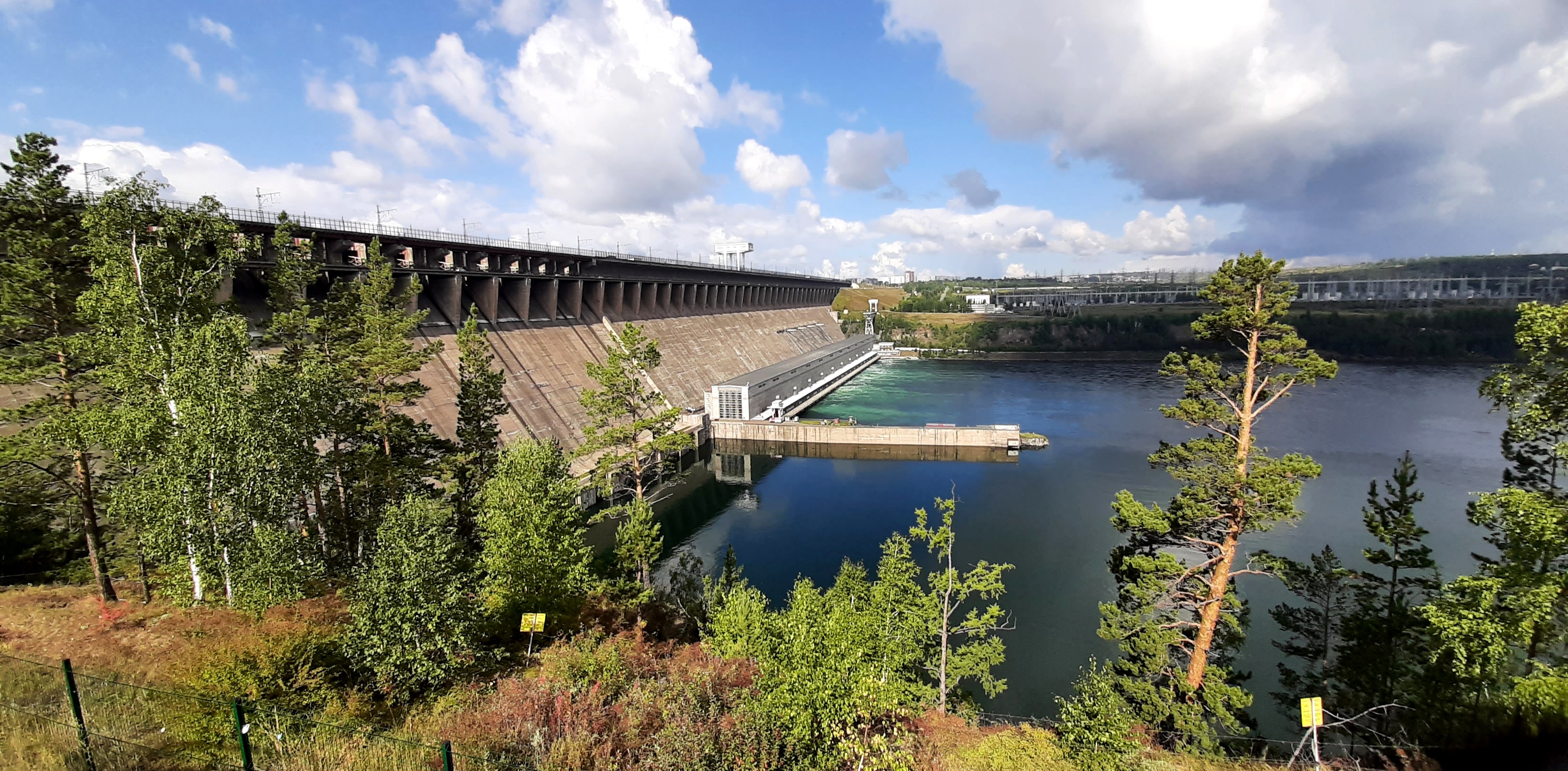
18 August 2021. A modern view of the Bratsk dam; not an archival photograph.
2021

The dam decades later

18 August 2021. A modern view of the Bratsk dam; not an archival photograph.

Andrijko Z. · Wikimedia Commons
CC BY-SA 4.0 · Original ↗
Real trains cross the dam

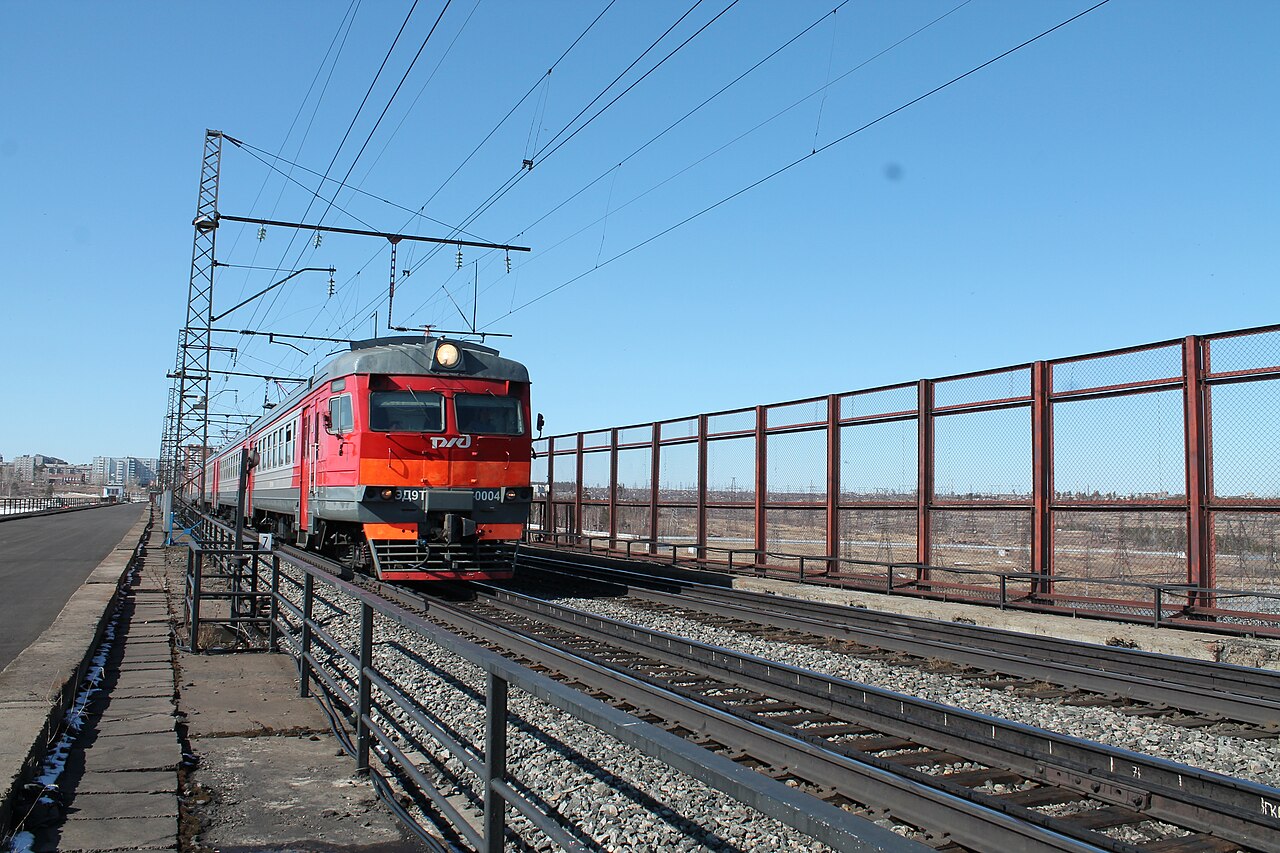
The crest of Bratsk Dam also carries a transport crossing over the Angara. Permanent railway traffic opened on 16 June 1965. A train above the power station is therefore everyday infrastructure rather than a construction prop. The structure simultaneously holds back water, generates electricity and connects communities on opposite sides of the river.

7 April 2016. Train on the dam crest. A later photograph of equipment and structures, rather than a construction-era image.
2016

Train on the dam crest

7 April 2016. Train on the dam crest. A later photograph of equipment and structures, rather than a construction-era image.

Сайга · Wikimedia Commons
CC BY-SA 4.0 · Original ↗
Two reservoirs meet at one dam

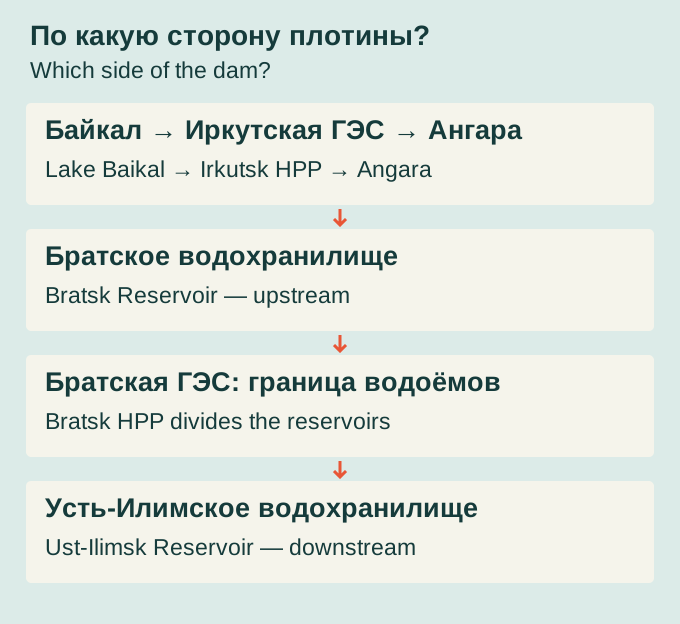
Bratsk Reservoir lies upstream of the dam, while Ust-Ilimsk Reservoir begins downstream. Different water levels and an operating power station separate them. A map can make them look like one continuous stretch of water. They are successive stages of the Angara cascade, with water leaving Bratsk continuing towards the next major hydroelectric station.

Original flow-order diagram showing the two reservoirs relative to Bratsk dam. It represents neither scale nor distances and does not show the entire Angara cascade.
2026 · схема / diagram

Which side of the dam?

Original flow-order diagram showing the two reservoirs relative to Bratsk dam. It represents neither scale nor distances and does not show the entire Angara cascade.

bratsk.com · bratsk.com
CC BY 4.0 · Original ↗

Bratsk resembles an archipelago of neighbourhoods

The Centre, Energetik, Padun and the Right Bank do not form one continuous urban grid. Forest, water and industrial land separate residential areas. This geography grew out of major construction projects and resettlement. Travelling between two Bratsk addresses can consequently feel like going between separate small towns, although they belong to the same city.

Bratsk has two birthdays more than three centuries apart

Bratsk traces its historical beginnings to the first fort founded in 1631. Modern Bratsk received city status on 12 December 1955. Both dates are meaningful: one marks a frontier stronghold, the other the creation of the industrial city. Together they connect the Angara region’s early history with the enormous transformations of the twentieth century.

The name preserves an old Russian term for the Buryats

Older Russian usage referred to the Buryats as bratskiye lyudi. The Great Soviet Encyclopedia explains the name of Bratsk Fort, and later the city, through this expression. A familiar modern place name therefore preserves an older layer of the Angara region’s history: encounters, exchange and complex relations between peoples long before the dam and factories.

Bratsk became a city of five major Komsomol projects

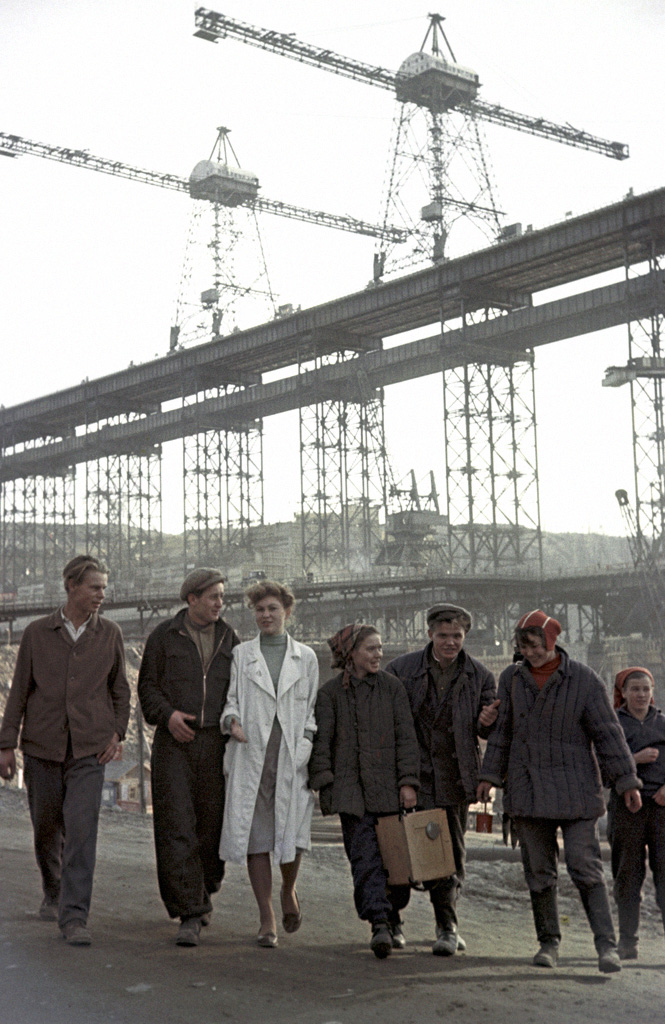
Local history identifies five major Komsomol construction projects: the hydroelectric station, aluminium smelter, timber complex, 500-kilovolt power line and the city itself. That final entry matters. Workers needed homes, schools, hospitals and cultural institutions as well as industrial buildings. Building a functioning city formed part of the same enormous undertaking.

1 March 1960. Builders at the Bratsk dam.
1960

The people who built it

1 March 1960. Builders at the Bratsk dam.

Алексей Бушкин / Alexey Bushkin · РИА Новости / RIA Novosti, № 699661
CC BY-SA 3.0 · Original ↗

The new construction settlement began with a tent town

The mid-1950s tent settlement known as Zelyony Gorodok became a symbol of the dam’s early construction years. Before avenues, the completed power station and cultural institutions came temporary accommodation and the practical demands of establishing a new settlement. This tent-town story belongs to the post-war construction project; old Bratsk already had several centuries of history.

The new reservoir reshaped the city’s aviation geography

The construction era’s first unpaved airfield opened in 1956. Its site lay in the area affected by the future reservoir, so aviation infrastructure had to move. The airport’s history is consequently a story of changing locations. Filling the reservoir reshaped not only villages and roads but also the growing city’s connection to air transport.

The airport monument is a real working-life Yak-40

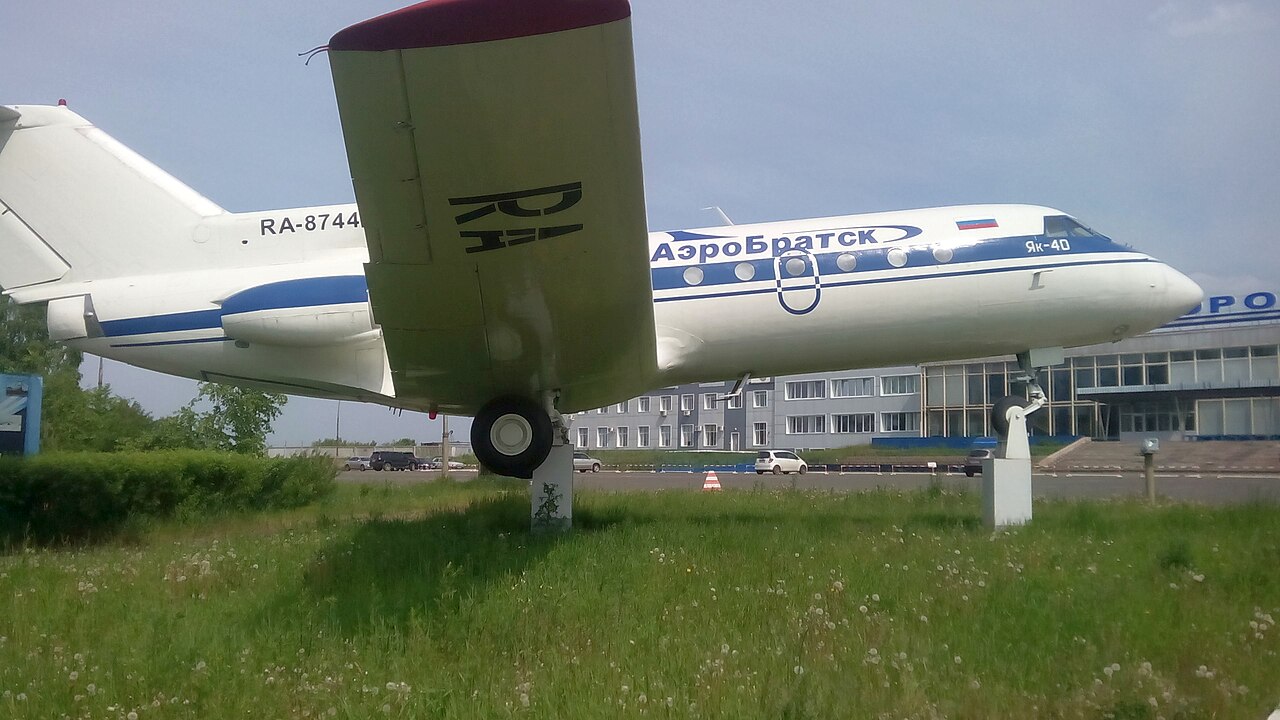
Yak-40 RA-87448 became an airport monument in 2014. Built in 1974, it had worked in Bratsk since 1980. The aircraft is a surviving participant in local aviation history, with an identifiable service record. Its compact passenger airframe recalls the regional routes that connected Siberian communities across distances difficult to cover by road.

22 June 2016. The aircraft monument outside the airport terminal, photographed after installation.
2016

Yak-40 outside the terminal

22 June 2016. The aircraft monument outside the airport terminal, photographed after installation.

Majskij · Wikimedia Commons
CC BY-SA 4.0 · Original ↗
You can catch a train on Dreamers Street

Padunskiye Porogi station stands at 30 Mechtateley Street in Energetik: literally, Dreamers Street. The hopeful vocabulary of the construction era has become an everyday travel address. Bratsk’s railway services are spread across several stations, so knowing the city name alone is insufficient. Even dreamers need to check which station appears on their ticket.

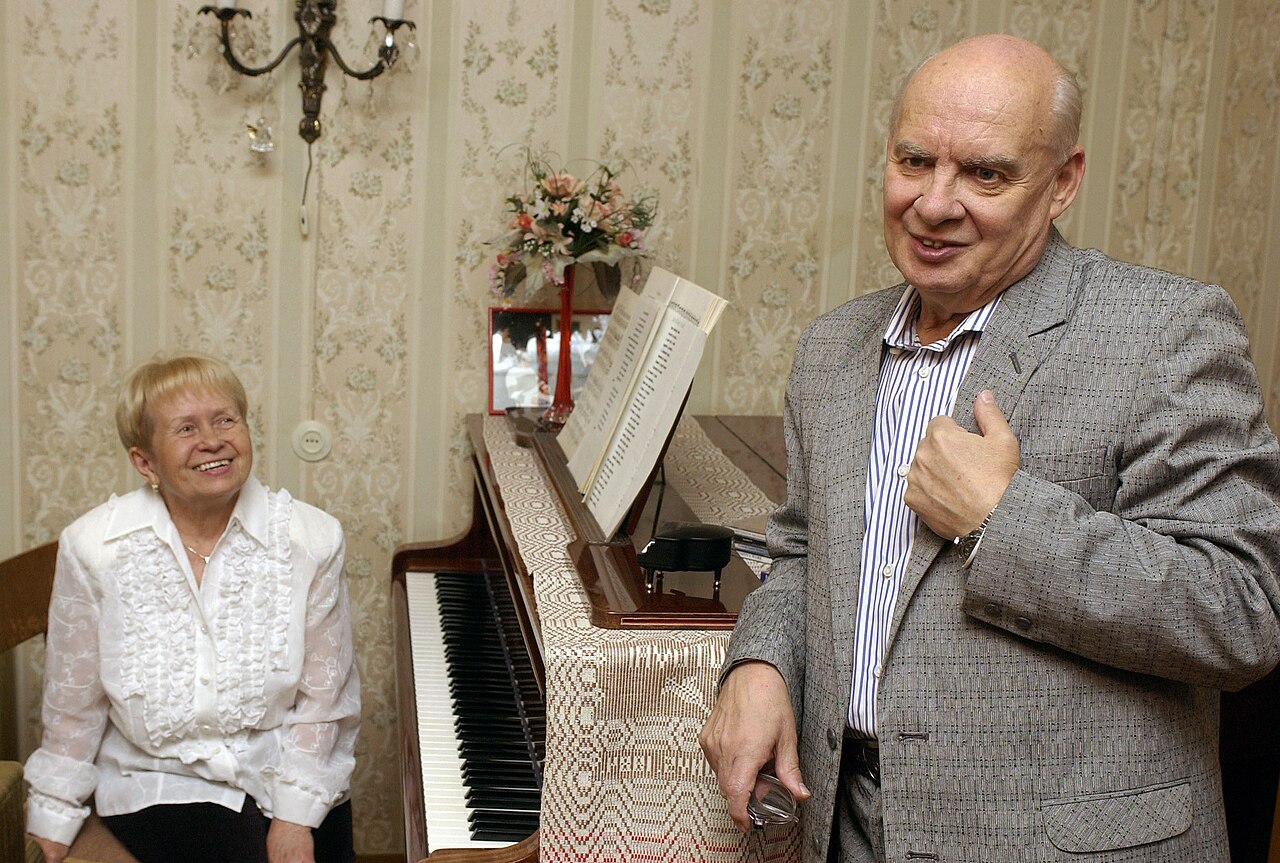
Bratsk has its own Pakhmutova farewell song

The city library dates Alexandra Pakhmutova and Nikolai Dobronravov’s Farewell to Bratsk to 1968. The song became part of the construction era’s musical memory, rooted in the writers’ visits and encounters with local people. Through music heard across the country, experiences associated with Bratsk travelled far beyond the Angara region.

9 November 2004. Alexandra Pakhmutova at the piano with Nikolai Dobronravov. A later portrait, not a Bratsk visit. Sergei Grebennikov is not pictured.
2004

Pakhmutova and Dobronravov

9 November 2004. Alexandra Pakhmutova at the piano with Nikolai Dobronravov. A later portrait, not a Bratsk visit. Sergei Grebennikov is not pictured.

Пресс-служба Президента России / Presidential Press Service · Kremlin.ru / Wikimedia Commons
CC BY 3.0 · Original ↗

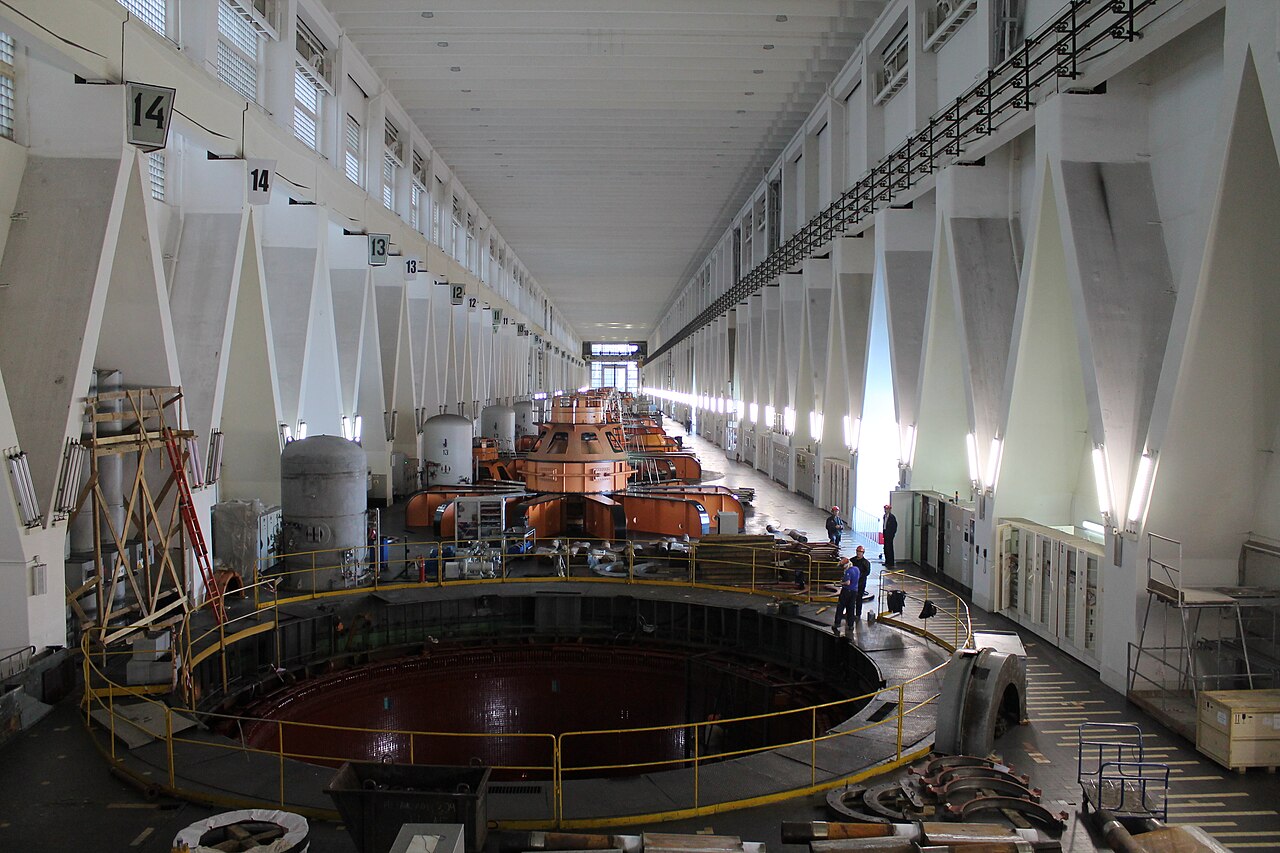
Eighteen generating units make up the station

Bratsk HPP has eighteen generating units and an installed capacity of 4,500 megawatts. Capacity describes the equipment; actual electricity production varies with water availability and power-system operation. Inside the turbine hall, the scale becomes easier to understand: the station consists of a series of individual units, each combining a turbine and generator.

7 April 2016. Machine hall. A later photograph of equipment and structures, rather than a construction-era image.
2016

Machine hall

7 April 2016. Machine hall. A later photograph of equipment and structures, rather than a construction-era image.

Сайга · Wikimedia Commons
CC BY-SA 4.0 · Original ↗
Bratsk was Russia’s first hydro station to reach a trillion kWh

On 13 January 2010, Bratsk HPP’s lifetime electricity production reached one trillion kilowatt-hours. The figure accumulated over decades of operation. The System Operator later identified Krasnoyarsk in 2023 and Ust-Ilimsk in 2025 as the next Russian hydro stations to reach this milestone. It is an unusually memorable number in the station’s operating history.

Fidel Castro visited the dam construction site

Fidel Castro visited Bratsk HPP on 13 May 1963, while construction was still under way and the final generating units had yet to be installed. The visit illustrates the project’s international visibility before completion. It became one of the city’s most recognisable encounters with world politics during the industrial construction era.

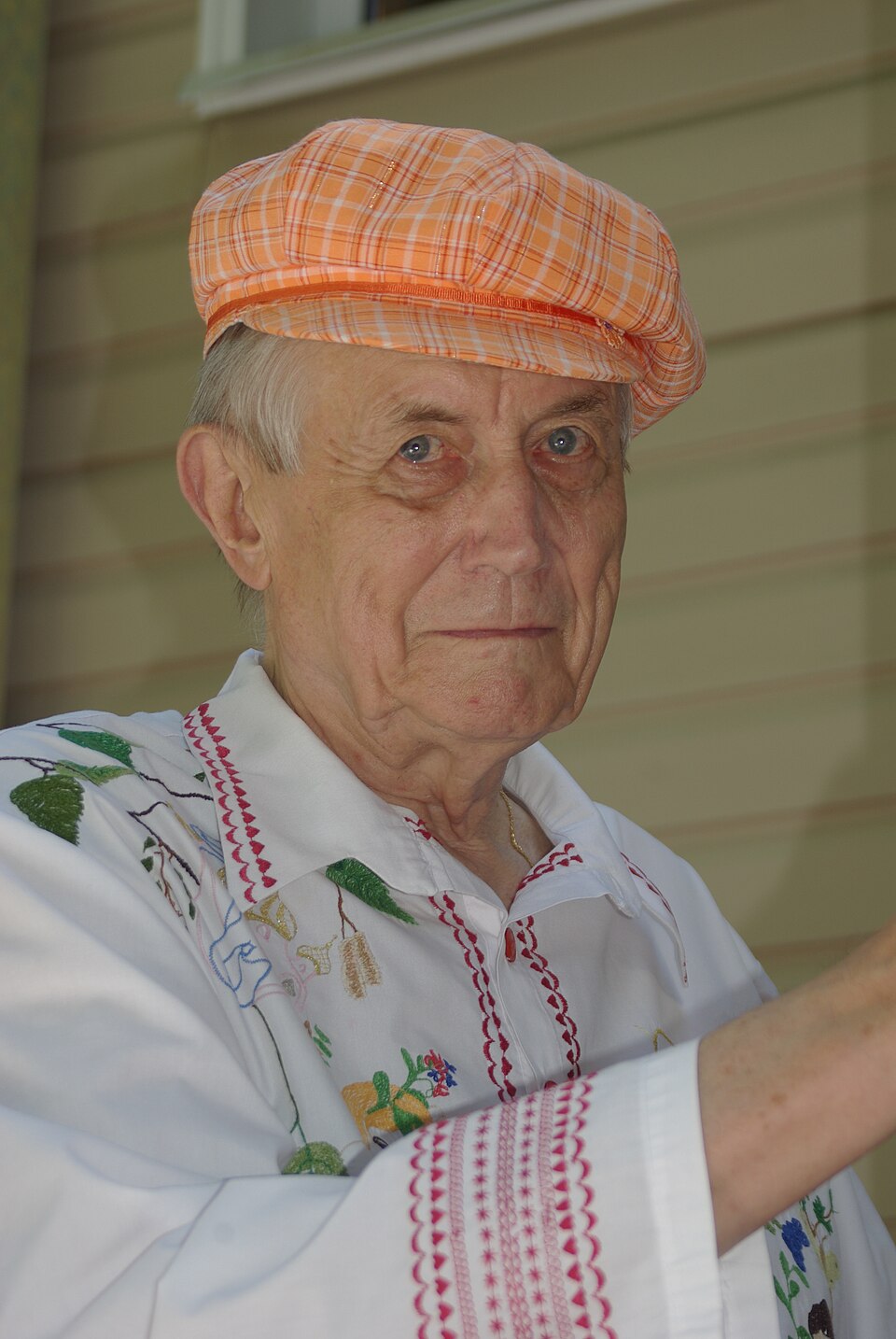
The power station became the title of a Yevtushenko poem

Yevgeny Yevtushenko titled a major poem Bratsk Hydroelectric Station. Fred Yusfin recalled a reading at Bratsk’s Energetik cultural centre on 3 May 1964, following the poet’s earlier encounters with the city. The industrial structure entered literature as an image of its era, its hopes and its arguments about the future.

July 2010. Yevtushenko in Peredelkino, photographed decades after the Bratsk visits described here.
2010

Yevgeny Yevtushenko

July 2010. Yevtushenko in Peredelkino, photographed decades after the Bratsk visits described here.

Rodrigo Fernández · Wikimedia Commons
CC BY-SA 3.0 · Original ↗
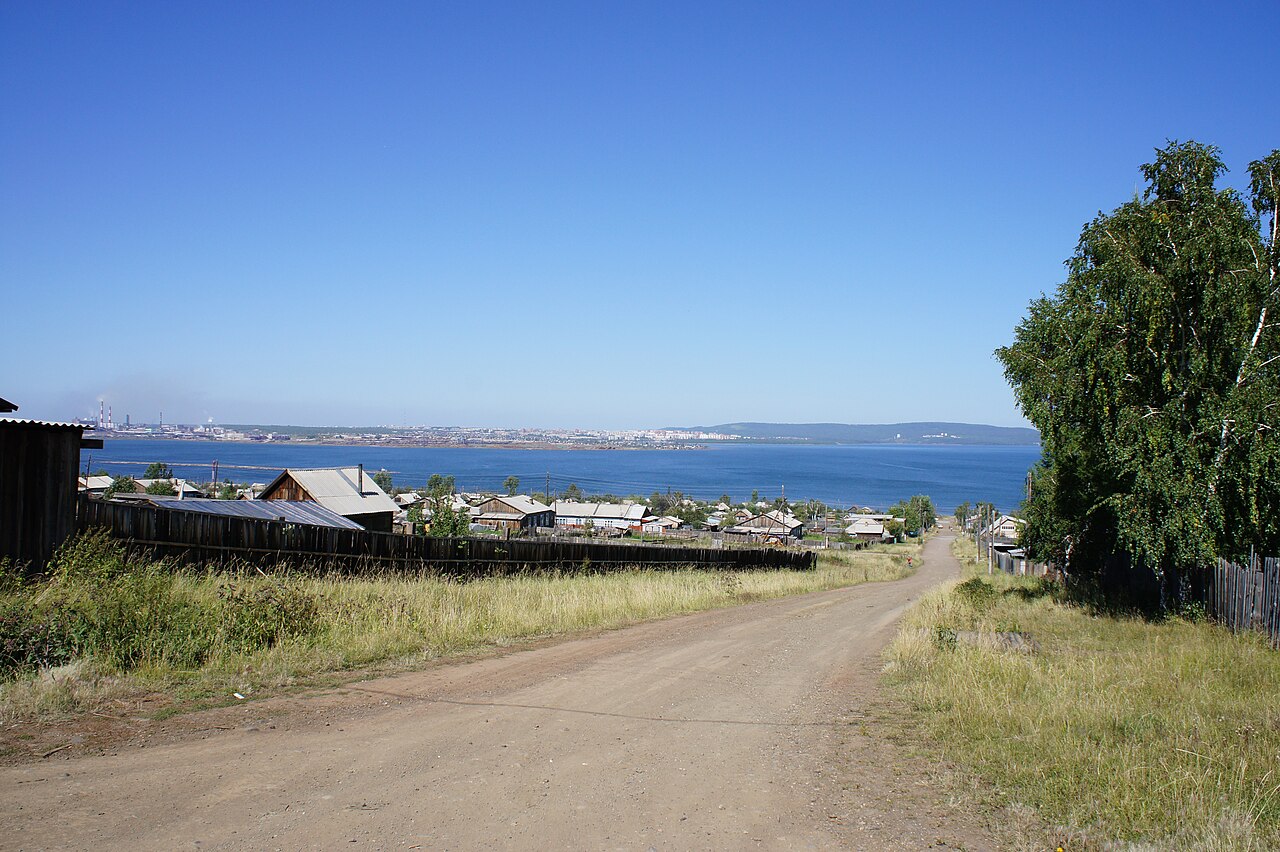
The local “sea” has an enormous physical scale

At its normal operating level, Bratsk Reservoir covers approximately 5,470 square kilometres and holds a total volume of 169.3 cubic kilometres. These design figures correspond to a specified water level. Filling took place in 1961–1967. The local description “sea” conveys the vast scale of its open water and branching bays.

22 August 2010. A view from Porozhsky towards the reservoir, with wooden homes and a street in the foreground.
2010

Porozhsky and the Bratsk Sea

22 August 2010. A view from Porozhsky towards the reservoir, with wooden homes and a street in the foreground.

Сергей Чубуков · Wikimedia Commons
CC BY 3.0 · Original ↗
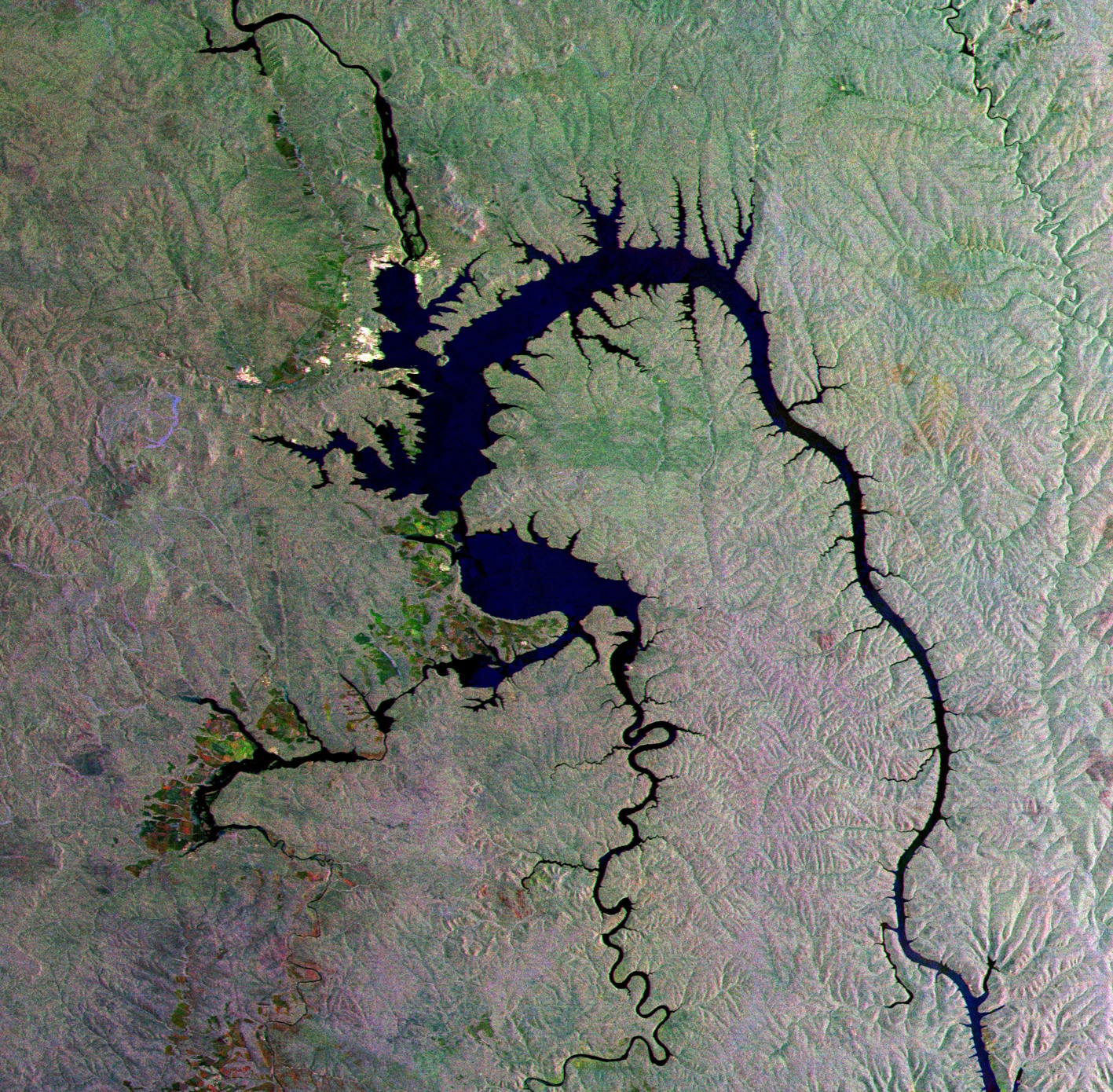
ESA saw a “Siberian gecko” in the reservoir

On 17 December 2010, the European Space Agency published an image of Bratsk Reservoir titled Siberian gecko. Its branching arms resemble a lizard’s body and limbs. The image uses Envisat radar data, with colours produced through processing. It reveals the reservoir’s overall shape on a scale impossible to grasp from the shore.

ESA’s radar image “Siberian gecko”, published on 17 December 2010. The branching outline follows inundated valleys. Colours reflect radar imaging and processing, rather than an ordinary natural-colour aerial photograph. Publication is not presented as the exact acquisition date.
≤ 2010

Bratsk Reservoir from Envisat

ESA’s radar image “Siberian gecko”, published on 17 December 2010. The branching outline follows inundated valleys. Colours reflect radar imaging and processing, rather than an ordinary natural-colour aerial photograph. Publication is not presented as the exact acquisition date.

ESA · ESA / Envisat
CC BY-SA 3.0 IGO · Original ↗

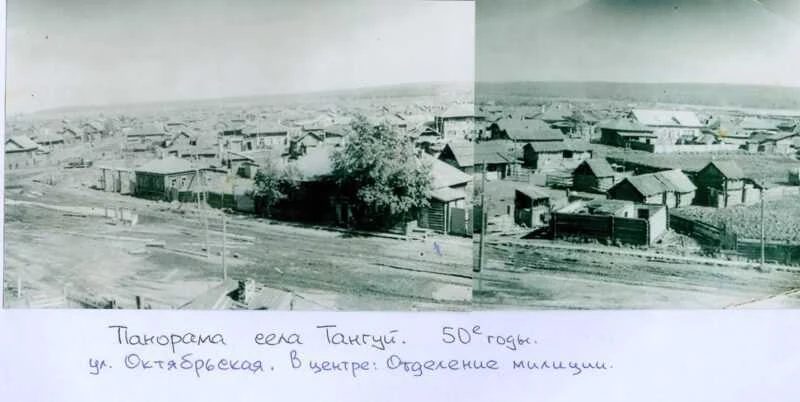
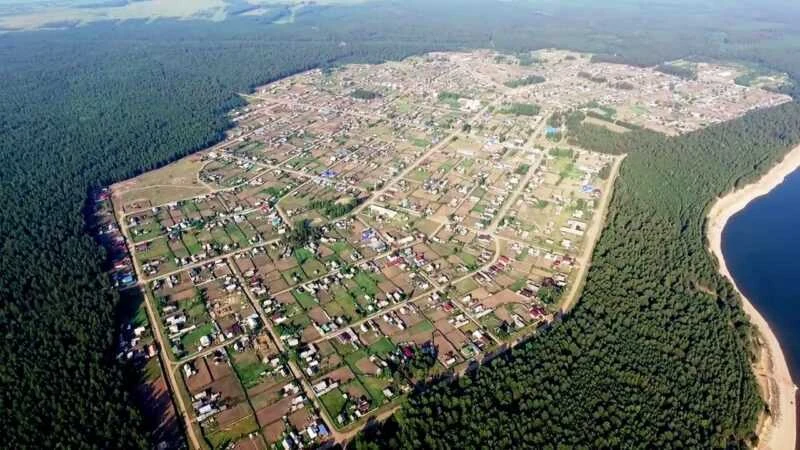
Old and new Tangui occupy different places

Creating the reservoir required settlements to relocate. Tangui offers a particularly clear example: historical photographs show the village before flooding, while modern images show its successor on a new site. Their comparison tells a relocation story. Behind the reservoir’s vast statistics are family moves, rebuilt homes and a familiar village name carried to new ground.

Archival panorama identified as Tangui in the 1950s in the municipal publication. Timber buildings and a village street are visible. Old and new Tangui occupy different sites.
1950-е · 1950s

Panorama of old Tangui

Archival panorama identified as Tangui in the 1950s in the municipal publication. Timber buildings and a village street are visible. Old and new Tangui occupy different sites.

Автор не указан / photographer not identified · Музей с. Тангуй / администрация Братского района
© правообладателя / rights reserved · Original ↗

2022, according to the source caption. The relocated village has streets, homesteads, forest and a reservoir shore. It is not a repeat view from the same position as the old Tangui panorama.
2022

New Tangui from above

2022, according to the source caption. The relocated village has streets, homesteads, forest and a reservoir shore. It is not a repeat view from the same position as the old Tangui panorama.

Автор не указан / photographer not identified · Музей с. Тангуй / администрация Братского района
© правообладателя / rights reserved · Original ↗

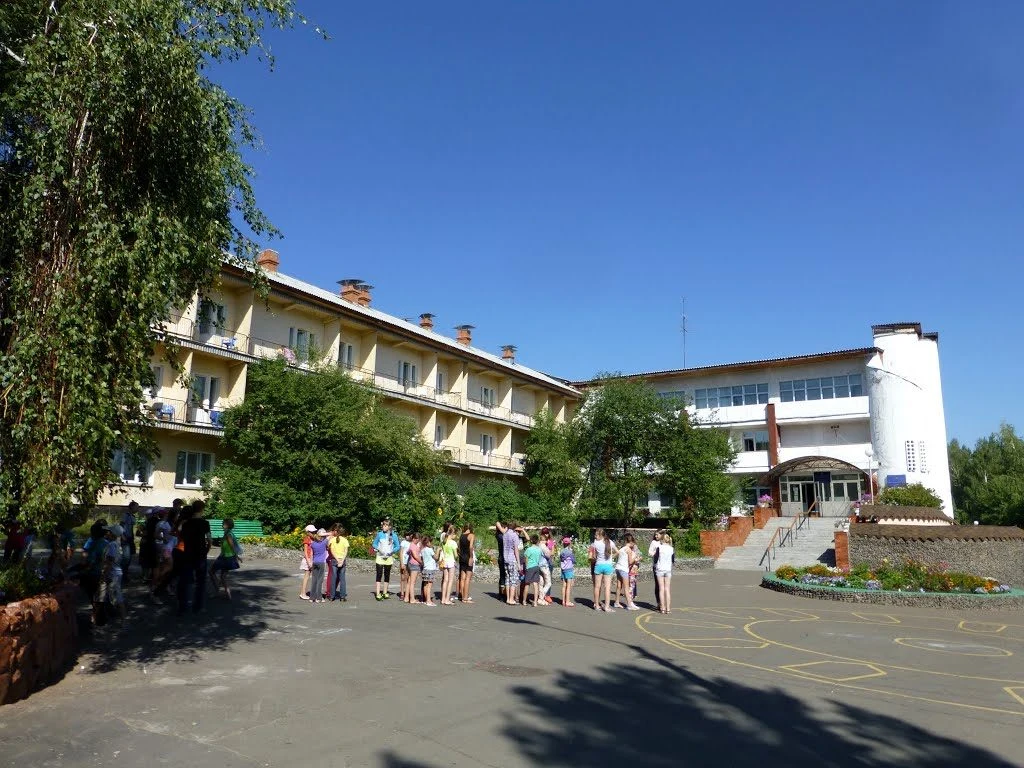
A seaside-style holiday home opened while the reservoir was filling

Bratskoye Vzmorye holiday home opened beside Zyaba Bay on 26 July 1966, while the reservoir was still filling. Industrial construction was quickly accompanied by a new leisure landscape of forest, shoreline and organised holidays, later developing into sanatorium life. Its name, evoking a seashore, gave inland Siberia a distinctly maritime association.

Lead illustration in TK Gorod’s report of 23 April 2019, showing the buildings and grounds. The photograph’s exact date is not supplied. It is neither an opening-year image from 1966 nor confirmation of present guest operations.
≤ 2019

Bratskoye Vzmorye buildings

Lead illustration in TK Gorod’s report of 23 April 2019, showing the buildings and grounds. The photograph’s exact date is not supplied. It is neither an opening-year image from 1966 nor confirmation of present guest operations.

Автор снимка не указан / photographer not identified · ТК «Город» / репортаж 2019 года
© правообладателя / rights reserved · Original ↗

An Evenki camp and Russian farmsteads share one museum

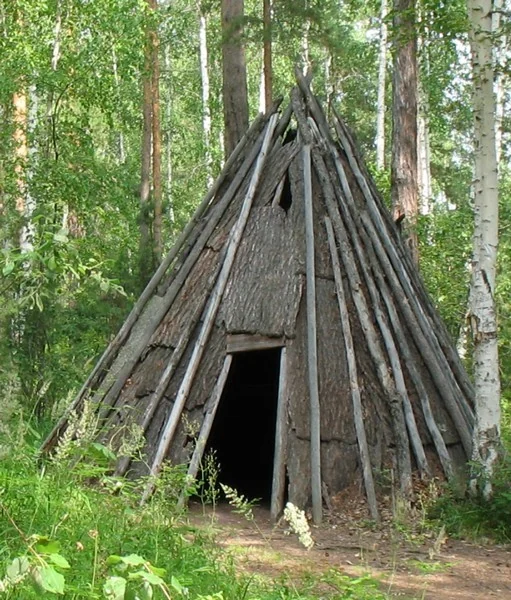
Angarskaya Derevnya’s open-air museum presents different traditions of the Angara region. Its Evenki sector explains a forest camp, while its Russian sector contains houses, granaries and farmyards. Walking between them reveals different ways of living within the same region, connecting buildings with the forest, river and practical organisation of everyday life.

A reconstructed bark-covered dwelling in the Evenki sector.
б/д · undated

A bark-covered chum

A reconstructed bark-covered dwelling in the Evenki sector.

Фотограф не указан / Photographer not named · Братский городской объединённый музей / Bratsk City Museum
© Bratsk City Museum · официальная музейная публикация / official museum publication · Original ↗

Two original Bratsk fort towers stand in different cities

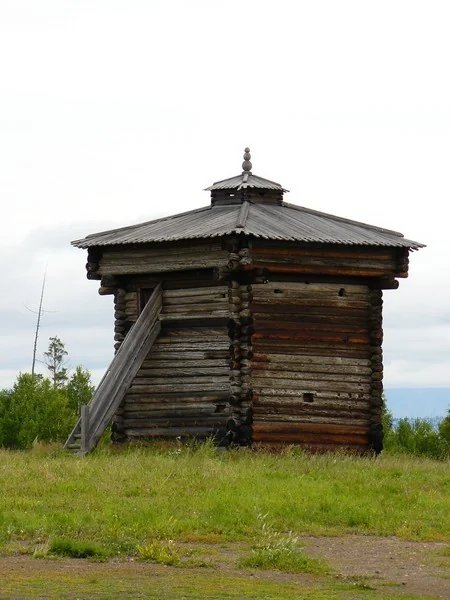
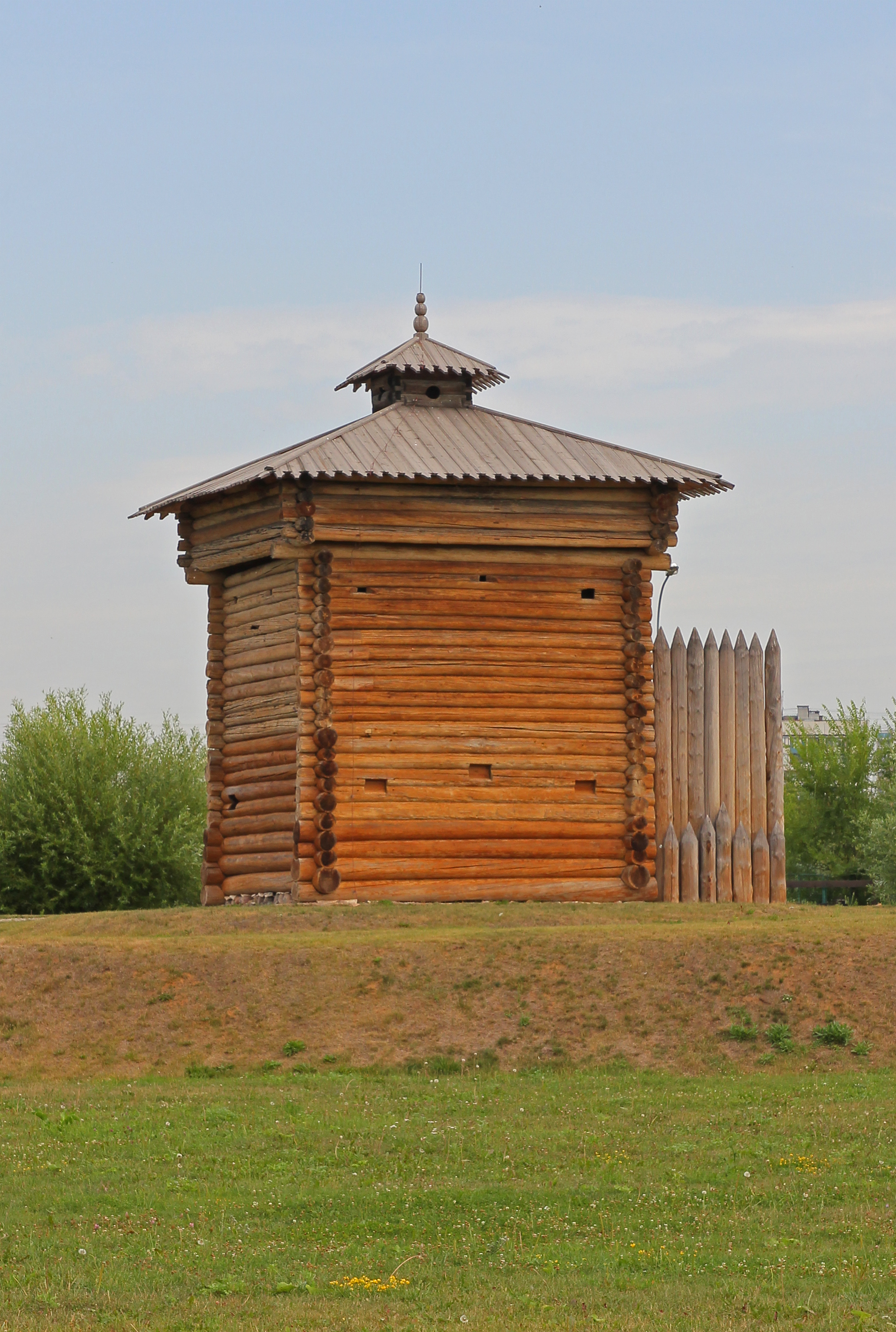
One surviving Bratsk fort tower stands at Angarskaya Derevnya; another is preserved at Kolomenskoye in Moscow. Wooden monuments were rescued and moved before the reservoir transformed their original setting. Visitors can therefore encounter authentic Bratsk architecture both beside the Angara and in the capital, with relocation and restoration forming part of each tower’s history.

The southwest tower at Angara Village. A 2026 study dates the surviving towers to 1685, revising the traditional museum date of 1654.
б/д · undated

An original Bratsk Ostrog tower

The southwest tower at Angara Village. A 2026 study dates the surviving towers to 1685, revising the traditional museum date of 1654.

Фотограф не указан / Photographer not named · Братский городской объединённый музей / Bratsk City Museum
© Bratsk City Museum · официальная музейная публикация / official museum publication · Original ↗

26 July 2011. The relocated tower in Kolomenskoye, Moscow. A modern photograph of a historic structure.
2011

A tower of Bratsk Ostrog

26 July 2011. The relocated tower in Kolomenskoye, Moscow. A modern photograph of a historic structure.

А.Савин, Википедия / A.Savin, Wikipedia · Wikimedia Commons
CC BY-SA 3.0 · Original ↗

Tree rings helped establish the towers’ age

A study published in 2026 dates the Bratsk fort towers to 1685. Researchers compared the logs’ annual growth rings and placed timber harvesting between autumn 1684 and spring 1685. Dendrochronology refined earlier dating. Even a familiar monument can yield new historical information when its surviving wood is examined with scientific methods.

The museum’s carved elk is far older than the fort

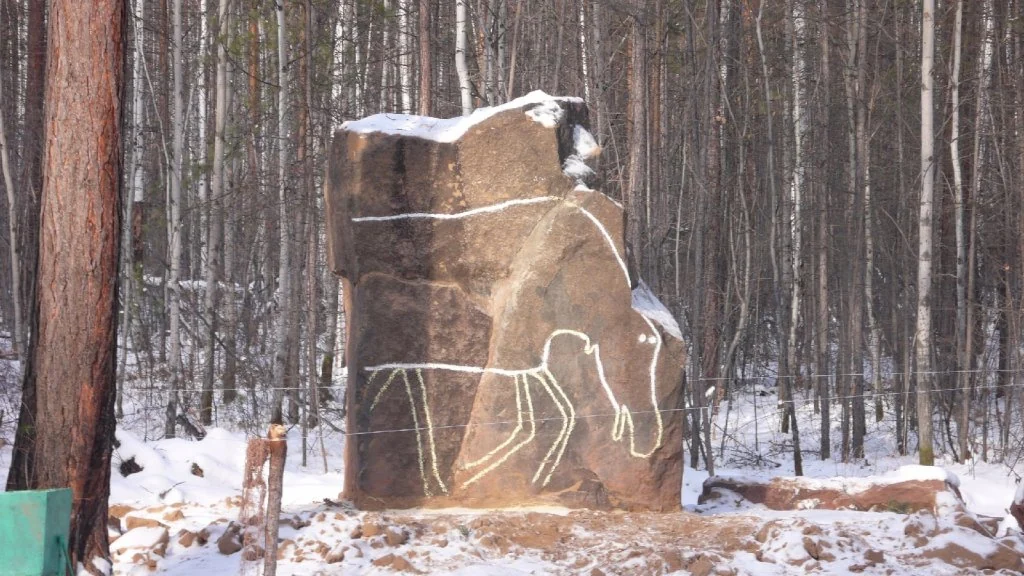
Near the entrance to Angarskaya Derevnya stands a rock bearing an elk petroglyph. The museum estimates the image’s age at five to eight thousand years. This is the institution’s stated estimate. A light outline makes the figure visible in the photograph, introducing a human history thousands of years older than the region’s Russian forts.

A salvaged rock-art fragment displayed at the museum. A pale outline makes the figure easier to see in this photograph; the museum estimates the image at 5,000–8,000 years old.
б/д · undated

A rock bearing an elk image

A salvaged rock-art fragment displayed at the museum. A pale outline makes the figure easier to see in this photograph; the museum estimates the image at 5,000–8,000 years old.

Фотограф не указан / Photographer not named · Братский городской объединённый музей / Bratsk City Museum
© Bratsk City Museum · официальная музейная публикация / official museum publication · Original ↗

A wooden church travelled here from the Lower Tunguska

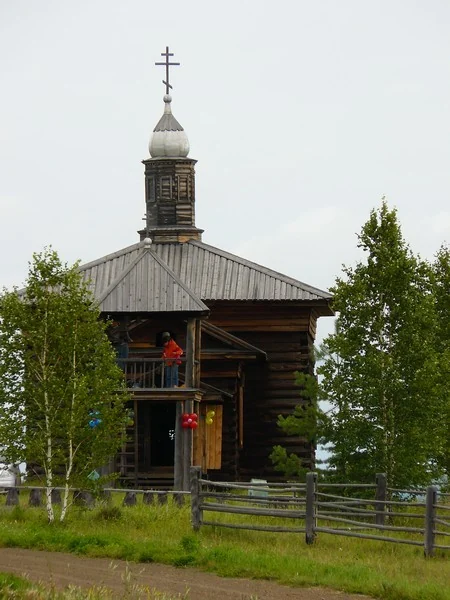
The 1875 Church of the Archangel Michael at Angarskaya Derevnya came from Nizhneye Karelino in Kirensk District, on the Lower Tunguska. Its journey extends the museum’s geography well beyond Bratsk’s immediate surroundings. A preserved building from another Siberian settlement now contributes to the broader story of the region’s wooden architecture.

The 1875 church from Nizhne Karelino, Kirensk district, relocated to the museum. It comes from the wider region, rather than old Bratsk itself.
б/д · undated

Church of the Archangel Michael

The 1875 church from Nizhne Karelino, Kirensk district, relocated to the museum. It comes from the wider region, rather than old Bratsk itself.

Фотограф не указан / Photographer not named · Братский городской объединённый музей / Bratsk City Museum
© Bratsk City Museum · официальная музейная публикация / official museum publication · Original ↗

A stove inscription helped date a house

The Chupin family estate from Anchirikovo contains a small but valuable clue: an inscription on its clay stove helped establish 1925 as the house’s construction year. Donated to the museum, it became the fifth Russian farmstead opened in 2022. An everyday domestic object can preserve information essential to understanding an entire building.

One museum farmstead can bring several villages together

The Nepomiluev farmstead illustrates how an ethnographic display is assembled. Its layout draws on Nizhnyaya Shamanka; its 1891 house and two-storey granary came from Petropavlovsk, with other buildings from Anchirikovo. Authentic structures from several places form an interpretive ensemble explaining the organisation of a traditional Angara farming household.

BrAZ was the first smelter to produce a million tonnes in a year

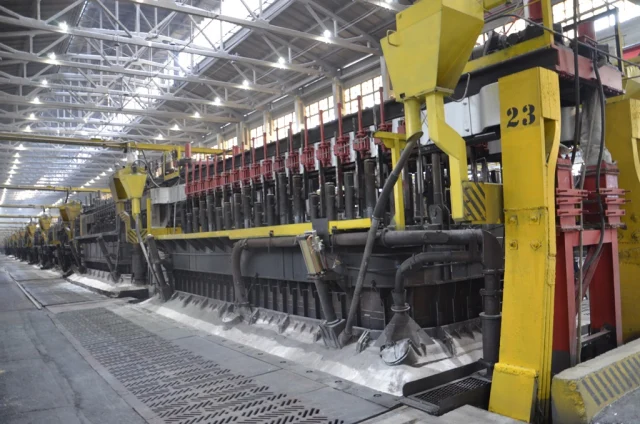
In December 2008, Bratsk Aluminium Smelter became the world’s first aluminium smelter to produce one million tonnes within a calendar year, according to the plant’s published history. This is a specific annual production achievement. The scale helps explain the growth of residential districts, transport links and social infrastructure alongside the industrial complex.

Production photograph accompanying the BrAZ director’s interview of 5 December 2025. It shows an existing hall, not the proposed RA-550 project.
≤ 2025

A row of reduction pots

Production photograph accompanying the BrAZ director’s interview of 5 December 2025. It shows an existing hall, not the proposed RA-550 project.

Автор не указан / photographer not identified · БрАЗ / Bratsk.org
© правообладателя / rights reserved · Original ↗

The first pulp wagon went to Transcarpathia

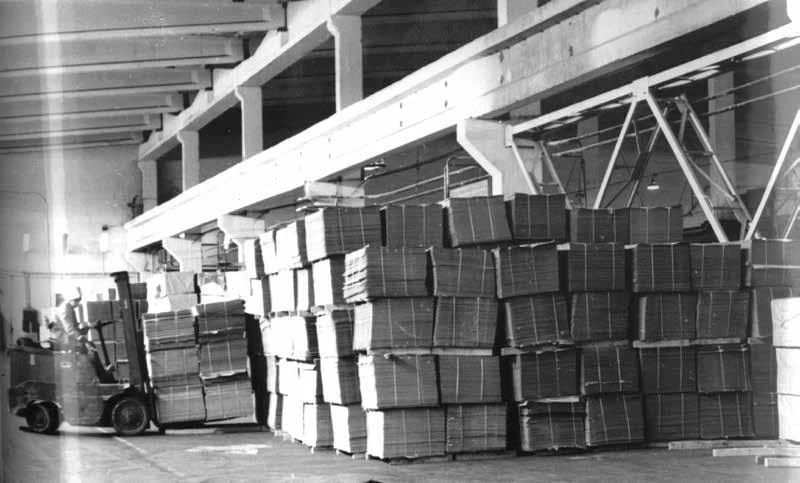
On 5 November 1965, the Bratsk timber complex dispatched its first wagon of pulp: thirty-eight tonnes bound for the Rakhiv cardboard factory in Transcarpathia. The industrial milestone has an identifiable cargo and destination. A construction project was becoming a supplier, connecting processed Siberian timber with manufacturing far beyond the city.

Archival illustration accompanying the first-dispatch story, printed page 13 of the anniversary chronicle. It shows pulp in its commercial bale form; no exact shooting date is supplied.
б/д · undated

Pulp bales in storage

Archival illustration accompanying the first-dispatch story, printed page 13 of the anniversary chronicle. It shows pulp in its commercial bale form; no exact shooting date is supplied.

Автор не указан / photographer not identified · Архив Группы «Илим» / Ilim Group archive
© правообладателя / rights reserved · Original ↗

Timber-complex specialists trained in Sweden

Building the timber complex involved international technical learning. Specialists trained in Sweden to operate Swedish equipment; biographical accounts of Ivan Olontsev describe these visits and groups of workers. Starting a huge industrial plant depended on individual people learning new technology, equipment adjustment and the practical demands of day-to-day operation.

A 2020 start-up connected Bratsk with Sweden remotely

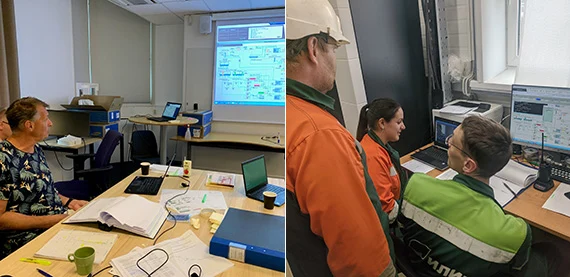
During the pandemic, Valmet supported the commissioning of a new evaporation line in Bratsk remotely. Teams in Gothenburg and at the plant exchanged operational information and video, with start-up in early July 2020. The project added a new form of international cooperation to the complex’s history: bringing industrial equipment into service with remote supplier support.

Valmet composite showing the remote team in Gothenburg and staff at the Bratsk site, documenting cooperation during 2020 travel restrictions.
2020

The teams on both sides of remote commissioning

Valmet composite showing the remote team in Gothenburg and staff at the Bratsk site, documenting cooperation during 2020 travel restrictions.

Автор не указан / photographer not identified · Valmet
© правообладателя / rights reserved · Original ↗

Bratsk pulp entered the tyre-industry supply chain

On 29 April 1967, the timber complex produced an experimental batch of improved bleached pulp for the cord industry. Cord is a reinforcing material used in products including tyres. The episode illustrates how chemical processing takes wood-derived material into applications well beyond the familiar worlds of paper and cardboard.

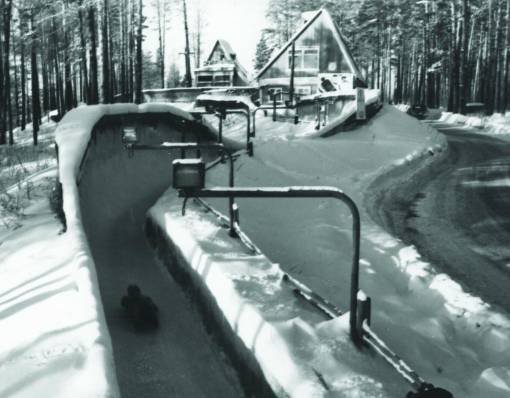
The first luge track was built in under three months

The Russian Luge Federation records construction of Bratsk’s track beginning in early September 1971, with athletes riding it by 20 November. The school marks its birthday on 25 December that year. An intense autumn building effort developed into a lasting sporting tradition that brought the city into international luge.

From the Olimp school collection published by the federation on 28 December 2021 for Bratsk luge’s fiftieth anniversary. Photograph date and individual identities are not specified; no particular competition is asserted.
≤2021

The ice chute at Pikhtovaya

From the Olimp school collection published by the federation on 28 December 2021 for Bratsk luge’s fiftieth anniversary. Photograph date and individual identities are not specified; no particular competition is asserted.

Фотограф не указан; материал СШОР «Олимп» / Photographer not stated; supplied by Olimp school · Федерация санного спорта России / Russian Luge Federation
Перепечатка с активной ссылкой / Reuse with an active source link · Original ↗

Valery Dudin connected Bratsk luge with Olympic bronze

Valery Dudin won bronze in men’s singles luge at the 1984 Sarajevo Winter Olympics. Olympedia records his club as Dynamo Bratsk, providing a clear link between the local sporting environment and an Olympic podium. The few moments of a competitive run represented years of preparation within a demanding Siberian training tradition.

Bratsk helped train an athlete who entered seven consecutive Winter Games

Albert Demchenko competed at seven consecutive Winter Olympics, from 1992 through 2014. His sporting biography includes several years of training in Bratsk. Born in Chusovoy, he is linked to Bratsk through that period of preparation. The city thus forms part of a career remarkable for its longevity across successive generations of Olympic competition.

A route from Sibiryak led to Russia’s home World Cup

Fyodor Kudryashov grew up in Bratsk and began his professional career with Sibiryak. His Russian Football Union profile records four appearances for Russia at the 2018 World Cup. Born in Mamakan, he developed as a footballer in Bratsk. The local club’s history therefore connects directly with the world’s biggest national-team tournament.

Fyodor Kudryashov at Russia’s training session on 9 June 2018.
2018

Preparing for the World Cup

Fyodor Kudryashov at Russia’s training session on 9 June 2018.

Антон Зайцев / Anton Zaitsev · soccer.ru / Wikimedia Commons · WebP conversion
CC BY-SA 3.0 · Original ↗

Bratsk had a top-division bandy team

Metallurg Bratsk, established in 2000 with the aluminium smelter, played in the top division of Russian bandy and reached the play-off stage in 2004/05. The club ceased operating in 2008. Its story adds another dimension to the city’s sporting past alongside luge tracks and the football stadium.

Tirlyamy takes its name from a local writer’s characters

The puppet theatre’s unusual name comes from characters created by Bratsk writer Gennady Mikhasenko. A production about the Tirlyamy appeared in 1984, and the theatre adopted their name in 1998. A literary invention became part of the city’s cultural identity and children’s memories, with a distinctive local story behind the unfamiliar word.

A stage image from the feature marking Tirlyamy’s fifty-fifth anniversary, published on 28 October 2023. The photograph’s precise shooting date is unspecified.
≤2023

On Tirlyamy’s stage

A stage image from the feature marking Tirlyamy’s fifty-fifth anniversary, published on 28 October 2023. The photograph’s precise shooting date is unspecified.

Фотограф не указан / Photographer not named · Глагол · 28.10.2023
© Правообладатель снимка / Image rights holder; источник: Глагол · Original ↗

The drama theatre moved into a former cinema

Bratsk Drama Theatre began work in Padun in 1986 and moved into the former Rossiya cinema in 2003. The company’s history and that of its present premises consequently have different starting points. The building retained its cultural purpose while changing medium: a place for film screenings became a permanent home for live performance.

A familiar children’s verse has a Bratsk connection

Yuri Chernykh, author of the well-known children’s poem Na lugu pasutsya ko…, lived and worked in Bratsk from 1963. An engineer-economist by profession, he reached readers far beyond the city through playful verse. Bratsk’s central children’s library bears his name, linking its industrial history with a familiar strand of Russian childhood culture.

The turbine hall became a Lenfilm shooting location

The city library records the first shots of The Fifth Quarter being filmed in Bratsk HPP’s turbine hall in summer 1972. Based on Gennady Mikhasenko’s story, the film also concerns construction at Ust-Ilimsk. Bratsk held a premiere screening at the Rossiya cinema on 25 September 1973: an industrial workspace had entered the world of feature film.

An engineer’s collection became a poetry library

Viktor Serbsky combined engineering, writing poetry and collecting poetry books. In December 1991, a decision was made to establish a library of twentieth-century Russian poetry from his collection; it opened in 1992. A private passion developed into a public institution, giving the city a lasting literary resource built through years of personal collecting.

A future Rolling Stones photographer grew up in Bratsk

Igor Vereshchagin’s family moved to Bratsk in 1956, and he grew up here. He later developed a music-photography career that included photographing the Rolling Stones’ Moscow concert in 1998. His biography connects the industrial city with rock photography: an early local environment formed part of a career that reached a very different international audience.

An energy specialist founded the Varyag youth camp

Fred Yusfin worked in the energy industry while organising cultural and youth activities. In 1968 he established Varyag, a camp built around nautical training and its own educational traditions. His work received the Lenin Komsomol Prize in 1986. This strand of Bratsk’s maritime imagination grew through someone whose principal profession was in hydroelectric power.

Golos Angary first went on air in November 1995

Golos Angary marks 7 November 1995 as its birthday and celebrated thirty years in 2025. Its history is associated with Yuri Osintsev and the growth of local commercial broadcasting. Familiar presenters, local conversations and news give Bratsk an audible identity, connecting listeners across the city’s widely separated residential districts.

A morning shift at Golos Angary, pictured in the 2015 anniversary interview.
≤2015

Olga Nazimova in the studio

A morning shift at Golos Angary, pictured in the 2015 anniversary interview.

Фотограф не указан / Photographer not named · Имена Братска · Евгения Гарбар, интервью 2015 года
Публикация с активной ссылкой на источник / Reuse with an active source link · Original ↗

A former cinema became a home for local television

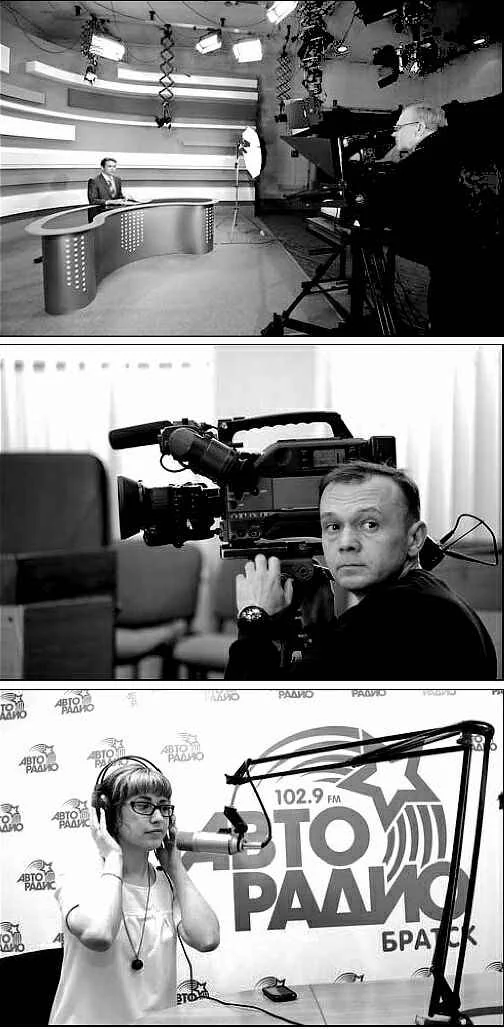
TRK Bratsk’s television centre occupied the former Avrora cinema, bringing together reporters, camera operators, editors and studio staff. It is another example of a cultural building finding a new purpose. A place once used to watch finished films became a workplace producing local news and programmes about the city’s own people.

A photographic collage from Elena Kutergina’s feature: the studio, camera work and TRK Bratsk staff. Photographs by Valery Pavlov; exact shooting dates are unspecified.
б/д · undated

TRK Bratsk’s studio and staff

A photographic collage from Elena Kutergina’s feature: the studio, camera work and TRK Bratsk staff. Photographs by Valery Pavlov; exact shooting dates are unspecified.

Валерий Павлов / Valery Pavlov · Имена Братска · Елена Кутергина
Публикация с активной ссылкой на источник / Reuse with an active source link · Original ↗

A collection of lighting devices became a Bratsk museum

Yuri Bordonsky’s Museum of Light grew from a private collection of lighting devices. Historical lamps and electrical fixtures reveal different ways people have illuminated everyday life. A 2016 visitor report documents the collection. In a city famous for producing electricity, the domestic history of light found its own intimate museum setting.

Archpriest Avvakum was imprisoned at Bratsk Fort

Bratsk Fort appears in the Siberian exile of Archpriest Avvakum in 1656–1657, documented in the Russian archives’ dedicated project. The stronghold’s role extended beyond defence and administration into the history of religious conflict and individual lives. The surviving towers belong to a later building phase than Avvakum’s imprisonment.

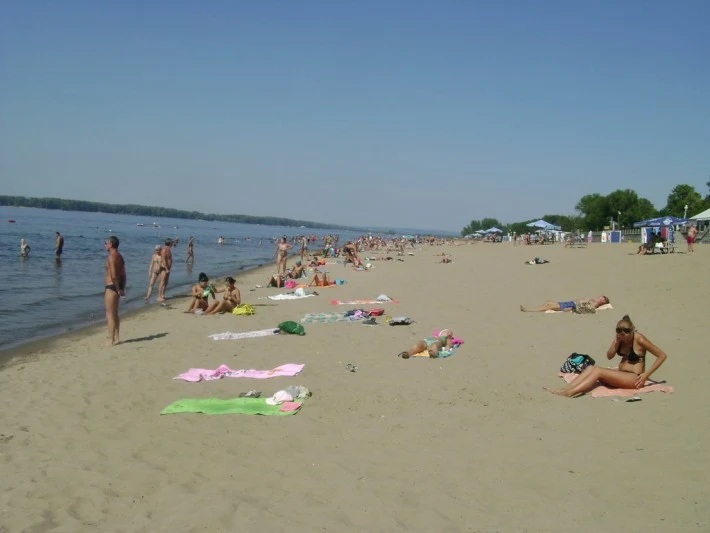
The name Zyaba can send you to different places

In everyday Bratsk speech, Zyaba can mean the reservoir bay, beach area and nearby dachas. There is also a separate village and railway station named Zyaba in Bratsk District. It pays to clarify the destination before setting out. One short name connects settlement history, rail transport and the city’s familiar summer leisure landscape.

Photograph captioned “Zyaba Beach” in an account of Bratsk published in 2015. Sand, holidaymakers and sales stalls are visible. The exact shooting date is not supplied; the image does not establish present facilities or beach conditions.
≤ 2015

Summer at Zyaba Beach

Photograph captioned “Zyaba Beach” in an account of Bratsk published in 2015. Sand, holidaymakers and sales stalls are visible. The exact shooting date is not supplied; the image does not establish present facilities or beach conditions.

Автор снимка не указан / photographer not identified · Не сидится / авторский обзор Братска, 2015
© правообладателя / rights reserved · Original ↗

Useful links

The Bratsk forts ↗Angara Village ↗Bratsk Reservoir ↗Bratskoye Vzmorye ↗BrAZ — Bratsk Aluminium Smelter ↗BLPK — Bratsk Timber-Industrial Complex ↗Bratsk Airport ↗Railways & stations ↗Luge in Bratsk ↗Fyodor Kudryashov ↗People of Bratsk ↗Theatres of Bratsk ↗Television in Bratsk: BST & TRK Bratsk ↗Golos Angary Radio ↗Zyaba: bay, beaches and dacha life ↗

Sources & further reading

This is an editorial selection rather than a statistical ranking. Historical records refer to the years stated; photographs retain their own dates and captions. The article covers Bratsk’s full history, including events after 1991.