← Explore the cityBRATSK / PEOPLE & PLACES

BrAZ — Bratsk Aluminium Smelter.

From a forest construction site and the first metal of 1966 to capacity above a million tonnes: people, technology, the city, monumental art, environmental concerns and rebuilding plans.

44 CHAPTERS / ABOUT 22 MIN READ
1966

First pot: 15 July; first metal: 25 July.

1975

Original design capacity of 915,000 tonnes a year reached.

>1M

Tonnes a year: capacity in the official profile, not reported 2026 output.

2026

The sixtieth anniversary and further modernisation plans.

Article contents

BrAZ: the other scale of Bratsk

Bratsk has two defining industrial silhouettes: the dam across the Angara and the long production halls of its aluminium smelter. The dam converts moving water into electricity; the smelter turns power, imported raw materials and human work into metal. Together they explain the industrial importance of this relatively young city.

BrAZ is the Russian abbreviation for the Bratsk Aluminium Smelter, a RUSAL enterprise producing primary aluminium and aluminium products. Its story connects the construction campaigns of the 1960s, generations of skilled workers, Soviet automation, economic upheaval and a continuing technological overhaul. Professional pride and serious environmental concerns belong in the same account. Both are essential to understanding Bratsk.
Photograph accompanying the interview published on 5 December 2025. The exact shooting date is not stated.
≤ 2025

BrAZ entrance in winter

Photograph accompanying the interview published on 5 December 2025. The exact shooting date is not stated.

Автор не указан / photographer not identified · БрАЗ / Bratsk.org
© правообладателя / rights reserved · Original ↗
Why build a giant smelter here?

A smelter needs much more than ore: it needs a very large, dependable supply of electricity. The construction of Bratsk's hydroelectric station therefore created the conditions for another major industry nearby, one that would consume power around the clock.

This was the logic of the territorial production complex, connecting energy, metallurgy, forestry and transport. BrAZ does not mine local bauxite. Its location is explained principally by electricity and access to transport. Seen separately, a potroom or a dam tells only part of the story. Bratsk developed around the connections between these industries, with housing and services required to sustain their workforces.

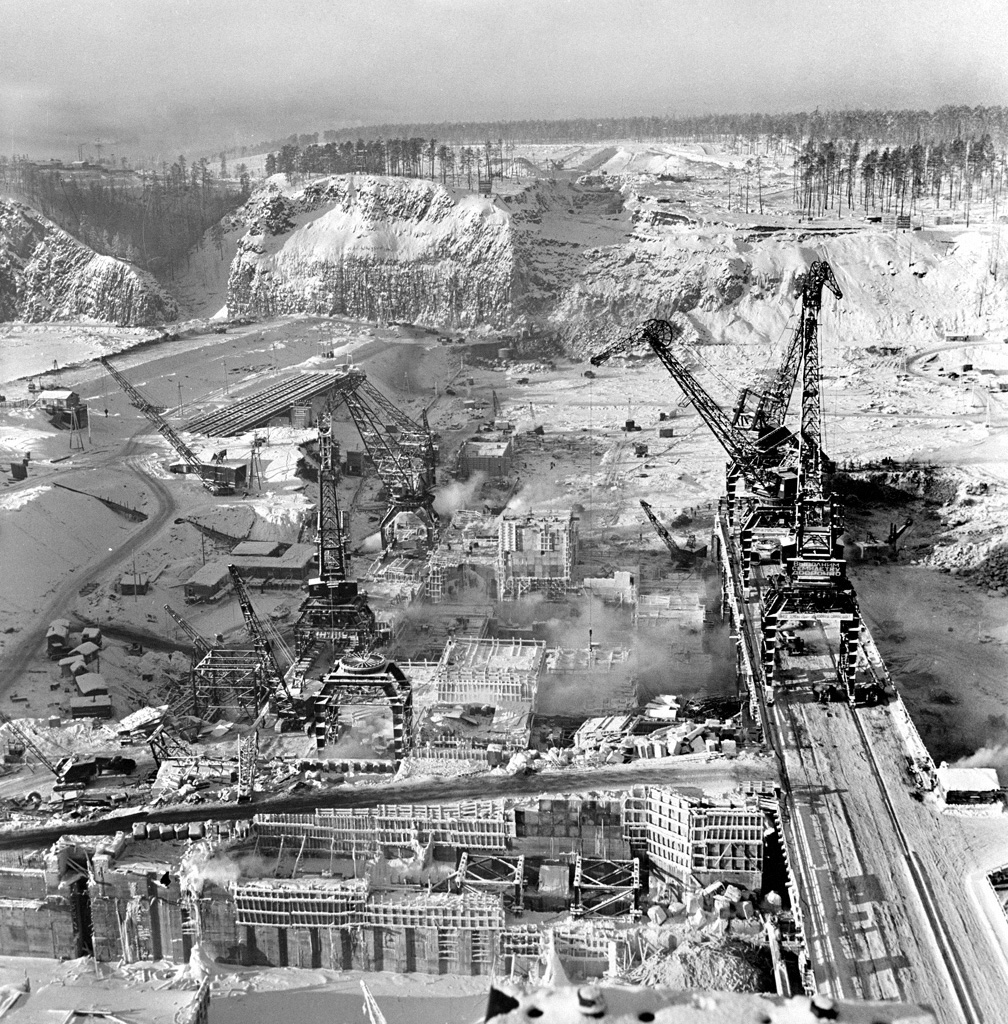
1 February 1960. The Bratsk dam construction site.
1960

Building the Bratsk hydroelectric station

1 February 1960. The Bratsk dam construction site.

Макс Альперт / Max Alpert · РИА Новости / RIA Novosti, № 791507
CC BY-SA 3.0 · Original ↗

A site beside the railway

In late December 1958, a 300-hectare site was reserved near railway siding No. 22 on the Tayshet–Lena line. Site selection thus preceded the main production buildings and first metal by several years. The design assignment was approved on 4 February 1961.

The railway mattered at every stage. During construction it would carry structural components, equipment and building materials. During operation it would deliver raw materials and carry finished metal away. BrAZ was conceived from the beginning as part of a far-reaching supply network, rather than a factory sustained solely by resources found beside its fence. This railway geography is as important to its history as the proximity of the dam.

Before the halls: earthworks, roads and concrete

The beginning of a smelter project looks very different from a familiar photograph of a working potroom. The city chronicle dates the first mechanised site work to 2 July 1961. Access routes, utilities, construction bases and the ground itself had to be prepared. On 16 July 1962, V. Shishkanov's team placed the first concrete block.

This preparatory period is a substantial part of the story. Before reduction workers could operate the pots, drivers, machine operators, concrete workers and installation crews created the conditions they needed. First metal marks the end of that initial process; it does not replace the years of less visible infrastructure work that made commissioning possible.

Assembling an industrial town

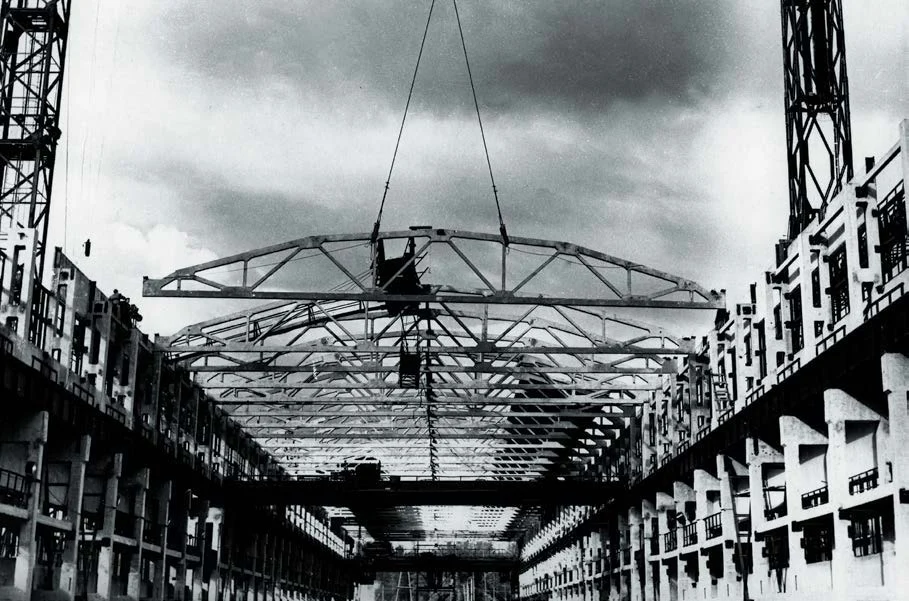
By the mid-1960s the project had acquired the scale visible in archival photographs: columns, cranes and the long spans of future potrooms. The industry history identifies 1964 as the beginning of work on the principal commissioning buildings. This does not contradict preparatory construction in 1961; the dates describe different stages of the same project.

The site demanded coordinated work by builders, electrical specialists and equipment installers. Walls alone were insufficient. Power supply, production equipment, access routes and servicing systems all had to be ready together. BrAZ's history is therefore also a history of cooperation across professions: the work of people outside metallurgy is physically embedded in every operating hall.

Assembly of a BrAZ production hall. Historical illustration from the 2022 industry book, printed pages 102–103; the caption does not give a precise shooting date.
1960-е / 1960s

A reduction hall under construction

Assembly of a BrAZ production hall. Historical illustration from the 2022 industry book, printed pages 102–103; the caption does not give a precise shooting date.

Фотограф в подписи не указан / photographer not identified · Алюминиевая Ассоциация, «90 лет алюминиевой отрасли России», 2022
© Алюминиевая Ассоциация, 2022 · архивная иллюстрация / archival illustration · Original ↗

Learning before producing

A new plant could not be staffed entirely from an established local workforce: the industry was growing alongside the city. Participants' recollections show how important training at operating plants was. Future Bratsk workers learned production tasks before returning to their own site.

Leonid Sinitsyn, a participant in the first start-up, recalled arriving at the unfinished smelter in February 1966 and training in Shelekhov. His experience gives the commissioning generation a recognisable human scale. A young recruit had to learn a specific trade, become accustomed to new responsibilities and join a team that still had to turn a construction project into a consistently operating metal producer.

Vladimir Malov and Semyon Gurkin

The first director was Vladimir Fyodorovich Malov, and the first chief engineer was Semyon Ivanovich Gurkin. Their names are associated with the transition from a building site to an operating enterprise, bringing together design decisions, equipment installation, workforce preparation and production discipline.

Managing construction and managing a working smelter are different tasks. Individual buildings can be completed separately, but production requires the entire chain to function together every day. The first leaders matter for more than a list of office-holders: they represent the organisational turning point at which an unfinished site acquired a sustained production rhythm, responsibility for metal quality and a developing technical workforce.

15 July and 25 July: two founding dates

BrAZ celebrates its birthday on 15 July, associated with the start-up of its first reduction pot in 1966. The city chronicle and casting workers' recollections date the first aluminium to 25 July. These dates refer to different events, and both belong in the account.

Starting a reduction pot does not instantly produce a finished ingot. Equipment must be prepared and brought into operating conditions before metal can be tapped and transferred. Short anniversary summaries often compress several stages into one. Here they remain distinct: 15 July is the date used for the enterprise's anniversary; 25 July is the first-metal date given by the historical sources cited below.

The first ladle, through a caster’s eyes

Caster Gennady Alexandrovich Pakhomov left a recollection of the first metal on 25 July 1966. His account shifts attention from capacity figures to the casting department: a celebration, an incompletely finished building and builders standing alongside metallurgists. The start of production belonged both to the people who erected the plant and to those who would operate it.

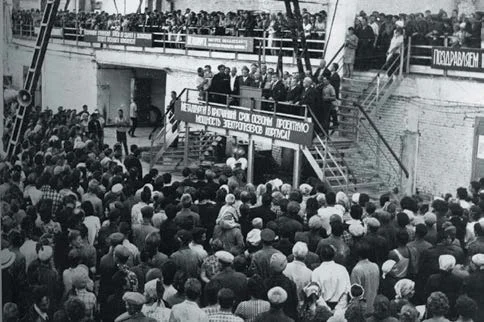
An archival photograph of the first casting conveys the anticipation surrounding the event. Far more people are present than an ordinary production operation would require. Metal becomes a visible sign of completed collective work. The photograph is dated simply to 1966 here; its precise shooting day cannot be established from its appearance.

The first casting as illustrated in the industry history of BrAZ. The event year is retained; the exact shooting day is unconfirmed. The small archival original is displayed without enlargement.
1966

A crowd at the first casting

The first casting as illustrated in the industry history of BrAZ. The event year is retained; the exact shooting day is unconfirmed. The small archival original is displayed without enlargement.

Фотограф в подписи не указан / photographer not identified · Алюминиевая Ассоциация, «90 лет алюминиевой отрасли России», 2022
© Алюминиевая Ассоциация, 2022 · архивная иллюстрация / archival illustration · Original ↗

First metal was only the beginning

The plant continued expanding after its first start-up. Additional capacity entered service over several years; BrAZ did not appear in its entirety on a single July day. The industry history identifies 22 October 1975 as a decisive milestone: completion of the pot start-up in building No. 23 brought the original design capacity to 915,000 tonnes a year.

Later development added further production tasks and facilities, including high-purity aluminium. Figures in different reference works therefore need dates and definitions. Original design capacity, subsequent installed capacity and actual annual output answer different questions. The enterprise kept developing after the initial project target had been achieved.

Aluminium-3: computers enter the potroom

In 1972 BrAZ introduced Aluminium-3, a centralised system for monitoring and controlling electrolysis. The first stage of an automated enterprise management system followed in January 1977. These developments show another side of Soviet industrial growth: increasing output was accompanied by efforts to control a complicated continuous process more precisely.

Automation does not remove the need for experienced workers. It redistributes tasks: systems take over some measurement and regulation, while people interpret readings, identify deviations and maintain equipment. Computing thus became part of BrAZ's production history long before contemporary digital programmes. The name Aluminium-3 is a reminder that industrial digitalisation has its own earlier generations.

The Order of Lenin and Golden Mercury

On 11 January 1971 BrAZ received the Order of Lenin. The city chronicle connects the award with higher output, the introduction of large reduction pots and achievement of their design performance. In 1980 the enterprise received the international Golden Mercury award, associated in its historical materials with production and international cooperation.

Awards also reveal the language of their period. State recognition formed part of a Soviet enterprise's public standing and collective identity; an international award pointed to aluminium's importance beyond the local economy. Such honours are a particular kind of historical evidence: they document recognition at a given moment, rather than substituting for information about technology, working conditions or air quality.

Vasily Panin: skill passed on

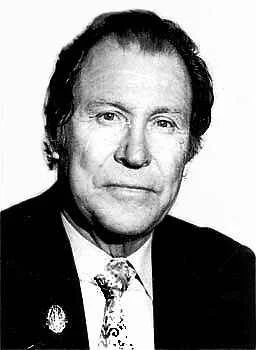
Vasily Mikhailovich Panin brought experience from Novokuznetsk when he was invited to Bratsk in April 1968. He became a reduction-team foreman, received the title Hero of Socialist Labour in 1971 and became an honorary citizen of Bratsk in 1985.

His role as a mentor is particularly significant. In a large industrial operation, individual skill quickly becomes a collective resource: the next shift and the next generation depend on experienced workers passing on what they know. Panin's biography makes it possible to tell BrAZ's story through a specific person and trade. Public honours stand alongside a less spectacular but continuous responsibility: teaching others to work accurately and responsibly.

Hero of Socialist Labour, reduction-team foreman and honorary citizen of Bratsk. Portrait from the biographical publication; shooting date not stated.
б/д · undated

Vasily Panin

Hero of Socialist Labour, reduction-team foreman and honorary citizen of Bratsk. Portrait from the biographical publication; shooting date not stated.

Автор не указан / photographer not identified · Имена Братска / Imena Bratska
© правообладателя / rights reserved · Original ↗

Who makes the aluminium?

At BrAZ, “metallurgist” covers several distinct occupations. Reduction workers oversee metal production; anode workers service the anode side; casters handle molten metal and cast products. Crane operators, electricians, mechanics, automation specialists and laboratory staff work alongside them. Output depends on coordination between these professions.

Continuous production creates a particular form of responsibility: the condition of equipment and the process passes from one shift to the next. The previous hours' results become the next team's starting conditions. The smelter's history therefore cannot be exhausted by directors' biographies or celebrated foremen. It also consists of everyday actions by people whose names seldom appear in anniversary accounts, but whose work makes production possible.

The journey to work becomes city history

According to the city chronicle, passenger electric trains between Bratsk and BrAZ began running on 31 March 1969. This transport milestone connects industrial history with an ordinary working day. Employees needed not only training but a reliable way to reach a site away from residential streets.

The factory journey helps explain why Bratsk cannot be understood as one compact centre. Industrial areas, residential districts and transport routes form a dispersed system. Shift schedules shape flows of people, while transport determines access to employment. The historic train service matters less as a railway curiosity than as evidence of the way a major enterprise's needs entered the organisation of the whole city.

Late Soviet BrAZ beyond the factory gate

By the 1980s the smelter was part of everyday Bratsk rather than merely a construction project. In the city chronicle, industrial enterprises appear alongside transport, housing, culture and public initiatives. At the end of the decade, BrAZ contributed money and equipment to relief after the Armenian earthquake.

This breadth of connection matters in an industrial city. Employment affected families, neighbourhoods, leisure and expectations about the future. Workers' recollections therefore often join factory experience and city experience into one account. BrAZ's history extends beyond its perimeter: its traces also belong in family archives and local newspapers, where the consequences of industrial employment appear in ordinary lives.

After the USSR: a different economic system

The dissolution of the USSR changed the environment in which BrAZ operated. A centrally planned system gave way to market relationships involving ownership, supplies and sales. Aluminium retained its international importance, while the organisational framework familiar to a Soviet enterprise changed substantially.

A short account can easily reduce this transition to prominent individuals or disputes. The production story requires a wider view: raw-material availability, electricity payments, metal deliveries, employment and workers' everyday lives. Different aspects call for different records. Ownership history, workforce recollections and output statistics complement one another; none on its own describes the entire decade. This chapter provides that transition's context rather than an unsupported account of individual controversies.

RUSAL and the million-tonne milestone

BrAZ joined RUSAL in 2000. In December 2008 it reached another prominent milestone: for the first time in its own history, annual production exceeded one million tonnes. This was actual output over a defined calendar year.

A million tonnes is difficult to capture through a household comparison without oversimplifying it. What matters is the continuous operation of many reduction pots, equipment maintenance and regular dispatches behind the number. The current official profile describes capacity above one million tonnes a year. Capacity expresses what the enterprise can produce; it does not automatically establish actual output for every subsequent year. Those two kinds of figure need to remain distinct.

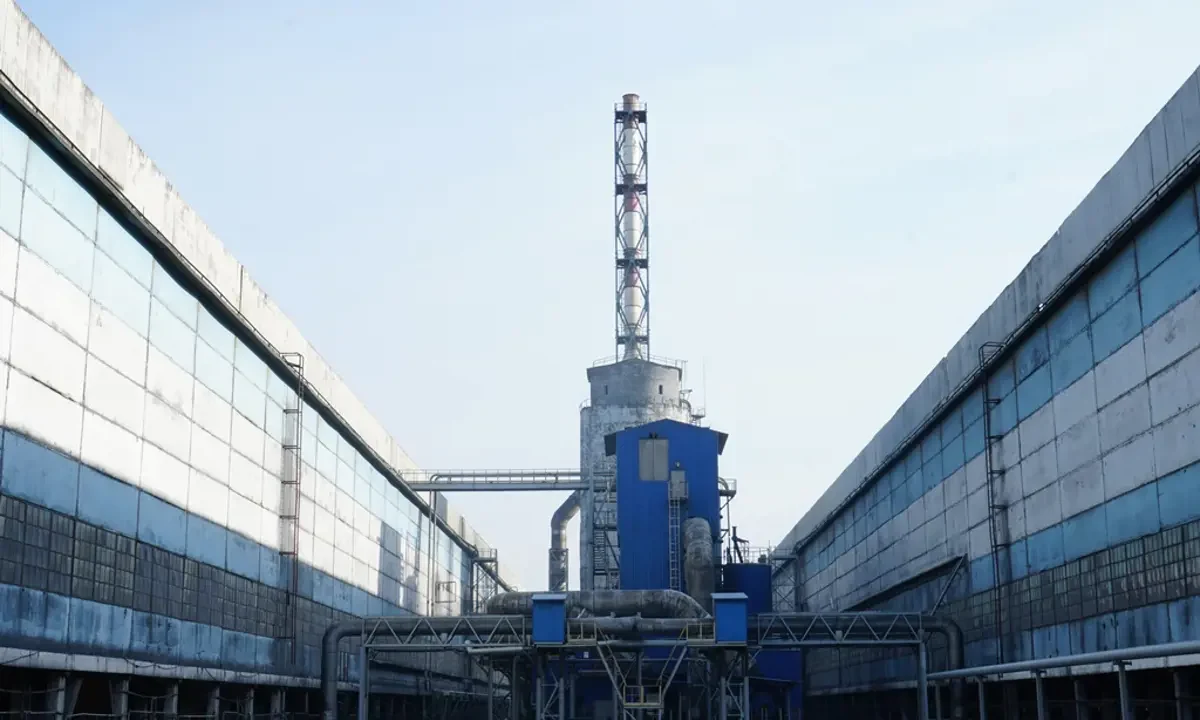
A building on the BrAZ site, published in December 2025. No separate shooting date is supplied.
≤ 2025

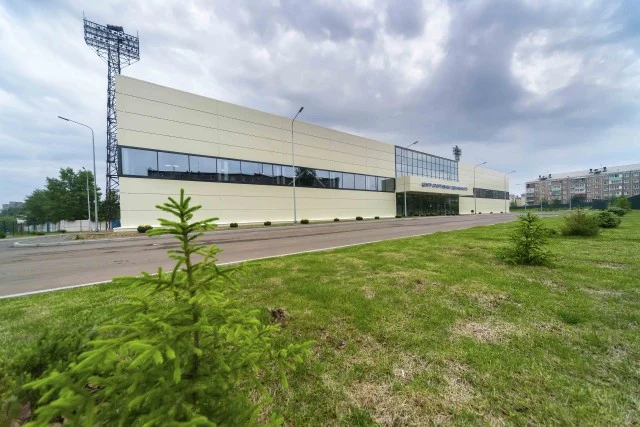
A production building

A building on the BrAZ site, published in December 2025. No separate shooting date is supplied.

Автор не указан / photographer not identified · БрАЗ / Bratsk.org
© правообладателя / rights reserved · Original ↗
What arrives at the smelter: alumina

An aluminium smelter's main aluminium-bearing feedstock is alumina, or aluminium oxide. It is made at an earlier stage of the production chain. A bauxite mine, an alumina refinery and an aluminium reduction smelter are separate operations; BrAZ belongs to the last category.

This sequence explains why a large smelter does not require a bauxite deposit beside Bratsk. Raw material can be transported to a source of power. The next task is to separate metal from its chemical compound, which is the purpose of electrolysis. Understanding the site's boundaries also matters when reading environmental information: mining, ore refining and metal reduction produce impacts at different locations.

How electricity makes metal

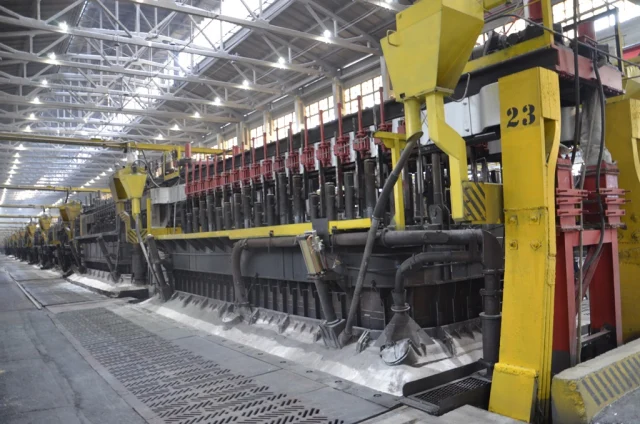
Production relies on electrolysis of alumina dissolved in a molten cryolite-based electrolyte. Direct current passes through the system and aluminium separates as liquid metal. The carbon anode participates in the reaction and is gradually consumed. A reduction pot is therefore an electrical, thermal and chemical installation at the same time.

This is an explanation of the general industrial process, rather than operating instructions for a particular Bratsk pot. Stable production requires coordinated material feeding, electrical conditions and heat balance. Experienced operators and automatic monitoring matter because an apparently repetitive row of pots contains many individual units whose condition must be watched continuously.

Production photograph accompanying the BrAZ director’s interview of 5 December 2025. It shows an existing hall, not the proposed RA-550 project.
≤ 2025

A row of reduction pots

Production photograph accompanying the BrAZ director’s interview of 5 December 2025. It shows an existing hall, not the proposed RA-550 project.

Автор не указан / photographer not identified · БрАЗ / Bratsk.org
© правообладателя / rights reserved · Original ↗
Why the smelter runs around the clock

Reduction is a continuous process. Reliability of electricity supply matters alongside the total quantity consumed. Electrical systems convert incoming power into the direct current required by the process. Describing the site only in terms of inexpensive electricity misses much of this technical relationship.

The Bratsk dam and BrAZ share an industrial logic, but a power station's installed capacity, its annual generation and a smelter's consumption are different quantities. They cannot be exchanged or used to claim a permanent consumption share without dated data. The underlying principle is more useful: a very large electricity producer and consumer form a connected infrastructure whose dependable operation matters to both.

What Søderberg technology means

BrAZ's historical production route is Søderberg technology, using a self-baking anode. Carbon paste takes shape and bakes during operation, unlike systems using anode blocks baked separately in advance. The distinction affects equipment, servicing and emission-control options.

Plant descriptions also refer to a dry anode. This is a refinement of the self-baking route, not another name for prebaked-anode technology. Terminology matters: the word “new” alone does not explain what has changed. Comparing projects requires attention to pot design, the anode system, alumina feeding and gas capture—the actual substance of modernisation rather than its label.

From reduction pot to casting

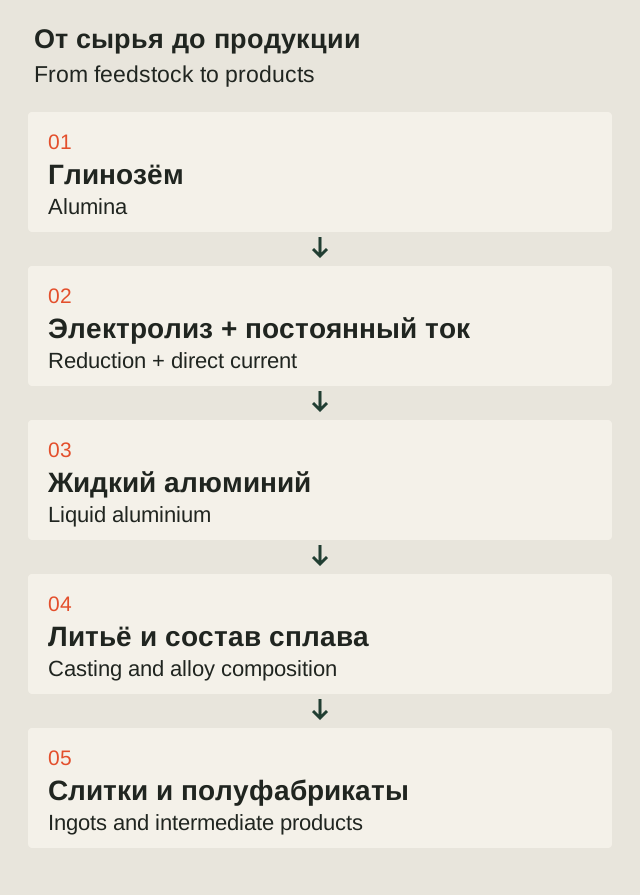
Producing liquid aluminium is not the end of the process. Metal is tapped from the pot, transported in a dedicated vessel and transferred to subsequent operations. Casting gives it the required composition and product form, turning apparently anonymous molten metal into a specified material for further manufacturing.

BrAZ's history therefore extends beyond its reduction halls. Casting equipment helps determine the products the enterprise can offer and the customers they suit. The first ladle in 1966 was a symbolic beginning; mature production also depends on repeatable quality. Each later batch must meet its specification, rather than merely provide a striking photograph of molten metal.

Original bratsk.com explanatory diagram. It shows a general sequence, not a hall layout or specifications of particular equipment.
2026 · схема / diagram

From feedstock to products

Original bratsk.com explanatory diagram. It shows a general sequence, not a hall layout or specifications of particular equipment.

bratsk.com · bratsk.com
CC BY 4.0 · Original ↗

Wire rod, ingots and alloys: what BrAZ sells

The official profile lists primary aluminium and products including electrical-grade wire rod, small and T-shaped ingots, and alloy products. Different forms serve different downstream operations, allowing metal to enter further manufacturing in a suitable condition.

Aluminium is used in power engineering, transport, construction and packaging, but these finished goods do not all leave BrAZ's gates. Other plants and processing stages lie between an ingot and an aircraft, sheet or cable. The smelter supplies material and intermediate products to that chain. This downstream relationship explains why product range and quality matter alongside total tonnage.

Quality means more than a shiny surface

Two ingots can look similar while serving different purposes, determined by composition and downstream processing requirements. Customers need the material specified for their own production. Laboratory checks, measurement, process engineering and product traceability therefore belong in the manufacturing story.

These activities are less visually dramatic than molten metal or enormous halls, so they often receive less attention in factory photography. Yet they are fundamental to the industrial chain. The enterprise sells products with defined properties, rather than an unspecified silver-coloured substance. Developing alloys and more demanding product forms increases the importance of control throughout the process, from incoming materials to the finished batch.

Carbon footprint and the city’s air

Hydropower matters to aluminium's carbon footprint, but it does not make reduction emission-free. Carbon anodes are consumed, and a full product assessment also includes earlier manufacturing stages. Comparisons require a defined boundary: the site itself, purchased electricity or the wider supply chain.

Urban air pollution involves a different set of indicators. A lower carbon footprint per tonne does not by itself establish a low concentration of a particular pollutant beside someone's home. Climate indicators and local emissions can usefully be discussed together, but they measure different impacts. The following chapters therefore distinguish government monitoring from plant gas-cleaning projects.

An environmental concern with a history

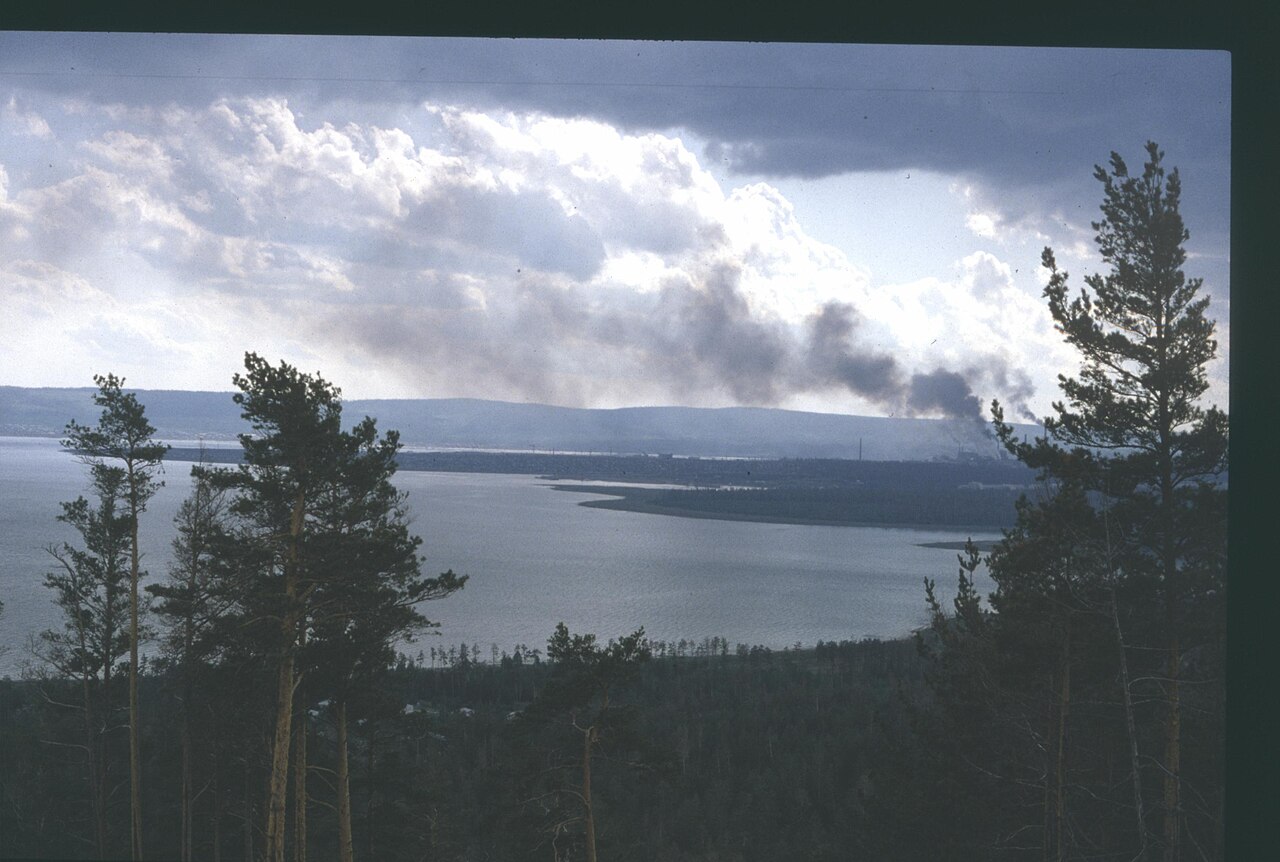
Environmental concerns also appear in Bratsk's late Soviet history. The early-1990s city chronicle records investigations of pollution around the city. A private photograph from 1981, shared by its author in an open archive, preserves another kind of evidence: how industrial air looked and was experienced by an observer.

A photograph has limits. It does not measure air composition or establish each source's contribution. Excluding such images from industrial history would nevertheless omit part of the city's experience. Documentary accuracy requires both showing the evidence and resisting the temptation to treat it as a laboratory result. Anniversary statistics alone cannot preserve this aspect of everyday life.

Summer 1981. The author describes air pollution from the aluminium works. The image does not establish a measured pollution concentration.
1981

An industrial landscape in 1981

Summer 1981. The author describes air pollution from the aluminium works. The image does not establish a measured pollution concentration.

CTHOE · Wikimedia Commons
CC BY-SA 3.0 · Original ↗

What government monitoring says about the air

Roshydromet's review for 2025 includes Bratsk among cities with a composite atmospheric pollution index of at least 14. It lists benzo[a]pyrene, formaldehyde, suspended matter, carbon disulphide and manganese for the city. This describes urban air; it does not allocate every measured pollutant to a particular enterprise.

Reading an annual review requires attention to methods and reporting periods. Comparisons across years must consider standards and observation coverage. The review provides a necessary perspective independent of factory publicity, while remaining different from a measurement of one stack. Here it is used for environmental conditions; enterprise publications are used for equipment and stated plans.

Fluorides: what “14.4 times background” means

On page 100 of its 2025 review, Roshydromet identifies BrAZ as the principal source of fluoride pollution in the Bratsk area. Average atmospheric fluoride deposition in Bratsk is reported at 14.4 times the background value, using the Listvyanka area as background. This is a background ratio, not “14.4 times the legal concentration limit”.

The chapter also reports soil observations. Soil concentration, atmospheric deposition and airborne concentration are different measurements. They cannot be added or treated as interchangeable. An accurate environmental account needs this specificity: where samples were taken, what was measured and which reference value was used.

Emission tonnage and air beside a home

An environmental project may reduce annual emission tonnage, emissions per tonne of product or releases of a particular gas. Residents also need to know the resulting concentrations in their surroundings. These measures are connected, but they do not automatically coincide.

Distance, weather, terrain and other pollution sources affect what happens between an installation and a residential neighbourhood. A sound modernisation history therefore needs two sets of records: changes in production and observations of environmental conditions. Reported reductions should retain their baseline year, pollutant coverage and calculation method. This makes it possible to assess commitments without confusing one kind of result with another.

EcoSøderberg: changing the existing process

One strand of BrAZ's modernisation is the conversion of existing pots to EcoSøderberg. Enterprise publications associate this with changes to design, feeding and gas capture. The name describes development of the Søderberg process already used at the site.

Improving an existing process must be distinguished from building a different anode system. EcoSøderberg does not mean conversion to prebaked or inert anodes. The scale of the programme is better understood through the number of converted pots, conversion dates and measured results. Such figures need their dates because the work proceeds in stages rather than changing the entire site in a single operation.

Gas cleaning before release

Capture begins at production equipment: the gas stream must be collected and directed to treatment. BrAZ's programme includes dry gas-cleaning installations and additional wet stages. These components perform particular tasks and depend on effective enclosures and gas extraction.

A treatment unit's efficiency applies to the stream that passes through it. It is not automatically the same percentage reduction in all site emissions or pollution across the city. To interpret an announcement about a new unit, useful questions include which halls it serves, which substances it captures and when operation began. A photograph helps explain the industrial layout; measurement establishes performance.

Illustration accompanying the plant’s 6 March 2026 gas-cleaning programme announcement. The photograph does not establish commissioning of every planned installation.
≤ 2026

Gas cleaning between production halls

Illustration accompanying the plant’s 6 March 2026 gas-cleaning programme announcement. The photograph does not establish commissioning of every planned installation.

Пресс-служба БрАЗа / BrAZ press service · БСТ / BST
© правообладателя / rights reserved · Original ↗

The rebuilding project: consultation and review

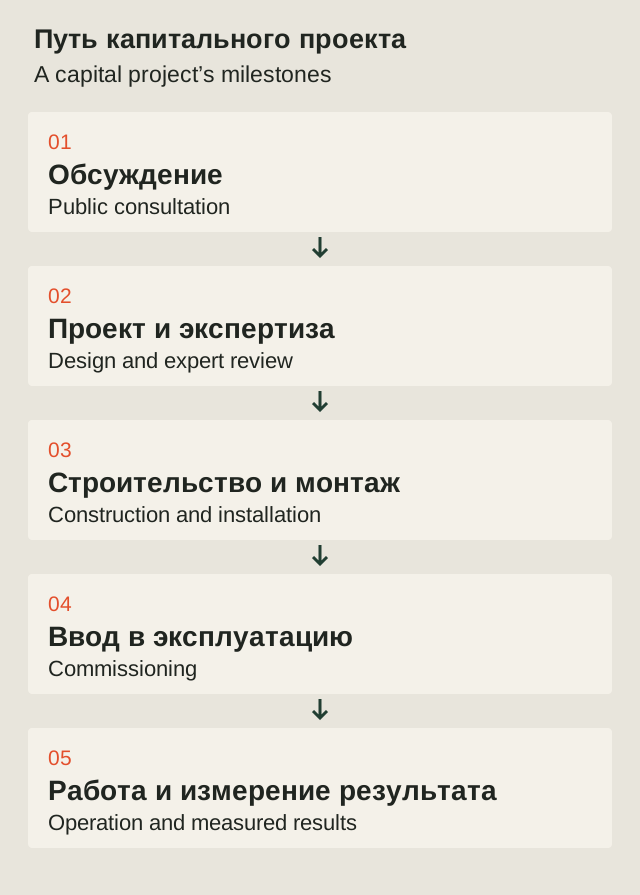
In April 2022 RUSAL announced public discussion of BrAZ's environmental rebuilding project. In May 2023 it reported a positive conclusion from Glavgosexpertiza, the state project-review body. Consultation, design and expert review were significant preparatory milestones for a capital project.

The published proposal envisaged replacing part of the existing capacity with prebaked-anode production, covering approximately half the enterprise's capacity. An approved design and an operating production hall are different states, however. Completion requires commissioning and operational evidence. This account therefore records the 2022–2023 announcements as project milestones, without turning them into a claim that the new production has already entered service.

Original bratsk.com explanatory diagram. It shows a general sequence, not a hall layout or specifications of particular equipment.
2026 · схема / diagram

A capital project’s milestones

Original bratsk.com explanatory diagram. It shows a general sequence, not a hall layout or specifications of particular equipment.

bratsk.com · bratsk.com
CC BY 4.0 · Original ↗

RA-550 and prebaked anodes

The rebuilding proposal names RA-550 technology, using prebaked anodes. The number refers to a nominal current of 550 kiloamperes; it is neither a temperature nor the plant's megawatt rating. Anode blocks for this route are baked separately from the reduction pot.

Prebaked anodes must also be distinguished from inert anodes: their carbon still participates in the reaction. That distinction matters when assessing both climate and local environmental effects. The advantages announced for the new production apply to the specified project and its operating conditions. They do not automatically mean the disappearance of every emission from the existing BrAZ site.

What was announced for 2026?

A plant press-service statement dated 6 March 2026 announced three dry gas-cleaning units, Nos. 91, 101 and 102. It gave target dates in August and October–November 2026; commissioning them would bring the total to 17. The statement also outlined further EcoSøderberg conversion plans.

These are dated company announcements about a work programme. At this article's check on 19 October 2026, they are not treated as proof that every annual target has been achieved: some announced deadlines still lie ahead. Commissioning a particular installation and establishing final emission reductions require separate evidence. Keeping the proposed calendar distinct from verified results is essential to following the project.

Igor Volokhov: a career from the potroom

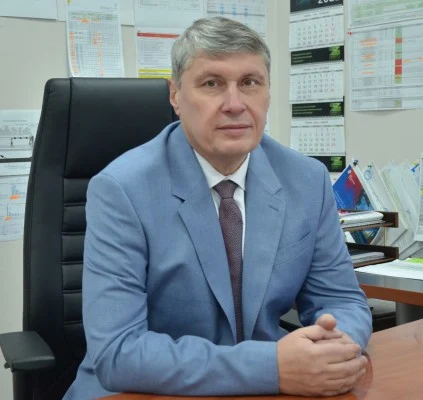
Igor Nikolayevich Volokhov became BrAZ's managing director in November 2024. In a December 2025 interview he described joining the plant in 1992 and progressing from reduction worker to management. Before returning to Bratsk as director, he had headed the Tayshet Aluminium Smelter.

His career connects several generations of the industry: a Soviet-origin operating plant, the changes of the 1990s and the commissioning of newer facilities. The interview is useful evidence of professional experience and management's perspective. Company assessments of environmental performance and efficiency still need to be compared with technical records and independent monitoring rather than treated as the only account.

BrAZ managing director. Portrait published with the interview on 5 December 2025.
≤ 2025

Igor Volokhov

BrAZ managing director. Portrait published with the interview on 5 December 2025.

Автор не указан / photographer not identified · БрАЗ / Bratsk.org
© правообладателя / rights reserved · Original ↗
The union and workers’ representation

In September 2026 the Mining and Metallurgical Trade Union of Russia published a report on the BrAZ union organisation's conference. It described more than 7,200 members across nine organisations on the industrial site, including retired members. That figure describes the union grouping, not the aluminium smelter's own employee headcount.

The distinction matters in any enterprise profile. Employees of one company, workers across several organisations and union members are different populations. The union source also reveals another strand of factory history: workforce representation, discussion of working conditions and continuing ties with veterans. It exists alongside production results and management decisions.

What sits behind the benefits package?

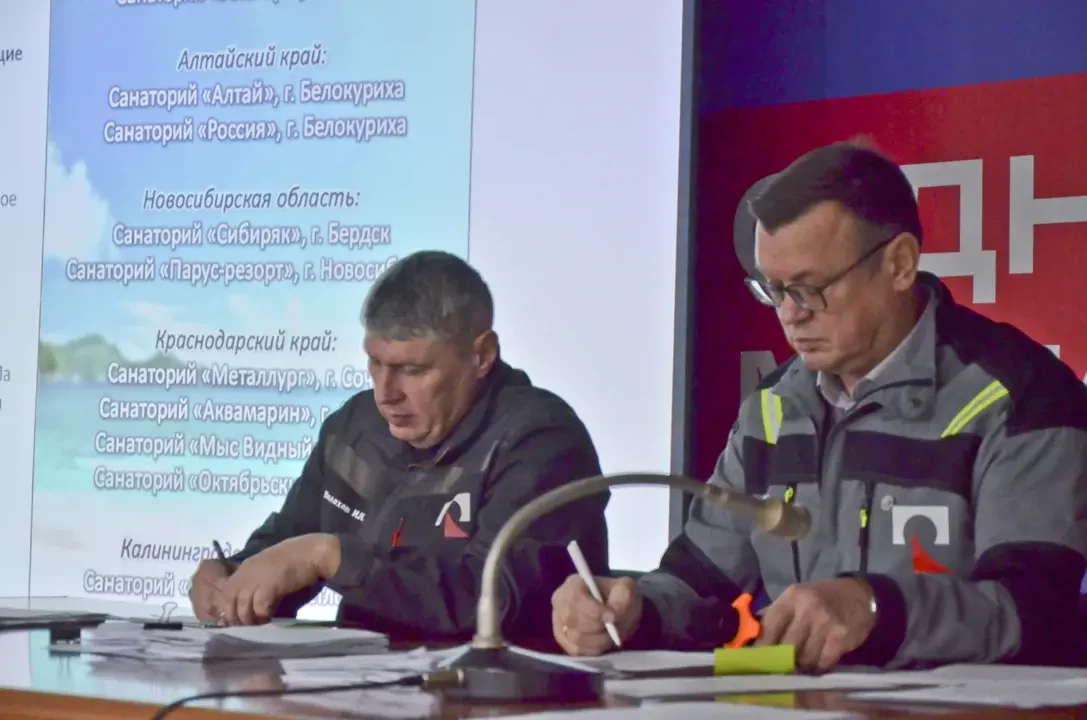
In January 2026 BrAZ signed a collective agreement for 2026–2028. The published account lists employee transport, meals, medical support, training and retraining, assistance in different life situations, and recreation programmes for workers and children. These are concrete relationships between enterprise and employee beyond the immediate production task.

In a factory city, such arrangements affect the appeal of a trade and the stability of family life. The announcement should still be read as a description of the agreement and the enterprise's report, rather than an individual entitlement for every reader. Eligibility depends on the document and applicable rules. Its historical significance is the breadth of the factory's involvement in everyday life.

Workforce conference and the 2026–2028 agreement. Plant press-service publication of 22 January 2026.
2026

Signing the collective agreement

Workforce conference and the 2026–2028 agreement. Plant press-service publication of 22 January 2026.

Пресс-служба БрАЗа / BrAZ press service · БСТ / BST
© правообладателя / rights reserved · Original ↗
Why learning never ends at the plant

Learning at an industrial enterprise extends beyond initial qualification. Equipment changes, requirements develop and employees acquire related skills or become mentors. Training and retraining are named among the plant's programmes in the collective-agreement announcement.

This connects today's BrAZ with the generation of 1966. Future metallurgists then learned at other plants before commissioning their own; an established BrAZ now provides a setting for passing on skills. Technological renewal and workforce learning belong in the same history. A new installation does not become reliable production without people who can service it, interpret its instruments and hand responsibility to the next shift.

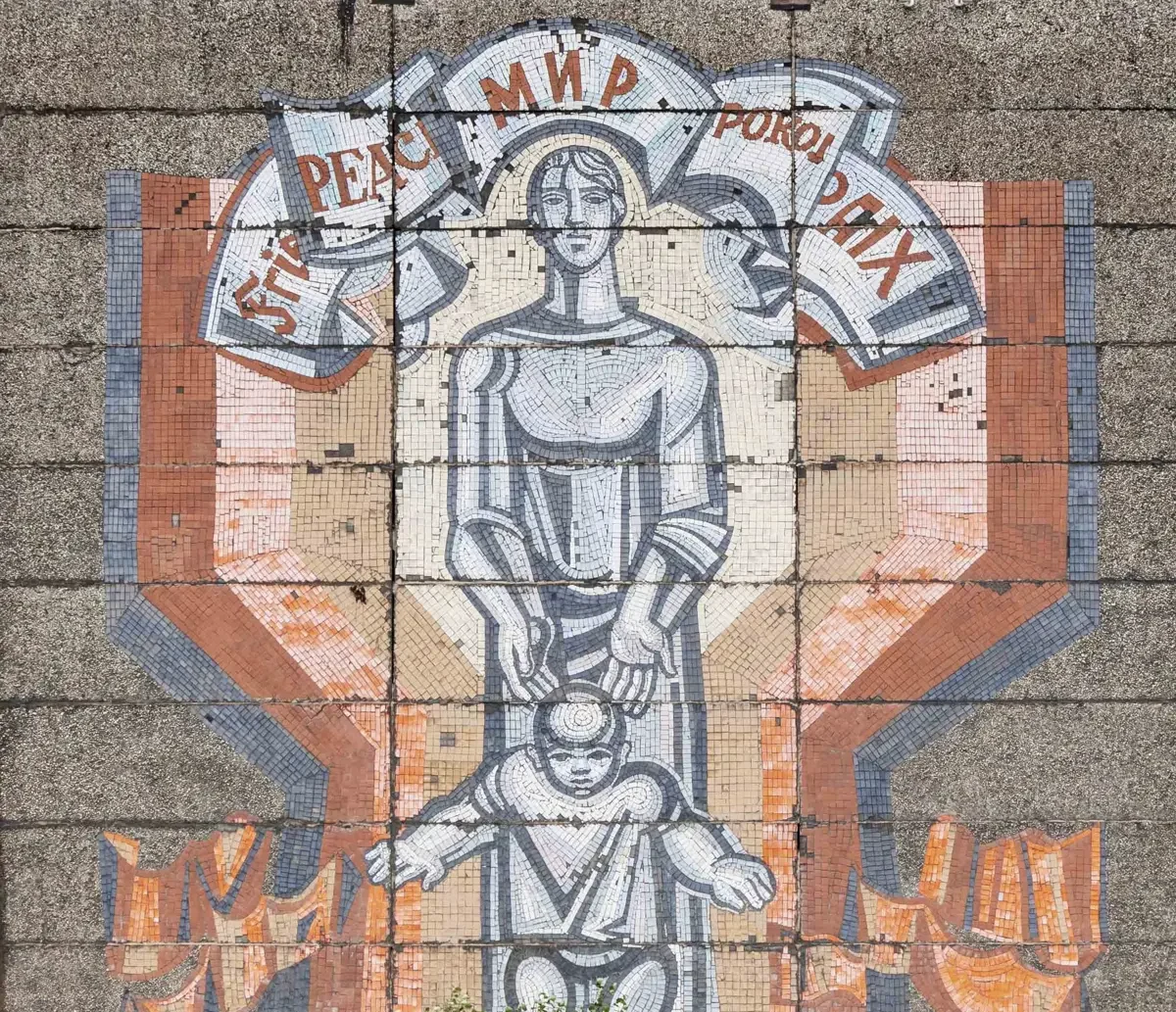
A gallery on the factory walls

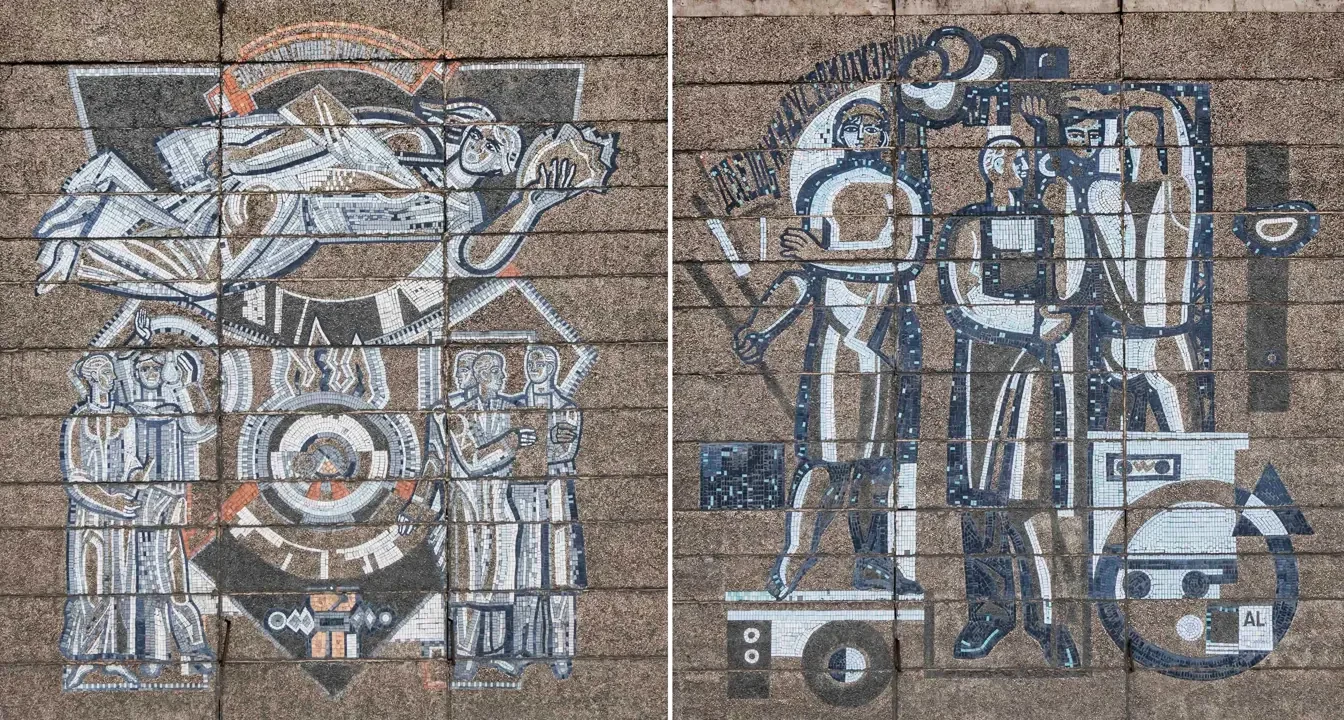
BrAZ is also a site of monumental art. In April 2026 the plant reported 13 surviving images on production buildings and a youth-council research initiative. Industrial, sporting and public themes express ideas about the people of a new industrial era.

Such works change the way a production site can be seen. A hall is not only an enclosure for equipment but also a surface carrying a cultural statement. Photographs reveal the figures, large-scale drawing and relationship between image and architecture. For the city's history, this heritage matters because it preserves a period's visual language even as production technologies continue to change.

A monumental image on a production façade. Published in April 2026 with a report on research into the plant’s panels; the caption does not establish attribution of this particular work.
≤ 2026

Workers and machines in a factory panel

A monumental image on a production façade. Published in April 2026 with a report on research into the plant’s panels; the caption does not establish attribution of this particular work.

Пресс-служба БрАЗа / BrAZ press service · БСТ / BST
© правообладателя / rights reserved · Original ↗
Another surviving BrAZ image. Photograph from the youth-council and press-service report; no exact shooting date is supplied.
≤ 2026

Peace, labour and friendship on a façade

Another surviving BrAZ image. Photograph from the youth-council and press-service report; no exact shooting date is supplied.

Пресс-служба БрАЗа / BrAZ press service · БСТ / BST
© правообладателя / rights reserved · Original ↗
Attribution and the work of remembering

The 2026 publication dates the first panel to 1967 on building No. 9 and names Georgy Chernov, T. Persandr and P. Voloshin among its creators. Those details concern a particular early work. They should not automatically be extended to every surviving image.

Research into factory art demonstrates how local history is assembled: newspaper reports, veterans' memories, photographs and museum expertise are compared. Unresolved questions should remain visible. An honest “attribution under research” is more valuable than an attractive guess. A family photograph of a façade or a clipping from the factory newspaper may become an important record for establishing authorship and dates.

Sixty years: returning to first metal

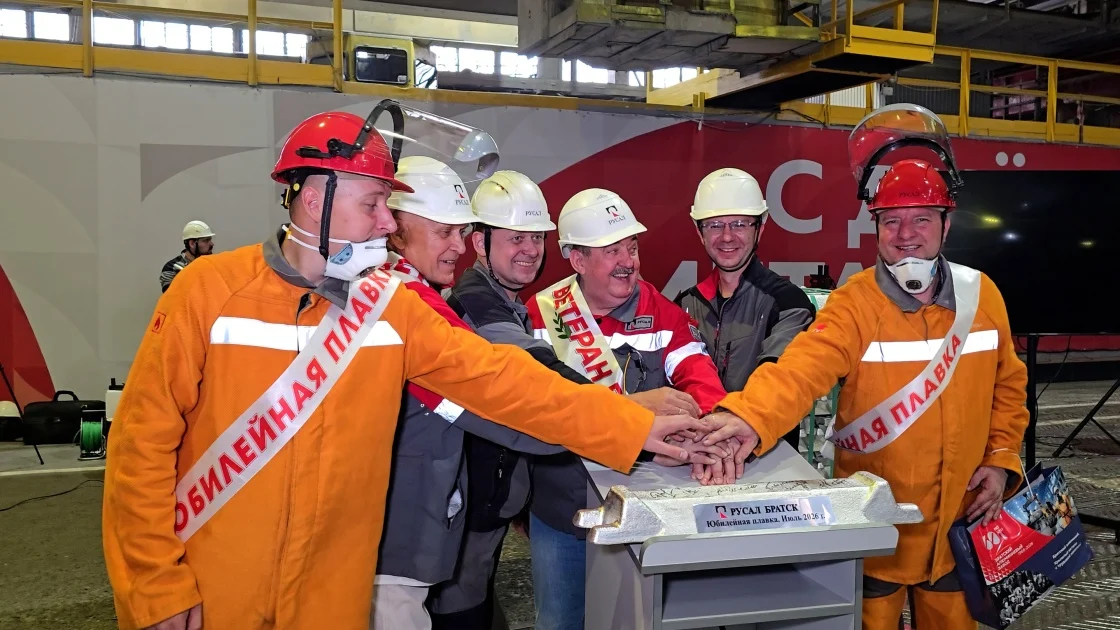
BrAZ marked its sixtieth anniversary in July 2026. Events included a symbolic casting involving different generations of employees. The ceremony returned the workforce to the founding scene of 1966, with molten metal again serving as a visible expression of shared history.

An anniversary casting does not signify the commissioning of new capacity. Its purpose is continuity between people and professions: start-up participants, veterans, current specialists and younger workers appear within the same historical narrative. Nor does the anniversary close BrAZ's story. Alongside construction memories remain present questions about technological renewal, the urban environment and the future of industrial employment.

Participants in the July 2026 anniversary casting. This is an anniversary ceremony, not evidence that a new reduction production line has been commissioned.
2026

The sixtieth-anniversary casting

Participants in the July 2026 anniversary casting. This is an anniversary ceremony, not evidence that a new reduction production line has been commissioned.

Автор не указан / photographer not identified · Новый Братск / Novy Bratsk
© правообладателя / rights reserved · Original ↗
A factory anniversary in public space

The anniversary was visible beyond the factory gate. Local reporting included a flower festival dedicated to the enterprise's sixtieth year. Such events show how a production anniversary becomes part of the city's cultural calendar.

For a visitor, this provides another way to see an industrial city: through public spaces, intergenerational meetings and celebrations as well as chimneys, the dam and technical specifications. These events do not replace discussion of environmental impacts. They add social history—the ways residents express attachment to a place whose everyday life has been connected to a major industry for decades.

What to read and how to continue exploring

For a detailed historical account, look for Aluminium of Bratsk: Essays on the History of the Bratsk Aluminium Smelter (Irkutsk, 1984). Read it as a document of its period, preserving names, production stories and the language of a Soviet enterprise. Compare it with the city chronicle, start-up participants' recollections and the later industry volume Ninety Years of Russia's Aluminium Industry.

Check the present through dated project announcements, union reports and government environmental monitoring. To explore the city, continue with the district and hydroelectric-station sections. BrAZ itself is an operating industrial site with controlled access. Any organised visit must be checked with the enterprise in advance; this article does not imply unrestricted public entry.

Useful links

Bratsk HPP: power for an industrial city ↗Bratsk districts ↗Books about Bratsk ↗Official BrAZ profile and contacts ↗Industry history and archival photographs ↗

Sources & further reading

Checked on 19 October 2026. This section covers history before 1991 and subsequent events, including the sixtieth anniversary. Capacity is distinguished from actual output, and company plans from verified commissioning. The latest government environmental review used covers 2025. Photograph publication dates are not presented as exact shooting dates.