← Explore the city
BRATSK / PEOPLE & PLACES

BLPK — Bratsk Timber-Industrial Complex.

From forest construction and first pulp to today’s Ilim mill: people, production, the city and its forests. Archival images, technology, the upheavals of the 1990s and environmental projects.

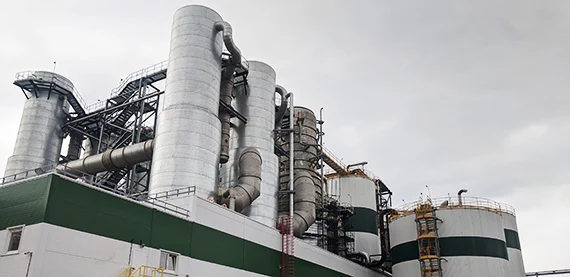
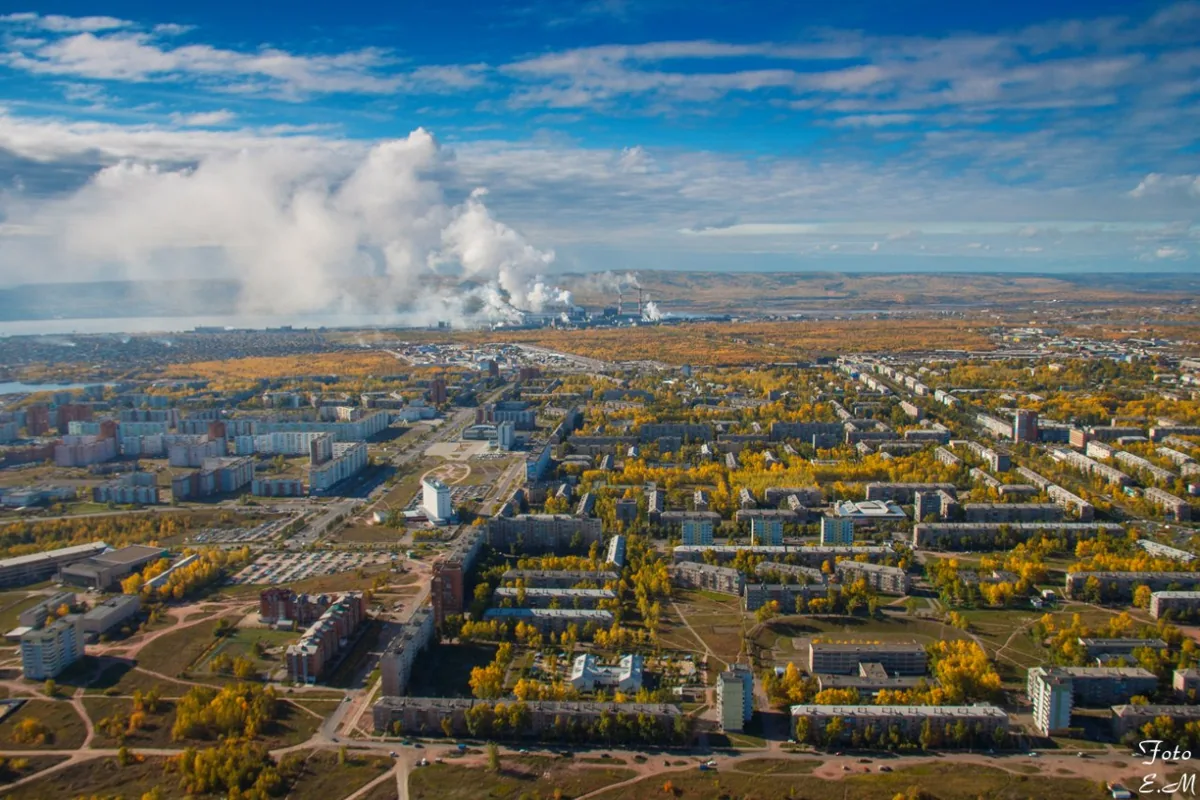
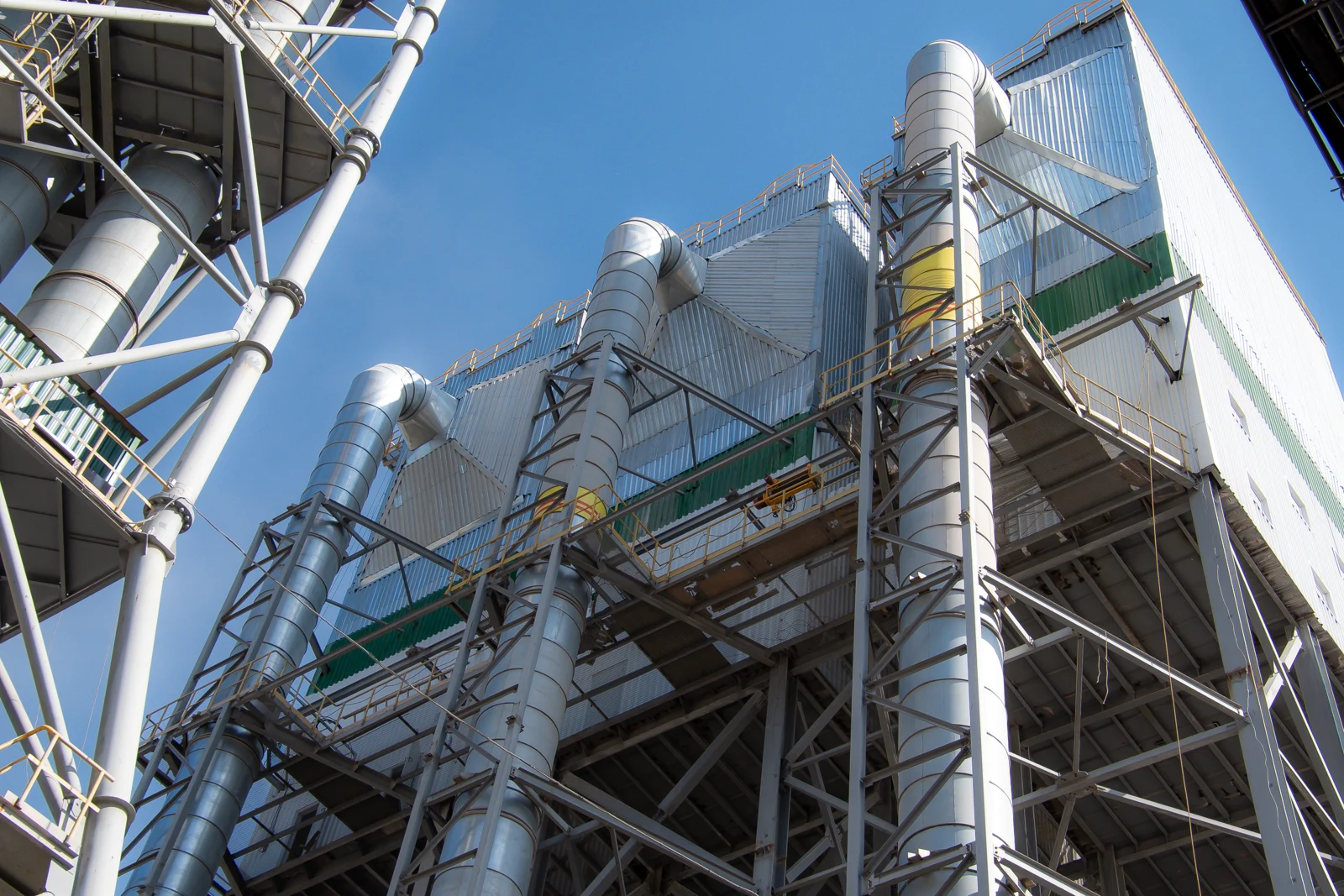
Site panorama in the Lestech Association’s 2025 industry profile. No exact shooting date is supplied; this is a modern view, not a photograph of the 1960s construction campaign.
≤ 2025The mill from above

Автор не указан / photographer not identified ↗ · © правообладателя / rights reserved

8 SECTIONS / COMPLETE READ — ABOUT 21 MIN
1958

Construction begins in city and company chronologies.

1965

First pulp on 5 September; commissioning continued in stages.

2013

First market pulp and ceremonial start-up of Big Bratsk.

2025

The mill’s sixtieth anniversary. This account continues into 2026.

EXPLORE BY SUBJECT

What interests you?

01

Planning and construction

6 chapters

BLPK: a town inside the industrial city

For generations of residents, BLPK has meant more than an industrial abbreviation. It evokes a family workplace, the journey to a shift, a factory newspaper, a cultural palace and occupations ranging from pulp cooking to timber rafting. The complex became one of the foundations of modern Bratsk alongside the dam and aluminium smelter.

Today's pulp and board operation is Ilim Group's Bratsk branch. Its official profile lists bleached softwood and hardwood pulp, board and forest-chemical products, with an overall annual volume of 1.3 million tonnes. That is a company profile figure, not a separate statement of actual 2026 output. The historical BLPK encompassed more than today's branch: its constituent enterprises and organisational boundaries changed over time.
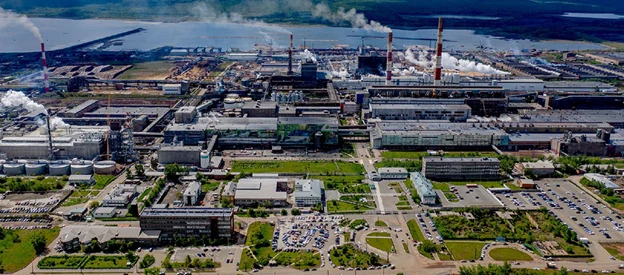
Site panorama in the Lestech Association’s 2025 industry profile. No exact shooting date is supplied; this is a modern view, not a photograph of the 1960s construction campaign.
≤ 2025

The mill from above

Site panorama in the Lestech Association’s 2025 industry profile. No exact shooting date is supplied; this is a modern view, not a photograph of the 1960s construction campaign.

Автор не указан / photographer not identified · Ассоциация «Лестех» / Lestech Association
© правообладателя / rights reserved · Original ↗
Sources

Forest, water, energy and railway

BLPK's conception relied on a combination of resources in the Angara region. Forest supplied feedstock, the Angara and its tributaries offered water and transport possibilities, and expanding energy infrastructure supported large-scale industry. The railway linked the future complex to equipment suppliers and customers far beyond the city.

A timber-industrial complex was more ambitious than a sawmill. The plan connected mechanical wood processing with chemical processing and directed different parts of the raw material towards different products. Timber storage, chip preparation, pulp and board production, energy and maintenance services had to work together. Its scale lay in those connections: an output or side stream from one operation could become a resource for another.

Sources

Putting the project on the map

City and company chronologies date the beginning of BLPK construction to 1958. The design assignment was approved in April 1960. Years of design, site preparation and coordination lay between the initial decision and the first pulp.

The anniversary chronicle associates the initiative with Georgy Mikhailovich Orlov, a leader in the timber and paper industry. Giprobum handled design; the construction directorate and building organisations then translated the scheme into buildings and production lines.

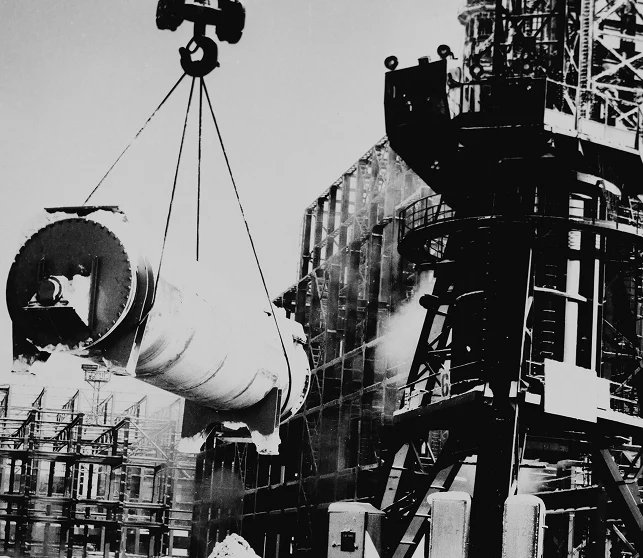
Archival illustration on Ilim’s history page beside the entry for construction beginning in 1958. That date belongs to the timeline event; the photograph’s exact shooting year is not established.
б/д · undated

Installing BLPK equipment

Archival illustration on Ilim’s history page beside the entry for construction beginning in 1958. That date belongs to the timeline event; the photograph’s exact shooting year is not established.

Автор не указан / photographer not identified · Архив Группы «Илим» / Ilim Group archive
© правообладателя / rights reserved · Original ↗

Sources

Before Olontsev: Khaim Kuznetsov’s directorate

Accounts of management often begin with Mikhail Olontsev, who led the mill through start-up. Yet BLPK had an earlier construction directorate. The anniversary chronicle names Khaim Abramovich Kuznetsov as its head and includes his recollections of work beginning in 1959. That preparatory stage deserves its own place.

The directorate recruited specialists and coordinated design, equipment and the construction sequence. Kuznetsov’s recollections name engineers, technologists and installers joining the new team. Construction management and management of the operating mill were different posts, explaining differing references to the “first director”.

Sources

Building the chain before the first cook

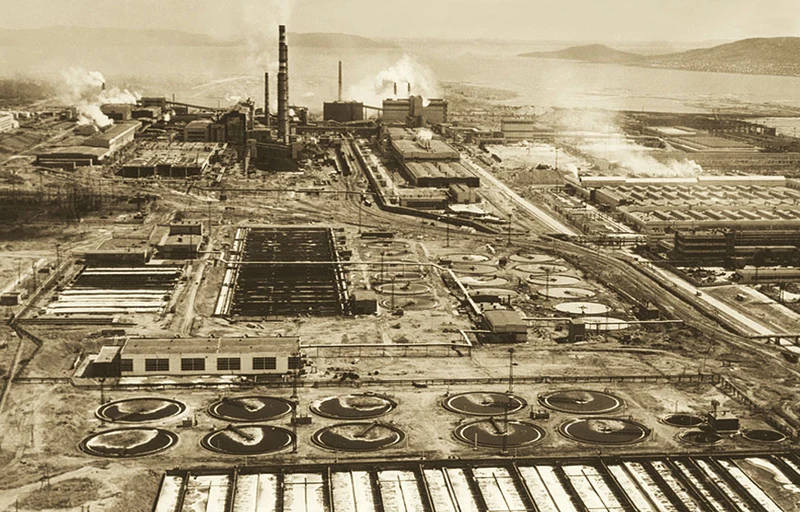
The main building campaign gathered pace in the early 1960s. Bratskgesstroy organisations and specialist installation teams worked on the complex. A 1964 photograph in the history of the local electrical installation enterprise shows an extensive site, with buildings connected by routes, utilities and construction traffic.

Cooking depended on supplies of feedstock, steam and chemicals, followed by washing, bleaching, drying and recovery. Buildings and utilities formed a connected chain in which a delay at one stage constrained the others.

Panorama captioned “BLPK, 1964” in the history of the local electrical installation enterprise. It shows long buildings, construction infrastructure and the developing site.
1964

The BLPK construction site

Panorama captioned “BLPK, 1964” in the history of the local electrical installation enterprise. It shows long buildings, construction infrastructure and the developing site.

Автор не указан / photographer not identified · БМУ «Гидроэлектромонтаж» / BMU Gidroelektromontazh
© правообладателя / rights reserved · Original ↗

Sources

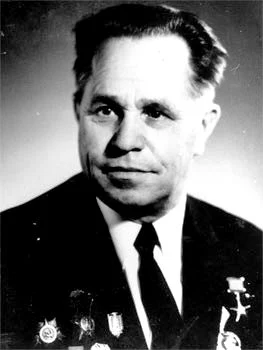
Mikhail Olontsev: leading the first start-up

Mikhail Ivanovich Olontsev took charge of BLPK in 1963. Before coming to Bratsk he had headed the Arkhangelsk pulp and paper mill, bringing experience of organising a major industrial operation. His new task combined completion of construction with mastering equipment and developing a trained workforce.

In 1971 he received the title Hero of Socialist Labour. He later headed the Siberian Research Institute of Pulp and Board. Production and research thus form connected stages of his career: the operating mill needed new technical solutions as well as management. Memorials in Bratsk, including a monument unveiled for BLPK's fiftieth anniversary, preserve his place in the city's history.

BLPK’s director during its first start-up. Portrait from the biographical account; no shooting date is given.
б/д · undated

Mikhail Ivanovich Olontsev

BLPK’s director during its first start-up. Portrait from the biographical account; no shooting date is given.

Автор не указан / photographer not identified · Имена Братска / Imena Bratska
© правообладателя / rights reserved · Original ↗

Sources
02

First production and new products

8 chapters

Swedish equipment and a new industrial school

BLPK purchased Swedish equipment that installers and future operators had to master. The library's historical account records two groups of specialists visiting Sweden, including Olontsev himself. A dedicated training effort prepared staff for pulp production at the new complex.

Technology transfer involved more than delivering machinery. Teams had to learn operating sequences, recognise equipment behaviour and coordinate different services. The director's recollections place technologists alongside mechanics, power engineers, automation and instrumentation specialists. International connections were therefore part of Soviet Bratsk's story: behind the image of a forest construction campaign stood imported machinery, professional visits and daily learning on site.

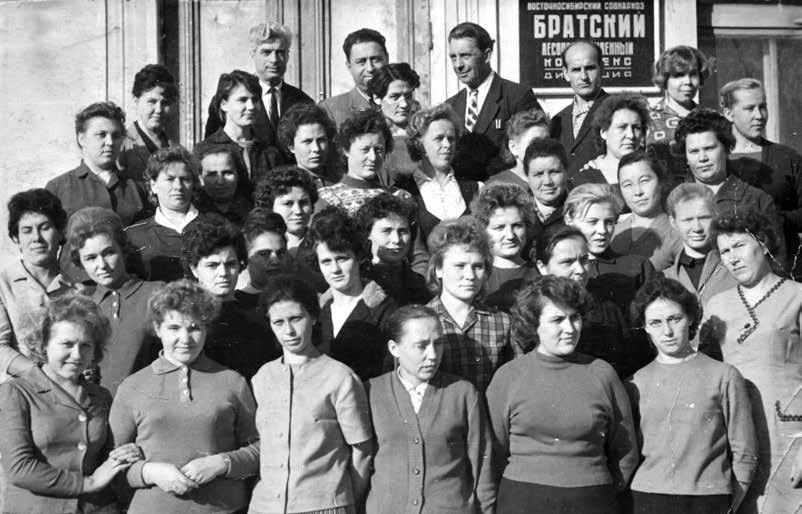
Group portrait dated 1965 in the anniversary chronicle, printed page 12. The caption does not list everyone pictured.
1965

People from the mill’s early years

Group portrait dated 1965 in the anniversary chronicle, printed page 12. The caption does not list everyone pictured.

Автор не указан / photographer not identified · Архив Группы «Илим» / Ilim Group archive
© правообладателя / rights reserved · Original ↗

Sources

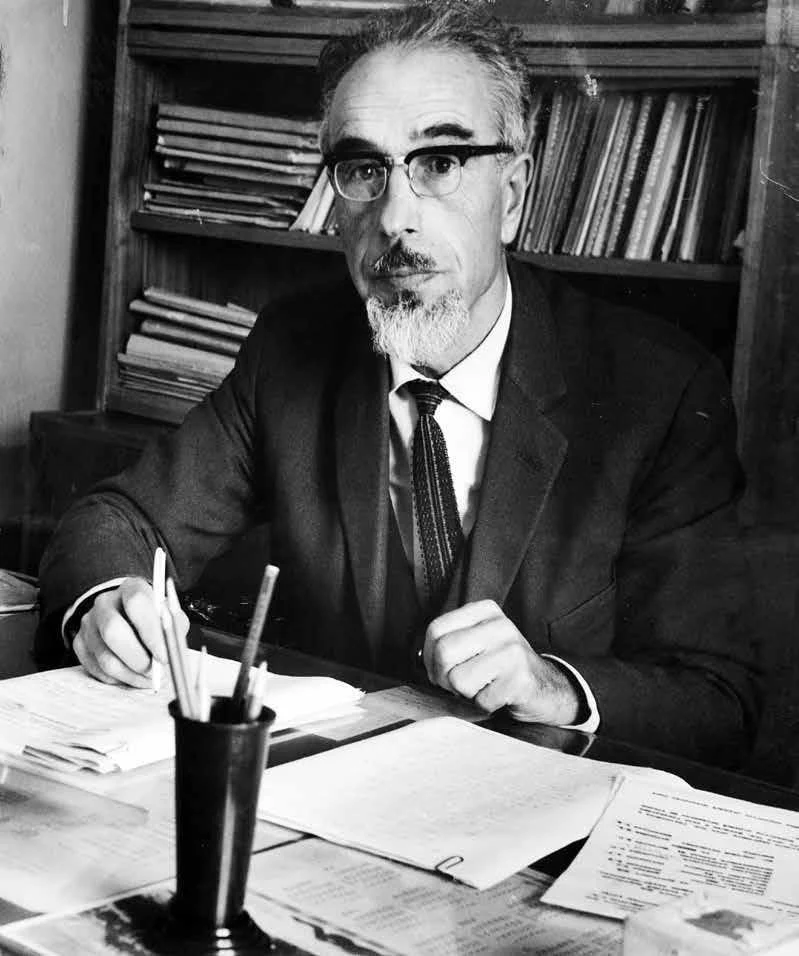
Semyon Dzhelyuk: the chief technologist

Semyon Pavlovich Dzhelyuk was a central figure in BLPK's technological development. He came to Bratsk during the preparatory period and became chief technologist. The anniversary chronicle preserves recollections by colleagues and family linking him to specialised pulp grades and inventive work.

The engineer connected design with daily operation, coordinating feedstock properties, process conditions and requirements for the finished product.

BLPK’s chief technologist. Archival portrait in the anniversary chronicle’s biographical section, printed pages 30–31. The shooting date is not supplied.
б/д · undated

Semyon Pavlovich Dzhelyuk

BLPK’s chief technologist. Archival portrait in the anniversary chronicle’s biographical section, printed pages 30–31. The shooting date is not supplied.

Автор не указан / photographer not identified · Архив Группы «Илим» / Ilim Group archive
© правообладателя / rights reserved · Original ↗

Sources

First pulp: the beginning of a long start-up

The city chronicle and Ilim's history date the first Bratsk pulp to 5 September 1965. It became the main symbol of BLPK's foundation. A successful first cook did not mean that the entire complex was finished, accepted and operating at design output.

Industrial commissioning includes trials, equipment testing, first product and the subsequent establishment of stable operation. Alongside celebratory announcements, the anniversary chronicle preserves reports of unfinished facilities and difficulties reaching operating conditions. September 1965 should therefore be read as the opening of a new stage. Builders were still on site, while the production team had to learn to achieve the required result consistently rather than just once.

Start-up participant Yury Safronov recalled preparing boiler water, trying to start circulation and waiting for the first cook’s result.

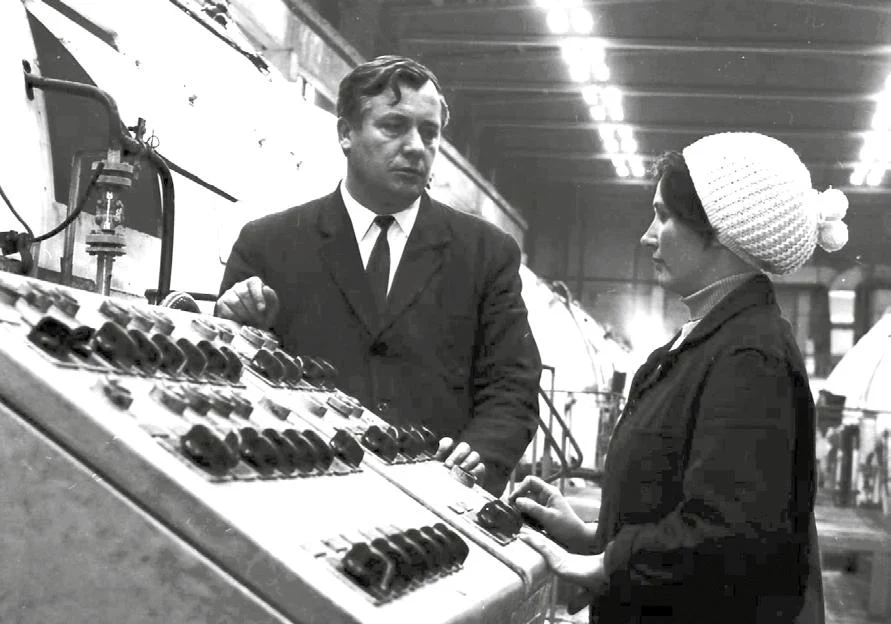
Archival image in the chronicle’s 1965 section, printed page 11. The caption names bleaching-shop head Viktor Semyonovich Klyonov. The exact shooting date is unspecified.
б/д · undated

At a production control panel

Archival image in the chronicle’s 1965 section, printed page 11. The caption names bleaching-shop head Viktor Semyonovich Klyonov. The exact shooting date is unspecified.

Автор не указан / photographer not identified · Архив Группы «Илим» / Ilim Group archive
© правообладателя / rights reserved · Original ↗

Sources

The first wagon leaves for a customer

BLPK's chronicle describes the first dispatch on 5 November 1965: a wagon carried 38 tonnes of unbleached pulp to the Rakhiv board factory in Transcarpathia. This was a distinct milestone. Material produced during commissioning had become a commodity that left the site for use by another enterprise.

The first wagon connects production history with transport history. Bales had to be dried, packed, weighed, marked and brought to the loading point. The ceremonial dispatch rested on operations that receive little attention in accounts of a first cook. For a distant customer, Bratsk was becoming more than a famous construction site: it was now a specific supplier of industrial raw material.

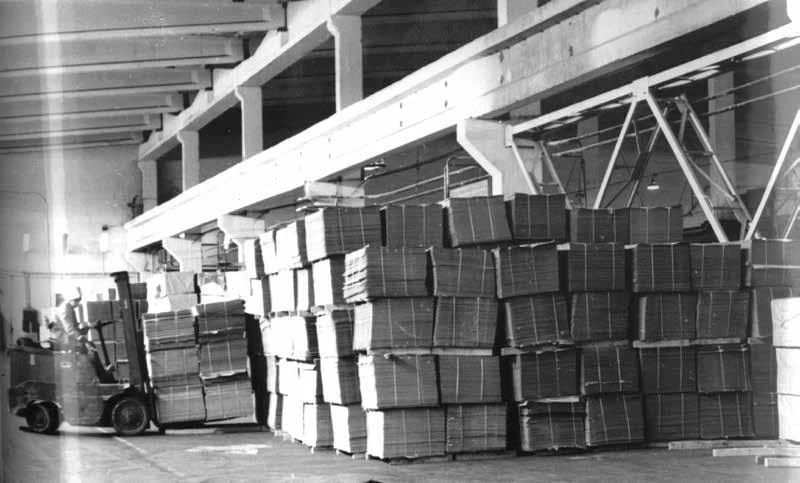
Archival illustration accompanying the first-dispatch story, printed page 13 of the anniversary chronicle. It shows pulp in its commercial bale form; no exact shooting date is supplied.
б/д · undated

Pulp bales in storage

Archival illustration accompanying the first-dispatch story, printed page 13 of the anniversary chronicle. It shows pulp in its commercial bale form; no exact shooting date is supplied.

Автор не указан / photographer not identified · Архив Группы «Илим» / Ilim Group archive
© правообладателя / rights reserved · Original ↗

Sources

Why commissioning has several dates

The city chronicle calls 30 December 1965 BLPK's commissioning day. An anniversary publication dates the state commission's acceptance document for the first stage to 31 December. The account of subsequent development separately records acceptance of initial capacity into permanent operation in June 1967.

First product, formal start-up readiness and the transition to continuous operation were separate milestones. Construction and process adjustment continued after 1965.

Sources

Cord pulp: Bratsk supplies another industry

According to the city chronicle, Bratsk's cord-pulp workers obtained their first trial batch of upgraded bleached pulp on 29 April 1967. It was intended for further manufacture of chemical fibres, including high-strength tyre cord. BLPK did not itself manufacture finished tyres; it stood at the beginning of another production chain.

Cord pulp had different property requirements from ordinary papermaking pulp, and its development received industry awards. Both cord-pulp lines closed after the new production started in 2013.

Sources

Tall-oil rosin: chemistry in the side streams

In February 1967 BLPK produced its first tonnes of tall-oil rosin. This forest-chemical product arose from processing substances recovered during kraft cooking. The complex was intended to obtain useful products from more than the cellulose fibre alone.

Tall-oil rosin and rosin extracted from wood follow different production routes. Both forms of using wood components appear in BLPK’s history.

Sources

Feed yeast and forest biochemistry

The city chronicle records BLPK's first trial batches of feed yeast in mid-May 1967. This is another indication of the breadth of the complex being built in Bratsk. Its history includes biochemical production as well as papermaking fibre and packaging materials.

Feed yeast was intended for industrial and agricultural use. It belonged to the historical complex’s product range; the constituent enterprises, their independence and their products later changed.

Sources
03

The complex and the city

9 chapters

The rosin-extraction plant

The early 1970s brought commissioning work on a rosin-extraction plant within the complex. The anniversary chronicle records integrated testing in 1971. This expanded BLPK's forest-chemical operations, with their own feed preparation, apparatus and specialist workforce.

Equipment trials, start-up and consistent production were separate stages. Extraction, pulp, board and woodworking belonged to the same complex but developed on their own schedules.

Sources

The first fibreboard

In 1972 Zinaida Nikolayevna Zvezda's shift produced the first fibreboard at BLPK's board plant. The city chronicle preserves the worker's name as well as the product milestone, allowing an industrial event to be seen through the people who carried it out.

Fibreboard is a panel material made from wood fibre. Its production broadened the complex’s range for other industries. Historical BLPK brought together enterprises that later developed different organisational affiliations.

Sources

Bleached pulp and a new research centre

In 1974 the state commission accepted a bleached papermaking-pulp stream designed for 250,000 tonnes a year. The Siberian Research Institute of Pulp and Board, SibNIITsK, was established in the same year. Production expansion thus accompanied the development of a research environment in Bratsk.

SibNIITsK studied feedstock quality, cooking, bleaching and finished-material properties. Pulp-technology research developed in the city alongside production.

Sources

Plywood: another branch of the complex

In 1977 the Bratsk complex's plywood plant produced its first large-format, enhanced-water-resistance plywood. Its mechanical and bonding processes differed substantially from pulp cooking. Very different industrial operations sat beneath the shared historical name BLPK.

The modern plywood operation is associated with Ilim Timber. Its official history describes a 2012 reconstruction raising capacity to 230,000 cubic metres a year, and a 2017 report marked the five-millionth cubic metre of plywood. Ilim Group and Ilim Timber are different companies. Similar names and a shared industrial past do not justify assigning every former BLPK product to today's pulp branch.

Sources

Bratsky Tsellyuloznik: the mill records itself

The first issue of the mill newspaper Bratsky Tsellyuloznik appeared on 18 February 1967. It expanded to four pages in 1979. Production events, shift results, notices, employee portraits and cultural activities made factory journalism a major record of everyday BLPK history.

The factory newspaper recorded names, dates, production records and workforce life while expressing the enterprise’s official position of its time.

Sources

A technical college grows with BLPK

The Bratsk evening technical school for the pulp, paper and woodworking industries was established on 7 February 1963. Initial teaching took place in the Stroitel settlement. In 1972 it began using a new building on Lenin Avenue; by the end of the decade it had extensive classrooms, laboratories and workshops.

It trained future technologists, mechanics and industry specialists. Evening study connected education with employment, a particularly valuable relationship for an expanding mill. Practical experience needed theoretical explanation, while teaching had access to a real industrial setting. In 1993 the school was reorganised as a pulp and paper college, continuing the educational strand of BLPK's history.

Sources

A trolleybus route to the mill

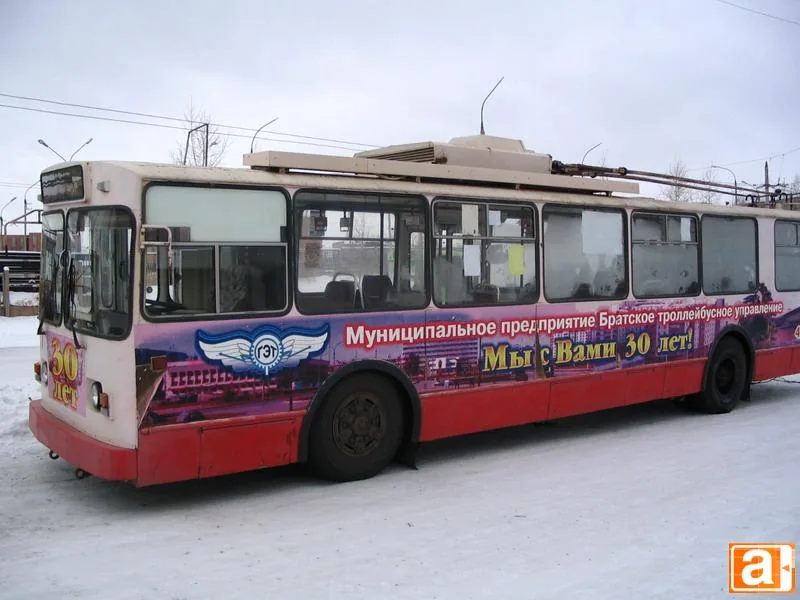
In 1975 Bratsk opened trolleybus service from the market to BLPK. An industrial commute became a milestone in the city's public transport history, connecting residential streets with a workplace attracting large daily flows of people.

The trolleybus linked the centre with the industrial site and became part of shift and family routines. The route described belongs to transport history; check current services before travelling.

February 2007. A VMZ-170 trolleybus in Bratsk, fleet number 57.
2007

Trolleybus no. 57

February 2007. A VMZ-170 trolleybus in Bratsk, fleet number 57.

Вячеслав Енгалычев (Кудинов) / Vyacheslav Engalychev (Kudinov) · Wikimedia Commons
CC BY-SA 3.0 · Original ↗

Sources

The forest-chemists’ palace and city culture

The forest-chemists' cultural palace opened in central Bratsk on 30 December 1967. In 1968 it hosted the first exhibition of the Bratsk photographic club. “Factory” culture here meant an institution participating in the life of the whole city, with exhibitions, concerts, clubs, meetings and public events extending beyond production themes.

Today the Bratsk-ART theatre and concert centre operates at 28 Lenin Avenue. It provides a place where a city walk encounters industrial history through public space. BLPK's story connects to performance, photography, amateur creativity and family life. The complex generated not only products but also demand for a cultural environment of its own.

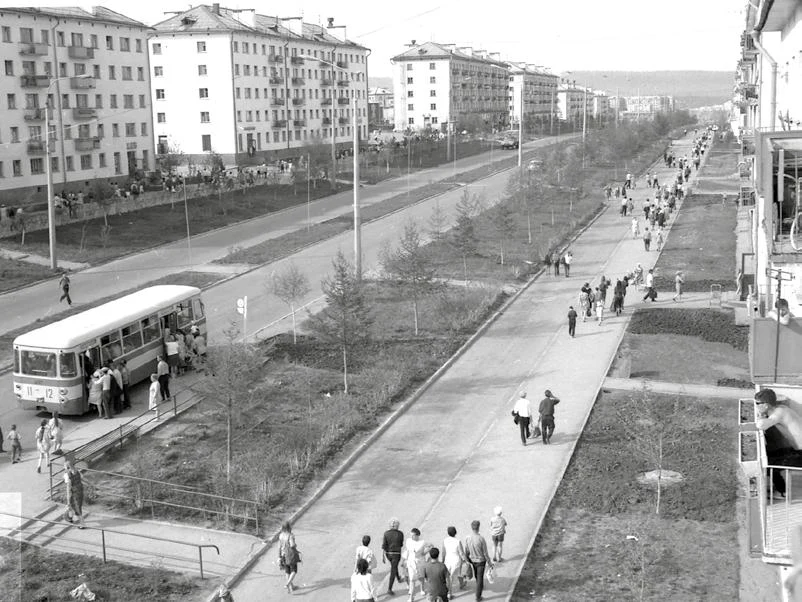
A city street in the anniversary volume’s 1967 section, printed page 26. It supplies urban context for BLPK’s history; the image’s exact date is not separately established.
б/д · undated

Residential Bratsk alongside industrial history

A city street in the anniversary volume’s 1967 section, printed page 26. It supplies urban context for BLPK’s history; the image’s exact date is not separately established.

Автор не указан / photographer not identified · Архив Группы «Илим» / Ilim Group archive
© правообладателя / rights reserved · Original ↗

Sources

Healthcare, recreation and everyday mill life

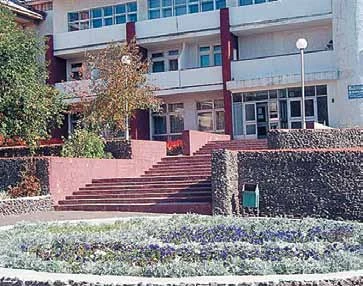
The BLPK production association's medical unit received its first patients in 1979. In 1985 builders handed over the 250-place Solnechny preventive-health resort. These dates show the enterprise's involvement in life beyond the immediate workplace.

A large workforce needed treatment, recovery, recreation and family services. Under the Soviet system, industrial enterprises provided some of these functions. Recollections of BLPK therefore include holidays, sport, children's camps and healthcare alongside events in the workshops. Ownership and access arrangements changed with the city's economy.

Illustration from the SOGAZ sanatorium catalogue: steps, flowerbeds and a building facade. The catalogue file is dated 2011; the exact photograph date is not supplied. Printed page 310, PDF page 311.
≤ 2011

Entrance to a Bratskoye Vzmorye building

Illustration from the SOGAZ sanatorium catalogue: steps, flowerbeds and a building facade. The catalogue file is dated 2011; the exact photograph date is not supplied. Printed page 310, PDF page 311.

Автор не указан / photographer not identified · СОГАЗ / каталог санаториев
© правообладателя / rights reserved · Original ↗

Sources
04

From the Soviet complex to Ilim

6 chapters

The ten-millionth tonne: a cumulative milestone

On 28 June 1984 BLPK cooked its ten-millionth tonne of pulp. This was cumulative output since production began, not annual capacity. It conveys the duration of industrial history: years of shifts, maintenance, learning and gradual mastery of equipment lay behind the milestone.

The 1984 record is cumulative production over years of operation. It differs from an individual line’s capacity and annual output; today’s company profile covers a changed production structure.

Archival illustration accompanying the first-dispatch story, printed page 13 of the anniversary chronicle. It shows pulp in its commercial bale form; no exact shooting date is supplied.
б/д · undated

Pulp bales in storage

Archival illustration accompanying the first-dispatch story, printed page 13 of the anniversary chronicle. It shows pulp in its commercial bale form; no exact shooting date is supplied.

Автор не указан / photographer not identified · Архив Группы «Илим» / Ilim Group archive
© правообладателя / rights reserved · Original ↗

Sources

One complex, several organisations

By the late 1980s BLPK's structure was changing. Accounts introduce the territorial production association and the names Bratsktsellyuloza, Bratskdrev and Bratskles. The production chain remained, while its management arrangements developed into a different form.

The name “LPK” remained attached to the site and industrial complex while its organisations and employer names changed. Workers could remain at the same equipment after an enterprise reorganisation.

Sources

Environmental conflict as the USSR ended

By 1991 environmental issues had become part of Bratsk's public history. The city chronicle describes an aerial investigation of industrial pollution. BLPK's chronicle preserves debate over the future of production and the tension between environmental demands and concerns about employment.

Observations from the early 1990s concern environmental conditions of that period. Later changes in air and water are recorded in the separate measurement series discussed below.

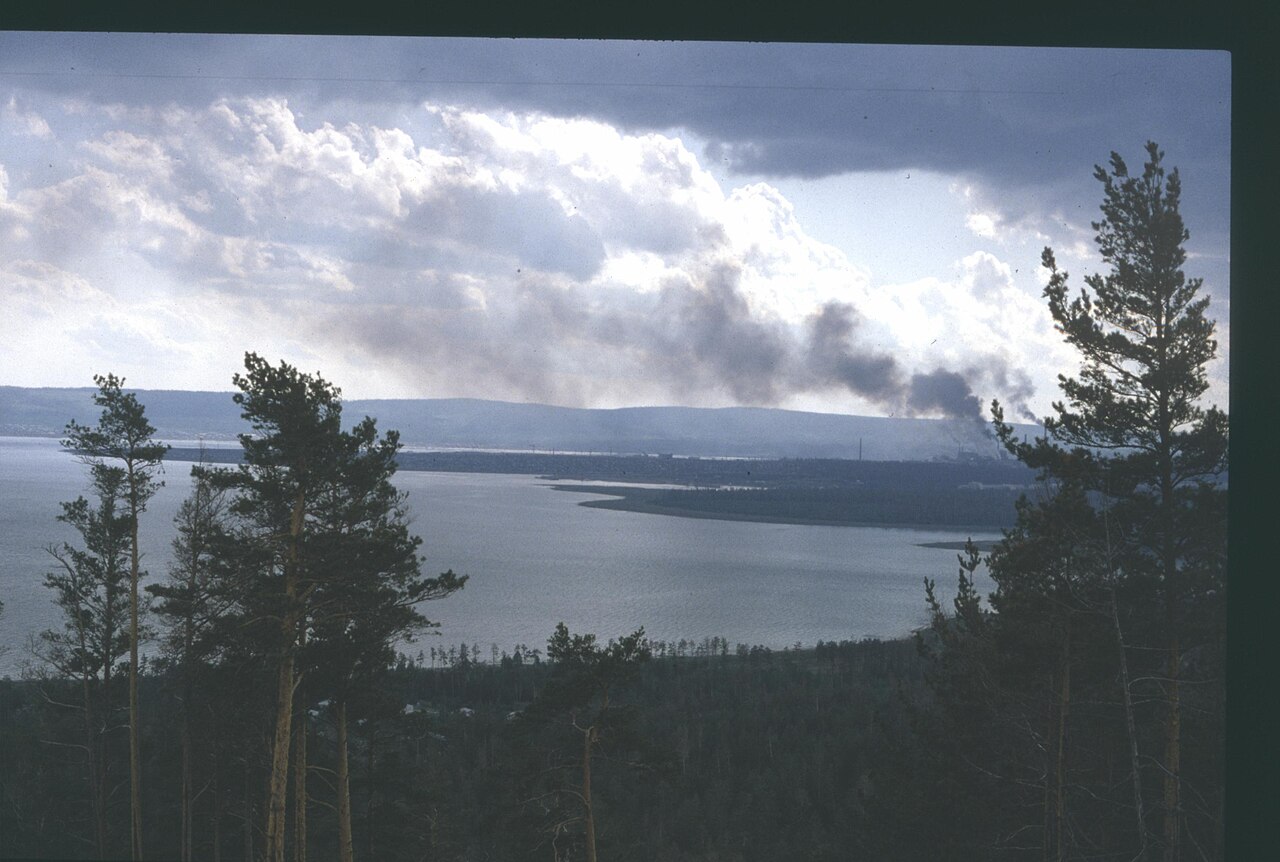
Summer 1981. The author describes air pollution from the aluminium works. The image does not establish a measured pollution concentration.
1981

An industrial landscape in 1981

Summer 1981. The author describes air pollution from the aluminium works. The image does not establish a measured pollution concentration.

CTHOE · Wikimedia Commons
CC BY-SA 3.0 · Original ↗

Sources

The killing of Eduard Yevtushenko

On 16 July 1993, BLPK general director Eduard Georgiyevich Yevtushenko was killed in the Moscow region. The mill’s anniversary chronicle records his death and the subsequent farewell.

The killing occurred amid the organisational change, economic difficulties and uncertainty of the early 1990s. The material used contains no verified findings identifying those responsible or anyone who ordered it.

Sources

Ilim Pulp and the recovery of production

The company history dates Ilim Pulp's acquisition of BLPK to 1997 and describes 1998 as a period of recovery. Railway shipments of Bratsk pulp and board to China began in 2000. A new framework for supplies, management and sales was taking shape.

The Soviet complex was becoming an operation integrated into market and export networks. Customer relationships extended beyond familiar inter-enterprise arrangements, making batch quality, delivery terms and long-distance logistics increasingly important. For employees, these changes affected work organisation and prospects for equipment utilisation. Ownership and production history need to be read together, without one substituting for the other.

Sources

From a holding structure to Ilim Group

In 2007 Ilim Pulp enterprises were consolidated within Ilim Group. Partnership with International Paper played a substantial role during this period. The official company chronology records International Paper's exit in 2023, when its stake was sold to Russian partners.

After International Paper’s exit in 2023, earlier descriptions of joint ownership became historical. The site continued operating within the changed corporate structure.

Sources
05

Production today

4 chapters

Big Bratsk: a new mill on the established site

Big Bratsk became one of the site's largest reconstructions. Metso's 2010 supply announcement listed cooking, screening, oxygen delignification, washing, bleaching, drying, baling, a recovery boiler and evaporation upgrades. It was an interconnected production system, rather than the purchase of one machine.

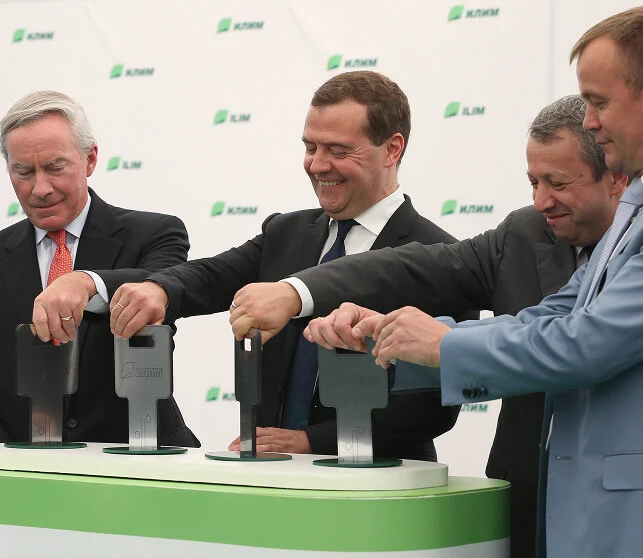
On 24 April 2013 the company announced the new line's first market pulp. A ceremonial inauguration followed in June. These events were distinct from the later achievement of design output. The historical complex acquired a new technological centre of gravity, built on an operating site where existing services still had to function throughout the transition.

Photograph in the official 2013 project chronology. The ceremony was distinct from first market pulp and the subsequent achievement of design output.
2013

The Big Bratsk inauguration

Photograph in the official 2013 project chronology. The ceremony was distinct from first market pulp and the subsequent achievement of design output.

Автор не указан / photographer not identified · Группа «Илим» / Ilim Group
© правообладателя / rights reserved · Original ↗

Sources

720,000 tonnes: the figure for a specific line

The new softwood line was designed for 720,000 tonnes of bleached market pulp a year. This was the specification of the Big Bratsk project in documents from its construction period. It is neither the mill's entire output nor a separate statistic for the current year.

The line also changed the enterprise's structure: both cord-pulp streams closed after its start-up. Modernisation therefore involved the end of an earlier technological chapter as well as the addition of equipment. A product celebrated in 1967 eventually gave way to different specialisation and market requirements. These transitions, rather than uninterrupted expansion alone, shape the production story.

Sources

The reconstructed board line

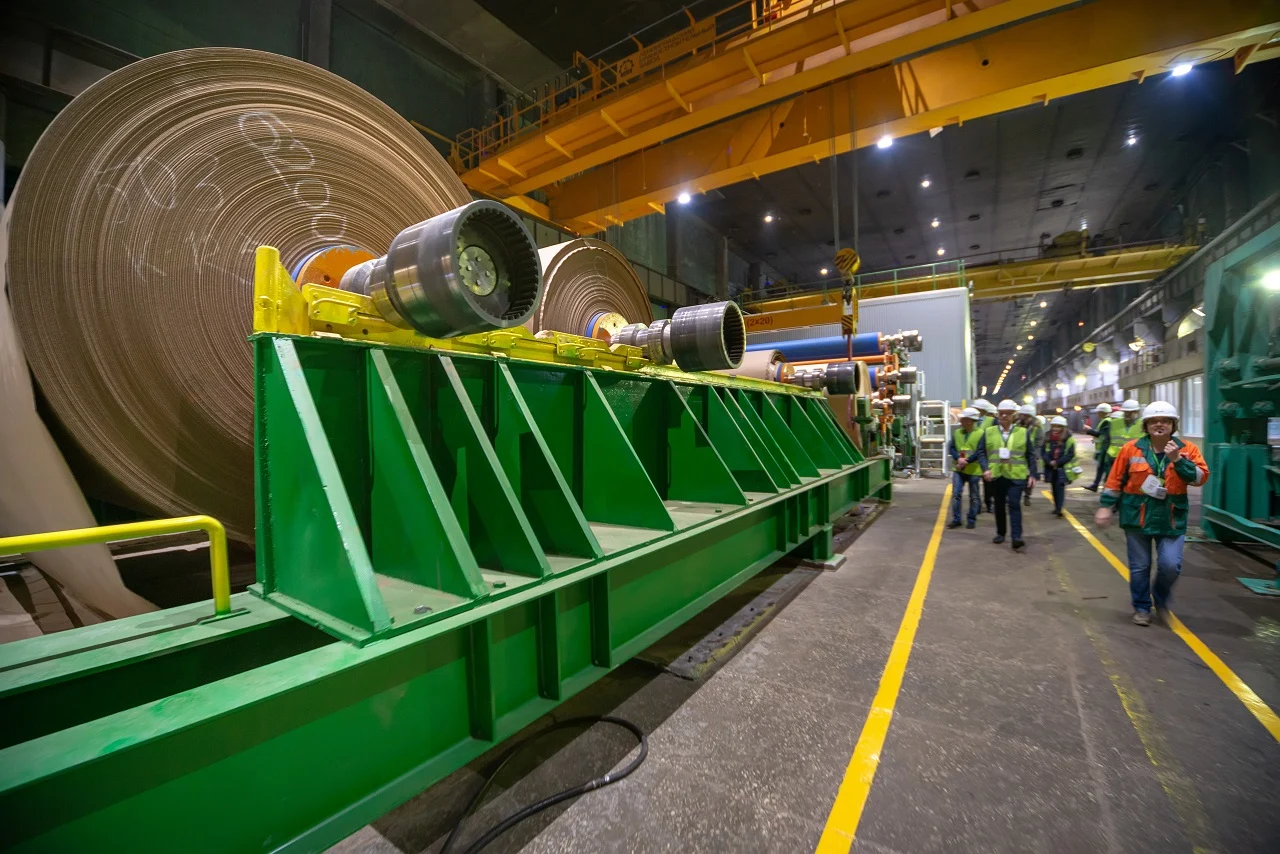
The board stream's modernisation was completed in autumn 2019. Ilim's December announcement described capacity rising to 300,000 tonnes a year. Russian and international customers visited the operation, interested in material properties as well as volume.

Board production forms a distinct strand of BLPK's history. Its development concerns packaging, strength requirements and a range of basis weights. Modernisation affects stock preparation and web formation across the process. The 300,000-tonne figure describes the board project reported in 2019. The new softwood pulp line has a separate capacity.

Customer visit in late November 2019. The photograph accompanies Ilim’s report on the completed reconstruction and 300,000-tonne annual board capacity.
2019

At the modernised board line

Customer visit in late November 2019. The photograph accompanies Ilim’s report on the completed reconstruction and 300,000-tonne annual board capacity.

Автор не указан / photographer not identified · Группа «Илим» / Ilim Group
© правообладателя / rights reserved · Original ↗

Sources

Commissioning across closed borders

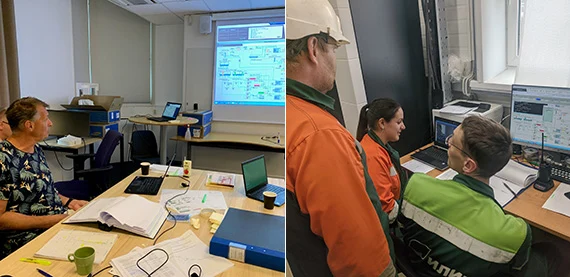
In summer 2020 a new evaporation line was commissioned at Bratsk. Pandemic restrictions prevented the usual travel by overseas specialists. Valmet describes a team working in Gothenburg while mill staff carried out tasks on site and shared data, photographs and video. Start-up took place in early July.

Remote links connected the workers beside the equipment with designers and commissioning specialists. The supplier rated evaporation line No. 8 at 980 tonnes of water evaporated per hour, rather than tonnes of pulp produced.

Valmet production photograph from the 17 August 2020 start-up account. The 980-tonne hourly figure concerns evaporated water, not pulp output.
≤ 2020

The new evaporation installation

Valmet production photograph from the 17 August 2020 start-up account. The 980-tonne hourly figure concerns evaporated water, not pulp output.

Автор не указан / photographer not identified · Valmet
© правообладателя / rights reserved · Original ↗

Valmet composite showing the remote team in Gothenburg and staff at the Bratsk site, documenting cooperation during 2020 travel restrictions.
2020

The teams on both sides of remote commissioning

Valmet composite showing the remote team in Gothenburg and staff at the Bratsk site, documenting cooperation during 2020 travel restrictions.

Автор не указан / photographer not identified · Valmet
© правообладателя / rights reserved · Original ↗

Sources
06

From timber to pulp

7 chapters

From roundwood to prepared chips

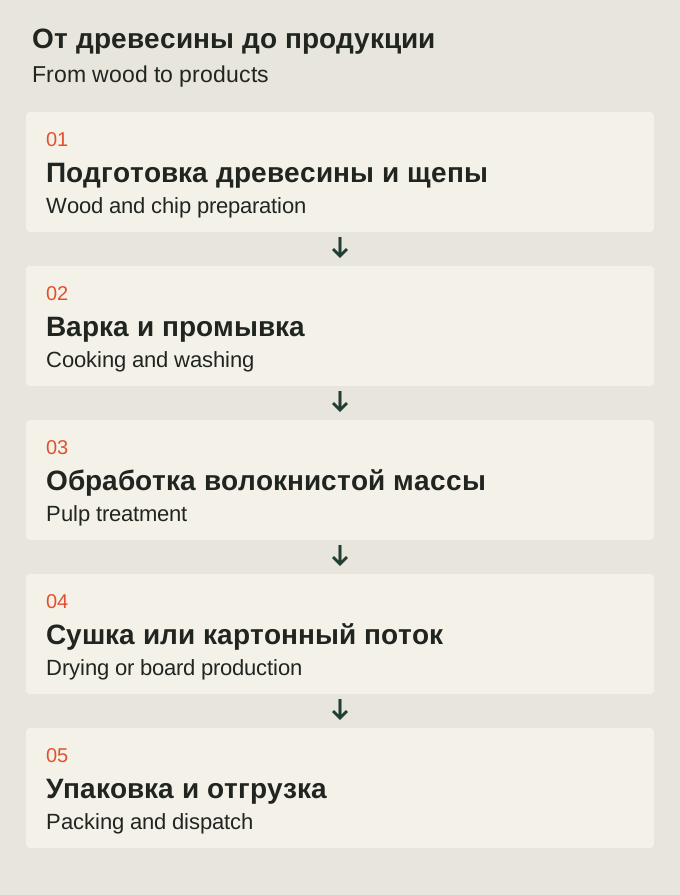
The first stage resembles familiar timber handling: incoming wood must be measured, sorted and prepared. For chemical processing it is converted into chips, with bark and unsuitable fractions separated. Cooking requires reasonably consistent feedstock.

Chip dimensions and composition affect how evenly the material is processed. Large timber stacks are consequently more than a reserve of wood: they form the beginning of a controlled production flow. Feed preparation connects the mill to forestry enterprises, transport and measurement systems. This describes the general pulp-industry sequence; the equipment and operating conditions of a particular Bratsk stream depend on its design.

Original overview of the general sequence. Market-pulp and board streams have different downstream operations; this is not a plan of a particular Bratsk workshop.
2026 · схема / diagram

From wood to products

Original overview of the general sequence. Market-pulp and board streams have different downstream operations; this is not a plan of a particular Bratsk workshop.

bratsk.com · bratsk.com
CC BY 4.0 · Original ↗

Sources

Cooking: separating fibre from wood

Wood contains more than papermaking fibre. Lignin binds its structure, and chemical cooking transfers much of that material into solution. Kraft, or sulphate, pulping uses cooking liquor and produces both fibrous pulp and spent liquor containing dissolved wood substances.

The aim is to preserve useful fibre properties while removing material that interferes with later processing. Two important streams leave the cooking stage: pulp moves towards cleaning and subsequent treatment, while spent liquor goes to recovery. Understanding the separation and reuse of these streams explains much of the mill's layout. This is a general description of the process, rather than a specification for an individual Bratsk digester.

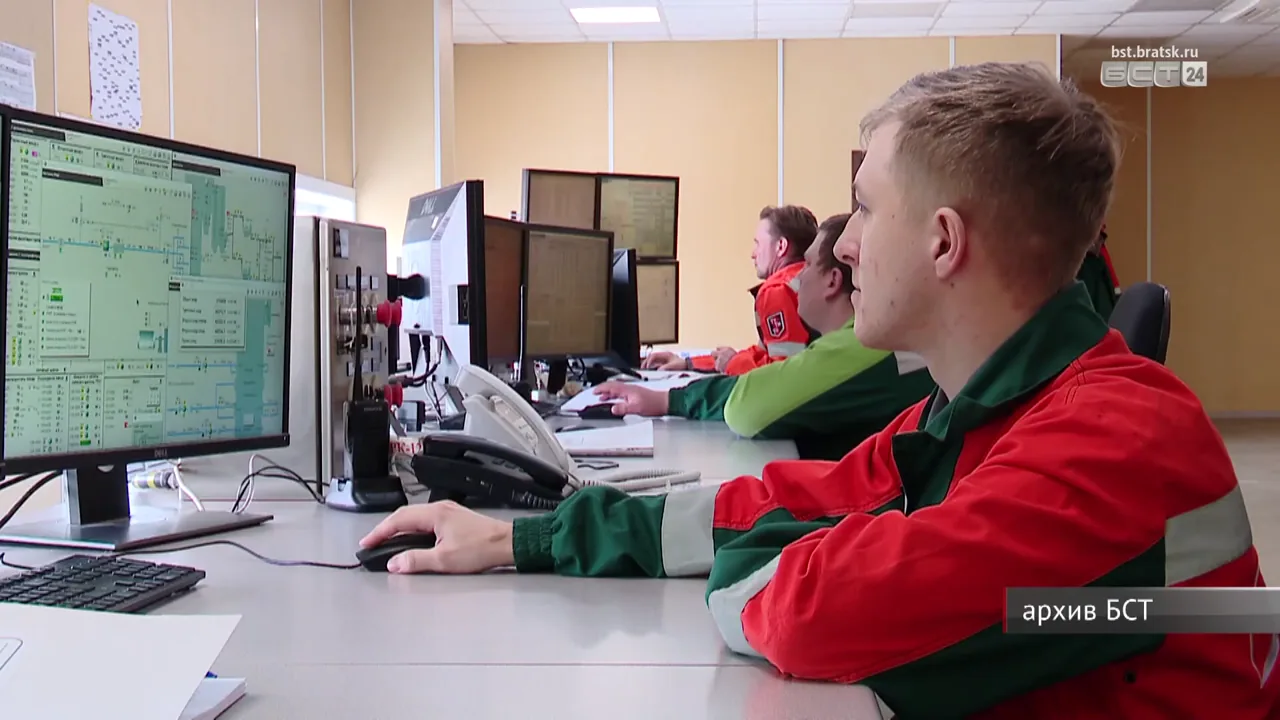
Mill operators at control screens. BST archive, frame 01:10 in the report published on 7 February 2025; filming date unspecified.
2025 · публикация / publication

Process control at the mill

Mill operators at control screens. BST archive, frame 01:10 in the report published on 7 February 2025; filming date unspecified.

Братская студия телевидения / Bratsk Television Studio · БСТ / BST
© БСТ. Использование с прямой ссылкой / Reuse with a direct source link · Original ↗

Sources

Softwood and hardwood pulp

The Bratsk branch's present range includes both bleached softwood and hardwood pulp. These are different materials, rather than two marketing names for the same thing. Differences in the wood are reflected in fibre properties and downstream use.

Customers select fibre for a paper or board recipe, sometimes combining several components. Bratsk supplies material with specified properties; office paper and other products in Ilim Group’s wider catalogue may be made at other sites.

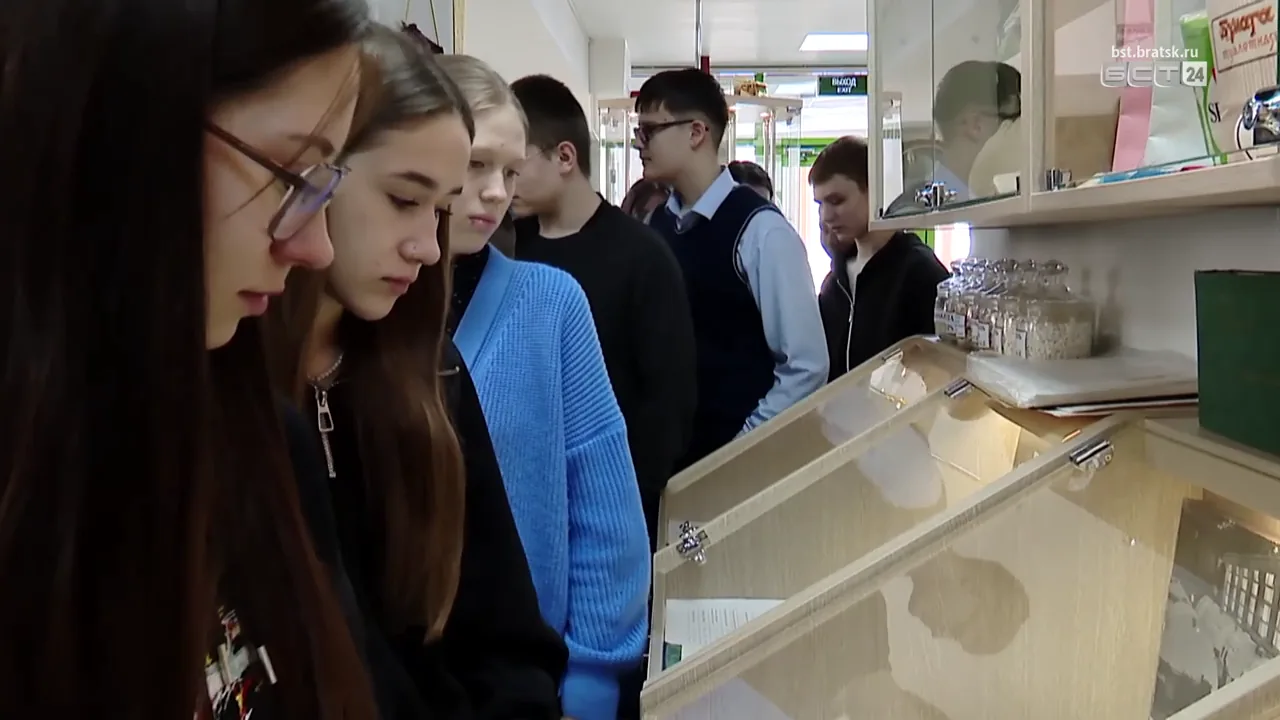
School No. 3 pupils examine product samples in the mill museum during their visit. BST report published on 17 March 2025, frame 00:55.
2025

Pulp samples in the factory museum

School No. 3 pupils examine product samples in the mill museum during their visit. BST report published on 17 March 2025, frame 00:55.

Братская студия телевидения / Bratsk Television Studio · БСТ / BST
© БСТ. Использование с прямой ссылкой / Reuse with a direct source link · Original ↗

Sources

Bleaching and the meaning of ECF

After cooking, pulp undergoes further treatment to remove residual lignin and achieve required properties. Bleaching technology matters for bleached grades. The industry distinguishes ECF, which avoids elemental chlorine, from TCF, which avoids chlorine-containing bleaching reagents.

ECF can use chlorine dioxide: the term refers to the absence of elemental chlorine, rather than every chlorine compound. Conversion to ECF was a separate objective in Bratsk’s modernisation programmes. The cited plans alone do not confirm completion across every line.

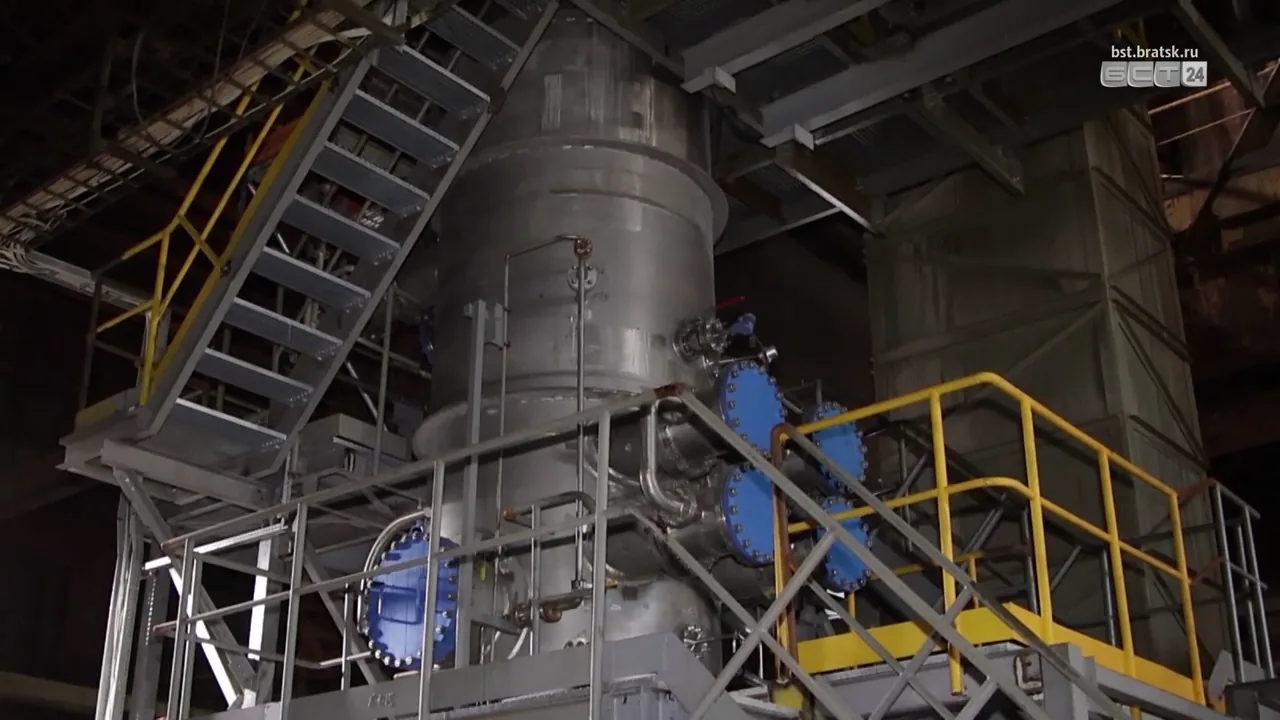
Equipment on the Bratsk mill hardwood pulp line during its upgrade. BST report published on 11 July 2023, frame 00:25.
2023

Hardwood pulp-line equipment

Equipment on the Bratsk mill hardwood pulp line during its upgrade. BST report published on 11 July 2023, frame 00:25.

Братская студия телевидения / Bratsk Television Studio · БСТ / BST
© БСТ. Использование с прямой ссылкой / Reuse with a direct source link · Original ↗

Sources

Black liquor: a side stream becomes a resource

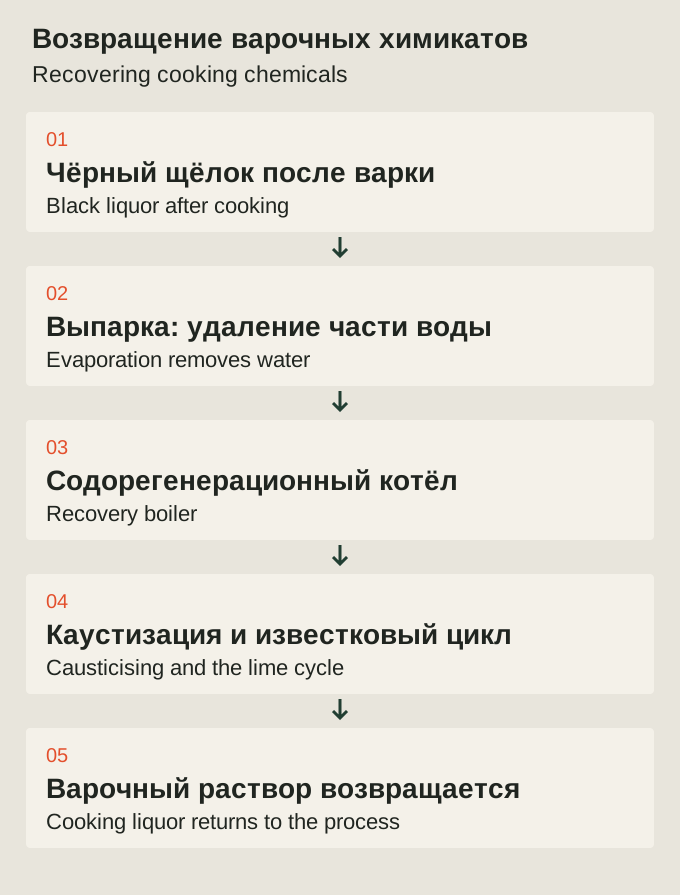
Cooking leaves black liquor, a solution containing dissolved wood substances and cooking chemicals. Kraft production sends this stream to concentration and recovery, separately from ordinary wastewater treatment.

After water removal, concentrated liquor reaches recovery operations. Organic material supplies energy and chemical components return to the cycle. Losses and make-up inputs remain, so the process is not entirely closed.

Original simplified kraft-recovery diagram. Organic material supplies energy; the chemical cycle includes additional streams, losses and make-up inputs.
2026 · схема / diagram

Recovering cooking chemicals

Original simplified kraft-recovery diagram. Organic material supplies energy; the chemical cycle includes additional streams, losses and make-up inputs.

bratsk.com · bratsk.com
CC BY 4.0 · Original ↗

Sources

Causticising and lime: an essential inner cycle

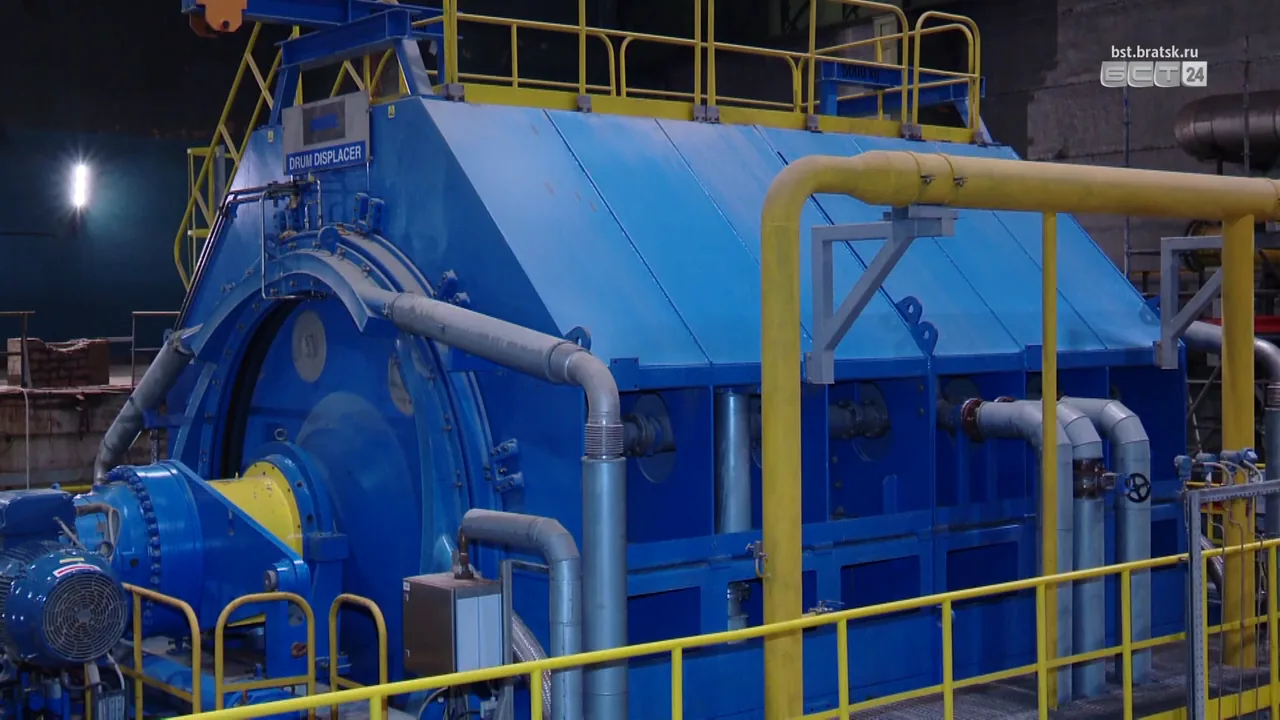
Recovered chemicals pass through several transformations before returning to cooking. Causticising and lime regeneration help restore the required cooking-liquor composition. This explains recurring terms in Bratsk industrial news: the causticising and lime-recovery department, lime kiln and electrostatic precipitator.

A lime kiln serves the main production’s chemical cycle. Its replacement can address capacity, reliability, resource use and specific emissions; actual results depend on operating conditions.

Equipment on the Bratsk mill site in a report on environmental upgrades. BST report published on 7 February 2025, frame 00:55.
2025

Industrial equipment installation

Equipment on the Bratsk mill site in a report on environmental upgrades. BST report published on 7 February 2025, frame 00:55.

Братская студия телевидения / Bratsk Television Studio · БСТ / BST
© БСТ. Использование с прямой ссылкой / Reuse with a direct source link · Original ↗

Sources

Why electricity alone is not enough

BLPK is often discussed alongside the Bratsk dam, but pulp production needs more than electricity. Process steam supplies heat for cooking, evaporation and drying. The complex's history therefore includes energy installations, boilers and connections between production processes.

Recovery operations return chemicals and contribute to the energy system. The industry also uses bark and wood residues for energy; each Bratsk boiler’s fuel depends on its design. Production needs steam and heat as well as electricity.

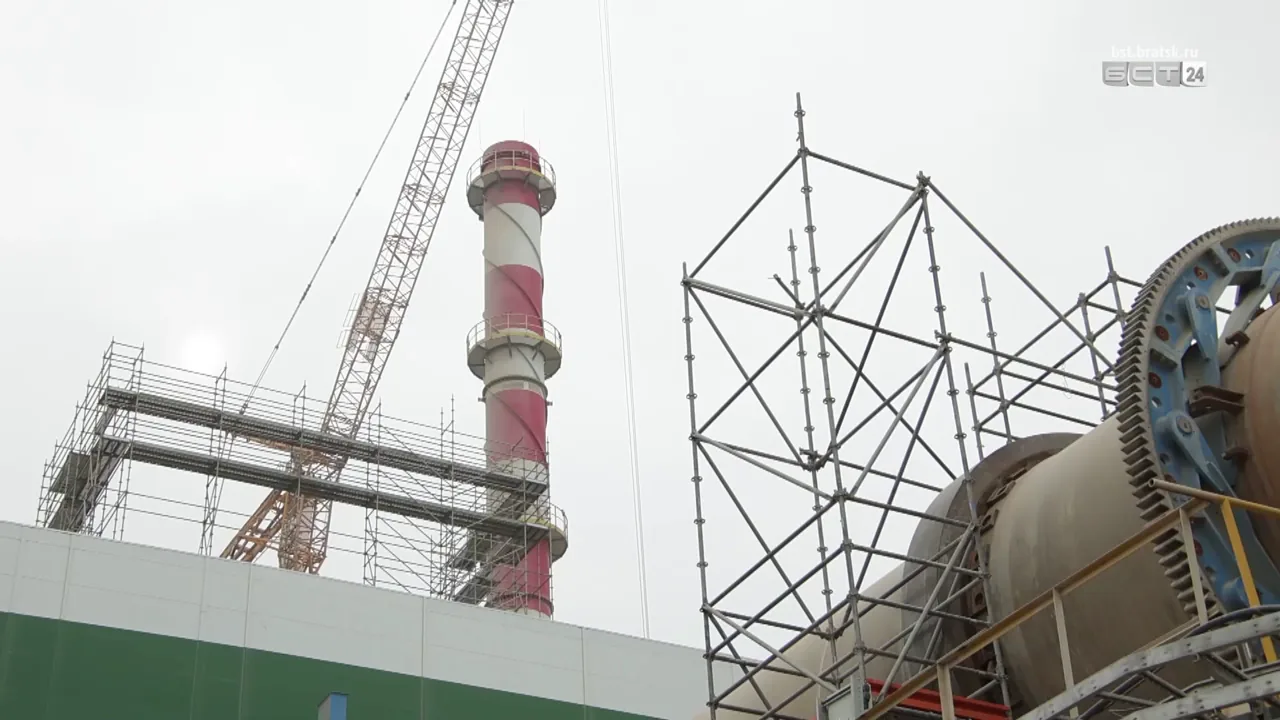
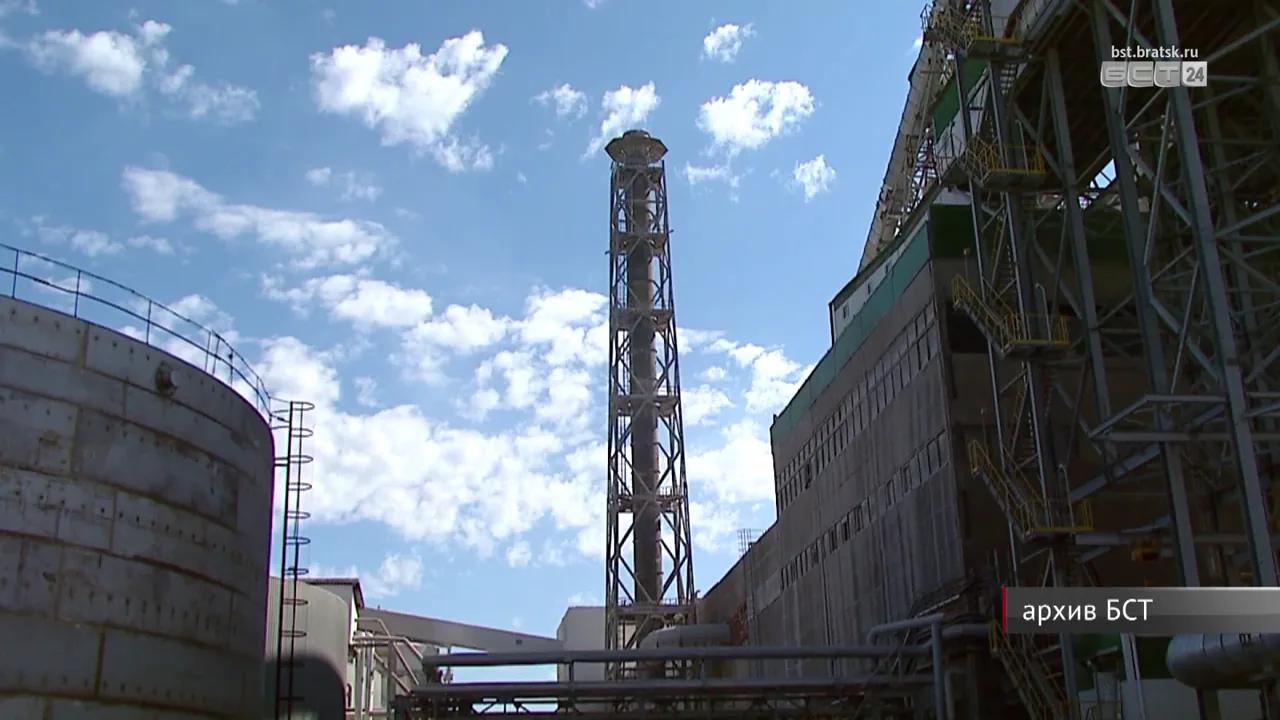
The Bratsk Ilim mill site. BST archive frame 00:25 in the report published on 7 February 2025; filming date unspecified.
2025 · публикация / publication

Structures on the Bratsk mill site

The Bratsk Ilim mill site. BST archive frame 00:25 in the report published on 7 February 2025; filming date unspecified.

Братская студия телевидения / Bratsk Television Studio · БСТ / BST
© БСТ. Использование с прямой ссылкой / Reuse with a direct source link · Original ↗

Sources
07

Products and forest resources

5 chapters

Drying and the market-pulp bale

Pulp leaves chemical processing as a water-containing stock. To supply other manufacturers it must be formed, dewatered, dried and packed for transport. Wet-lap and drying lines therefore feature prominently in mill occupations and recollections.

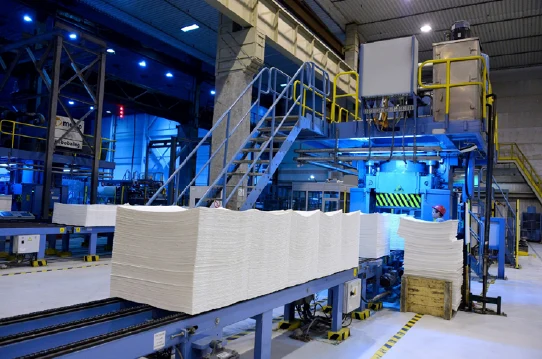
The pale bales in a modern production photograph are a marketable form of fibre raw material. They are not finished office paper, even if the material resembles thick sheets. A downstream mill prepares it again for its own process. Packaging, marking and protection determine its condition on arrival. BLPK's production chain thus extends beyond the digester to a product ready for the next journey.

Production image from the 2025 industry profile, showing bales of material for downstream processing rather than finished office paper.
≤ 2025

Packed market pulp

Production image from the 2025 industry profile, showing bales of material for downstream processing rather than finished office paper.

Автор не указан / photographer not identified · Ассоциация «Лестех» / Lestech Association
© правообладателя / rights reserved · Original ↗
Sources

Kraftliner: where a future box begins

Kraftliner forms the flat facing layers of corrugated board. It contributes to packaging performance, but a roll is not yet a finished box. Downstream manufacturers combine it with other layers, form blanks and make packaging for particular goods.

Expanding Bratsk's range of board basis weights allowed the mill to meet different customer requirements. Grams per square metre describe mass per unit area, not thickness in millimetres. Basis weight alone does not capture every property: strength and other characteristics also matter. The 2019 modernisation was therefore discussed with customers in terms of product capabilities as well as increased tonnage.

Sources

Forest-chemical products today

Forest-chemical products remain a separate part of the Bratsk branch's official range. They recall the integrated use of feedstock: cellulose fibre is not its only commercially valuable component. Separating and processing associated substances requires dedicated operations.

Feed yeast, the rosin-extraction plant and panel production belong to different stages of historical BLPK. Today’s Ilim branch has its own product range, listed in its current profile.

Sources

Rails, containers and the route east

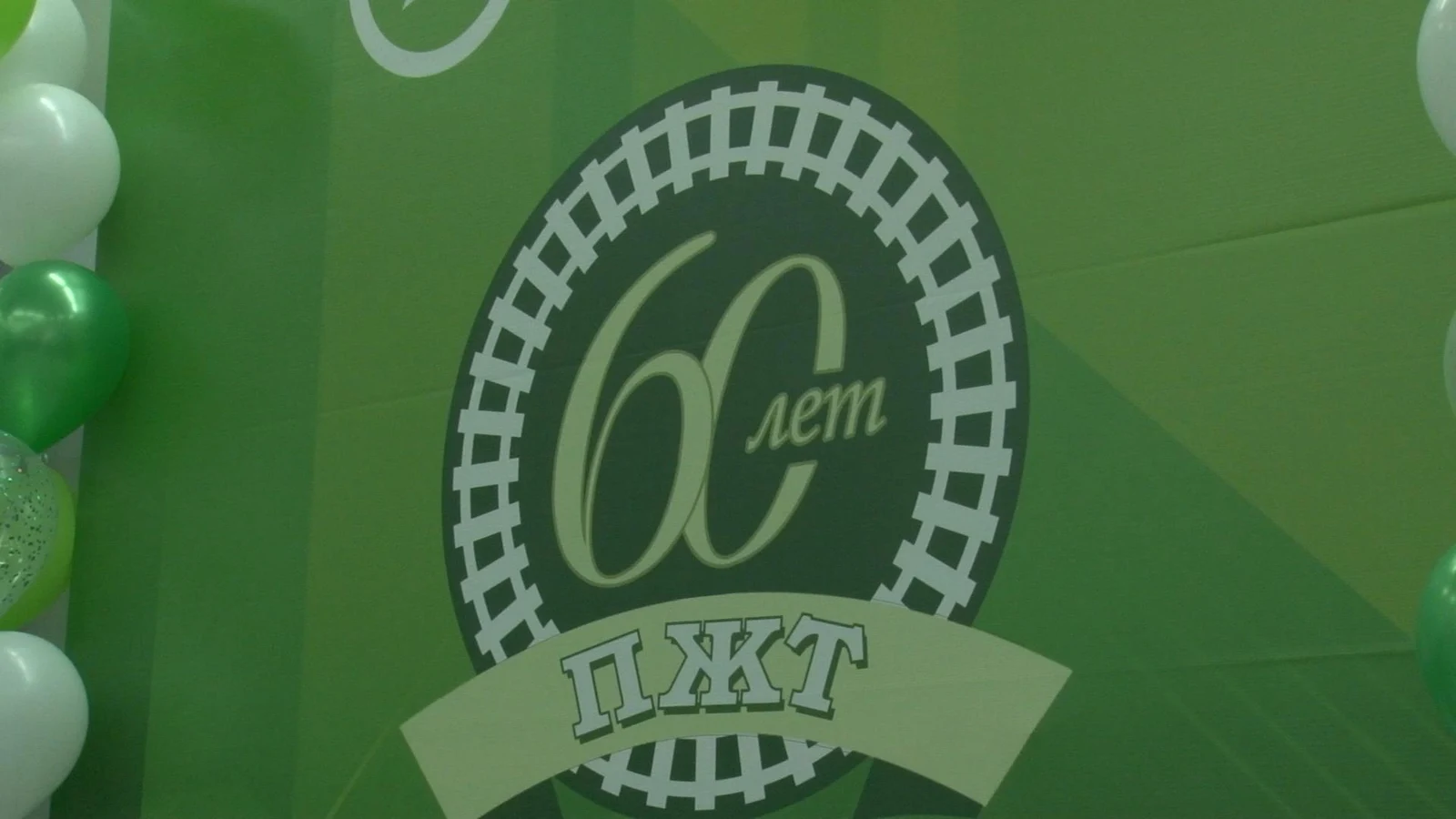
Railway operations accompanied BLPK before large-scale output began. The organisation now known as the Bratsk branch of Fintrans GL traces its history to the complex's early units. Its tasks include positioning and removing wagons, assembling trains, loading and transport maintenance.

China became an important export destination. The 2022 company chronology records container loading of pulp and dispatches through Tayshet using a dry-port arrangement. Modernisation thus continues beyond the workshop: making a material is insufficient without a dependable route to its customer. Routing, packaging and network capacity influence the site's work alongside cooking technology.

Frame from TRK Bratsk’s report on the transport enterprise tracing its roots to BLPK’s early units. This is a modern anniversary emblem, not an archival photograph of the first trains.
2024

Sixty years of the railway operation

Frame from TRK Bratsk’s report on the transport enterprise tracing its roots to BLPK’s early units. This is a modern anniversary emblem, not an archival photograph of the first trains.

Автор не указан / photographer not identified · ТРК «Братск» / TRK Bratsk
© правообладателя / rights reserved · Original ↗
Sources

The forestry branch: another part of the system

The city mill and the forestry branch in Bratsk District are not the same unit. Ilim's official page describes wood supply separately: Forest-Siberia operations supply both Bratsk and Ust-Ilimsk. Their work includes harvesting, roads, forest tending, fire-prevention infrastructure and regeneration.

Leased forests, timber deliveries and forestry staff are counted separately from the urban pulp branch. Harvesting and forest regeneration are distinct stages preceding pulp production.

Sources
08

Environment, people and memory

9 chapters

Why a pulp mill has an odour

The mill's characteristic smell forms part of residents' experience of Bratsk. Kraft processes can emit reduced sulphur compounds at several stages. Addressing odour therefore requires collecting gases from multiple process points rather than adding one universal filter.

Documents distinguish concentrated and dilute odorous gas streams; their properties determine collection and treatment. Smell does not give a precise concentration value. Air conditions are established through instrument observations.

Sources

The Vikhoreva: a river in the mill’s story

Roshydromet's 2025 review classifies Vikhoreva water as polluted at Chekanovsky and dirty at Koblyakovo. Those results concern specific monitoring cross-sections. The government review records river conditions; it does not automatically allocate each measured substance among individual sources.

Company programmes seek to reduce pressure on the Vikhoreva. Measurements at an outfall describe the discharge, while river samples describe conditions at the sampling point; these are separate indicators.

Sources

Several industries share one city’s air

Roshydromet's annual review for 2025 includes Bratsk among cities with a composite atmospheric pollution index of at least 14. This describes urban air affected by multiple sources. Assigning the whole index to BLPK alone, or treating it as one pollutant's result, would be incorrect.

Plant emissions are measured in tonnes, while air beside homes is assessed through concentrations of particular substances. Government monitoring and factory programmes cover different subjects and periods.

Bratsk from the air, 2013. A general city view; the visible plume has not been attributed to a specific enterprise.
2013

City, forest and an industrial horizon

Bratsk from the air, 2013. A general city view; the visible plume has not been attributed to a specific enterprise.

OLOXOVA · Wikimedia Commons
CC BY-SA 3.0 · Original ↗

Sources

Environmental programmes: spending, projects and commitments

In May 2022 Ilim announced a programme exceeding 18 billion roubles for 2022–2026, covering air-related measures and reduced pressure on the Vikhoreva. In April 2024 it described further dilute-gas collection, gas-cleaning and chemical-recovery reconstruction work.

The announcements describe programme objectives and budgets at publication. Outcomes depend on commissioning and actual changes in emissions and discharges; announced deadlines could later be revised.

Illustration accompanying Ilim’s environmental programme published on 17 May 2022. The photograph does not establish completion of every future project described in that announcement.
≤ 2022

Equipment on the industrial site

Illustration accompanying Ilim’s environmental programme published on 17 May 2022. The photograph does not establish completion of every future project described in that announcement.

Автор не указан / photographer not identified · Группа «Илим» / Ilim Group
© правообладателя / rights reserved · Original ↗
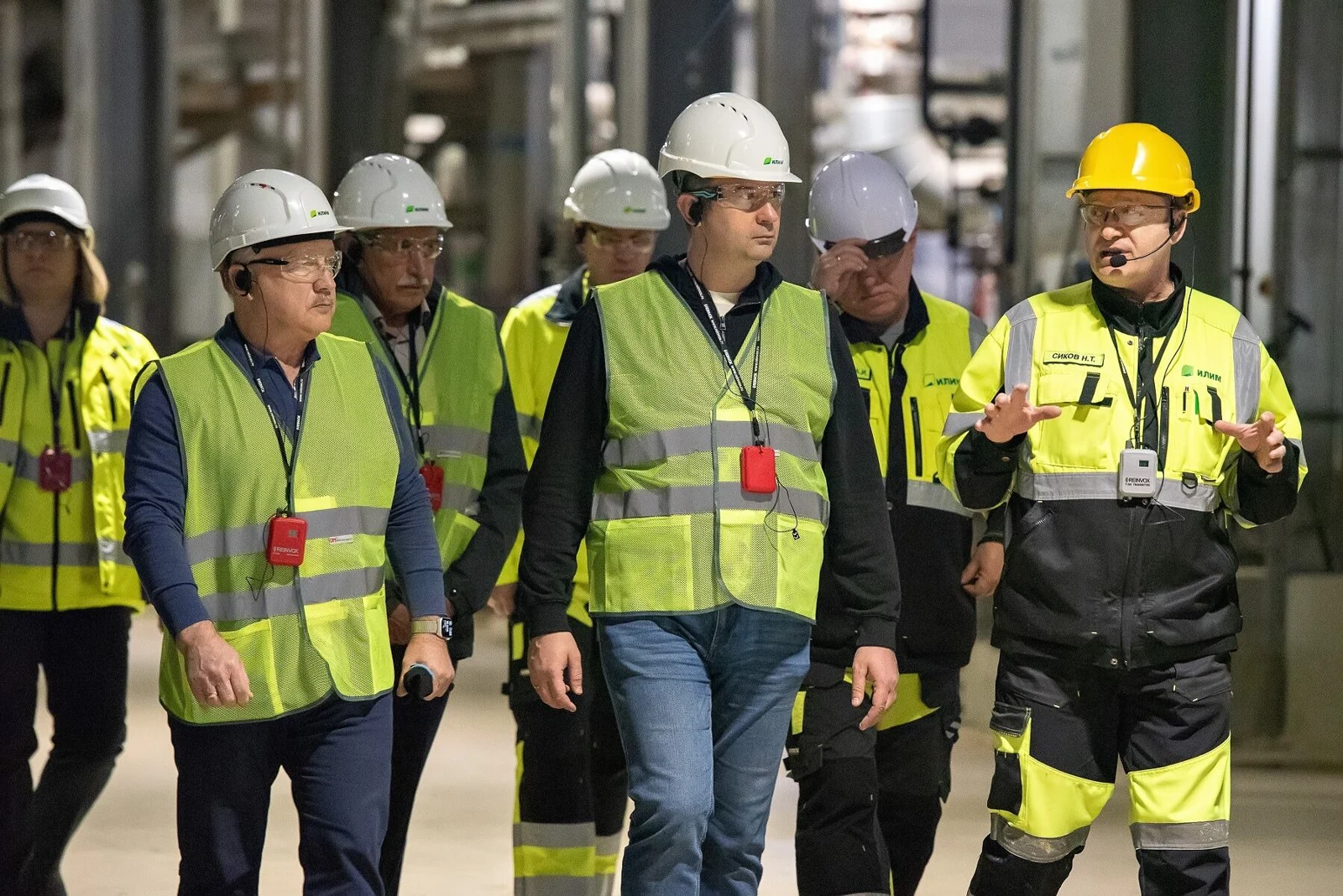
Visit by Clean Air project-office head Maxim Korolkov in April 2024. The company publication describes programmes and target dates as stated then.
2024

Discussing environmental projects on site

Visit by Clean Air project-office head Maxim Korolkov in April 2024. The company publication describes programmes and target dates as stated then.

Автор не указан / photographer not identified · Группа «Илим» / Ilim Group
© правообладателя / rights reserved · Original ↗
Washing equipment on the hardwood pulp line in Bratsk. BST report published on 11 July 2023, frame 01:30.
2023

Pulp-washing equipment

Washing equipment on the hardwood pulp line in Bratsk. BST report published on 11 July 2023, frame 01:30.

Братская студия телевидения / Bratsk Television Studio · БСТ / BST
© БСТ. Использование с прямой ссылкой / Reuse with a direct source link · Original ↗

Sources

The 2026 update: deadlines proved difficult

A report from the deputy commission meeting on 12 May 2026 records chief environmental specialist Galina Bystrova acknowledging delays on odorous-gas targets. Instead of the earlier 44-tonne annual goal, she described an expected 46–48 tonnes after the board-stream project. Uncertainty about meeting nitrogen-oxide quotas was also discussed.

These are a company representative’s public statements as reported by a local publication. On 19 October 2026 the year was unfinished, and the material used did not contain confirmed results for every annual target.

Sources

Vyacheslav Mikheyenko: from dryer operator to director

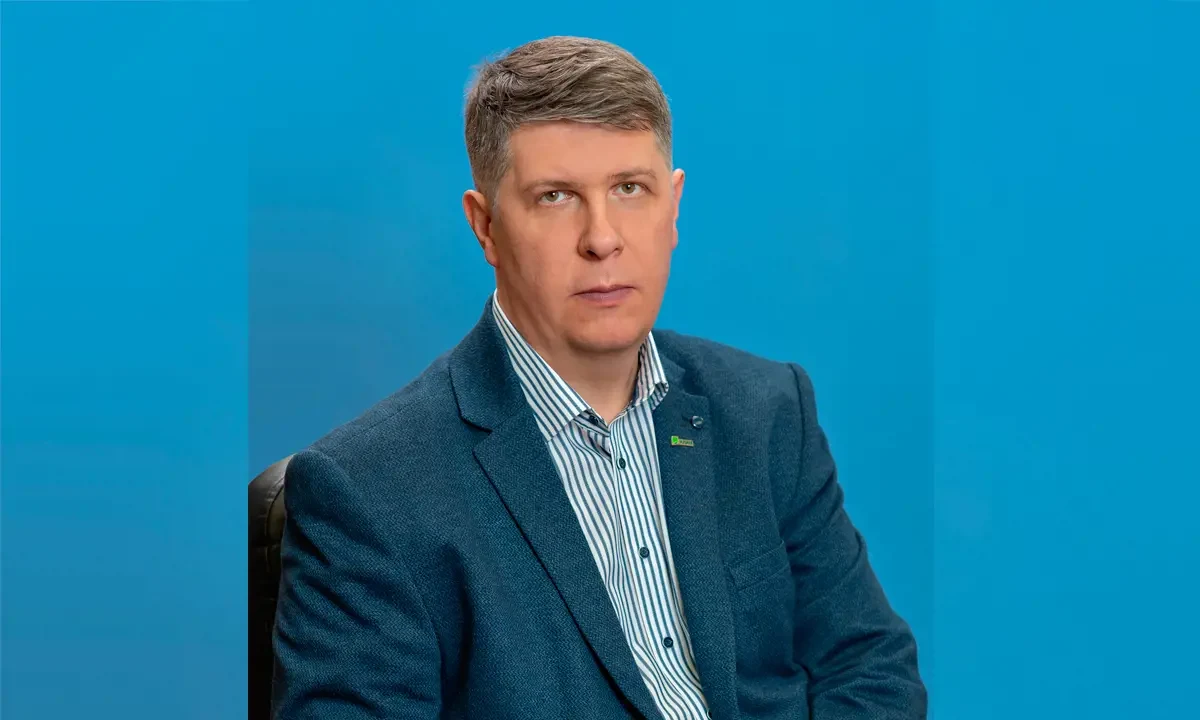
An announcement published on 27 June 2025 named Vyacheslav Valentinovich Mikheyenko as director of the Bratsk branch. His career began as a wet-lap dryer operator. He trained at the Bratsk pulp and paper technical school, continued his education and held production-management roles.

The official branch page identifies Mikheyenko as director at the check date. His long career at the mill began in drying operations.

Portrait accompanying the Bratsk branch director appointment announcement of 27 June 2025. No exact shooting date is supplied.
≤ 2025

Vyacheslav Valentinovich Mikheyenko

Portrait accompanying the Bratsk branch director appointment announcement of 27 June 2025. No exact shooting date is supplied.

Пресс-служба Группы «Илим» / Ilim Group press service · БСТ / BST
© правообладателя / rights reserved · Original ↗
Sources

Sixty years of BLPK

The Bratsk mill marked its sixtieth anniversary in 2025. Intergenerational meetings, recollections and workforce events formed part of the occasion. A March Ilim Cup quiz tournament, for example, was dedicated to the anniversary, showing a factory community expressed through shared activity as well as production results.

Training, technological change and environmental projects continued at the site beyond its sixtieth anniversary.

Frame from TRK Bratsk’s report on the transport enterprise tracing its roots to BLPK’s early units. This is a modern anniversary emblem, not an archival photograph of the first trains.
2024

Sixty years of the railway operation

Frame from TRK Bratsk’s report on the transport enterprise tracing its roots to BLPK’s early units. This is a modern anniversary emblem, not an archival photograph of the first trains.

Автор не указан / photographer not identified · ТРК «Братск» / TRK Bratsk
© правообладателя / rights reserved · Original ↗
Sources

Olontsev’s monument and the people behind the complex

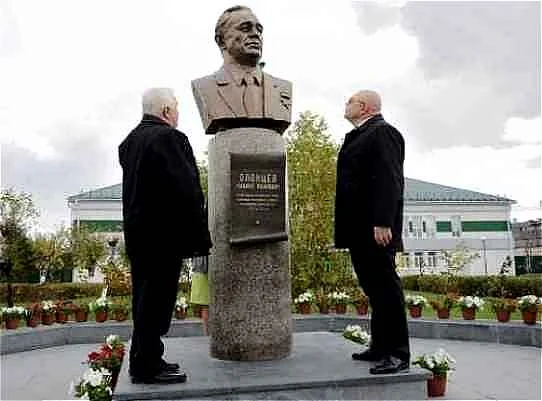
A monument to Mikhail Olontsev was unveiled in Bratsk for BLPK's fiftieth anniversary in 2015. It commemorates the leader associated with the operating mill's beginnings, while the wider history belongs to technologists, process operators, cooks, dryer workers, maintenance teams, railway staff, forestry workers and builders.

Captions identify known names, departments, dates and sources. Where the exact shooting date is unknown, the available dating is retained.

Monument to the leader of the operating mill’s first years, unveiled for the complex’s fiftieth anniversary in 2015. The source caption identifies his son beside it; no exact shooting day is given.
≥ 2015

At Mikhail Olontsev’s monument

Monument to the leader of the operating mill’s first years, unveiled for the complex’s fiftieth anniversary in 2015. The source caption identifies his son beside it; no exact shooting day is given.

Автор не указан / photographer not identified · Имена Братска / Imena Bratska
© правообладателя / rights reserved · Original ↗
Sources

Further reading and places to continue the story

The most extensive open source used here is the anniversary chronicle Historical Has Become Our Portrait on Ilim's website, combining factory reporting, recollections and photographs across fifty years. Read it alongside the libraries' city chronology, the college history and contemporary technical announcements: each has its own period and perspective.

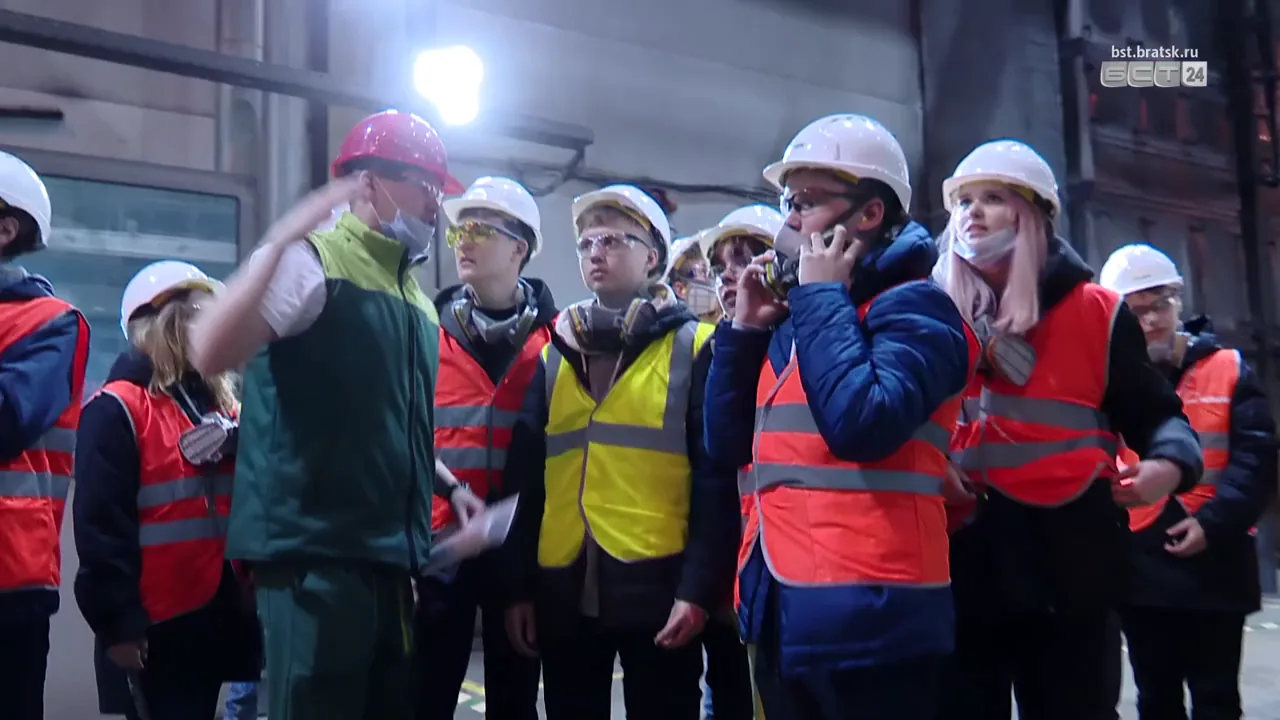
In Bratsk, the complex’s story continues at Bratsk-ART, along former factory transport routes and through museum and library materials. The mill is an operating industrial site with controlled access; organised visits require arrangements with the enterprise. Related site sections cover BrAZ, the dam, neighbourhoods and cultural life.

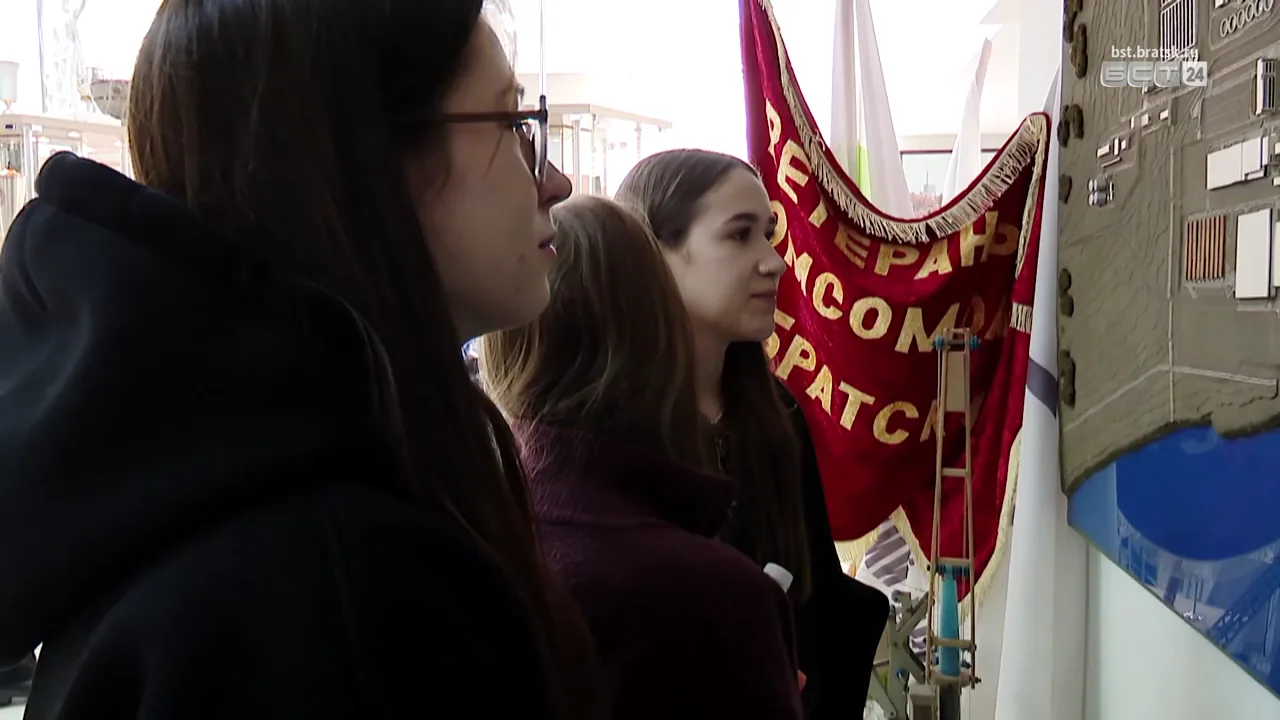
School No. 3 pupils visiting the Bratsk Ilim mill site. Report published on 17 March 2025, frame 01:10.
2025

School pupils on the mill site

School No. 3 pupils visiting the Bratsk Ilim mill site. Report published on 17 March 2025, frame 01:10.

Братская студия телевидения / Bratsk Television Studio · БСТ / BST
© БСТ. Использование с прямой ссылкой / Reuse with a direct source link · Original ↗
A school group at the Bratsk mill museum history displays. BST report published on 17 March 2025, frame 01:50.
2025

Mill history in its museum display

A school group at the Bratsk mill museum history displays. BST report published on 17 March 2025, frame 01:50.

Братская студия телевидения / Bratsk Television Studio · БСТ / BST
© БСТ. Использование с прямой ссылкой / Reuse with a direct source link · Original ↗
Sources

Useful links

Read the original BLPK anniversary chronicle ↗Official Ilim Bratsk branch page ↗BrAZ: another major Bratsk story ↗Bratsk hydroelectric station ↗City districts ↗Books about Bratsk ↗Museums of Bratsk: a guide to the collections ↗
Sources and dates

Checked 19 October 2026. Historical BLPK included enterprises now associated with Ilim Group and Ilim Timber. First cooks, start-up and formal acceptance took place on different dates. Capacity, annual output and cumulative production are separate measures. Environmental information includes the May 2026 public report and Roshydromet’s 2025 review. Some photographs have no confirmed shooting date.