A village as a museum
Angara Village was created to rescue the region’s wooden buildings. An Evenki exhibition opened in 1982. Its museum setting preserves buildings and objects from a transformed river landscape.
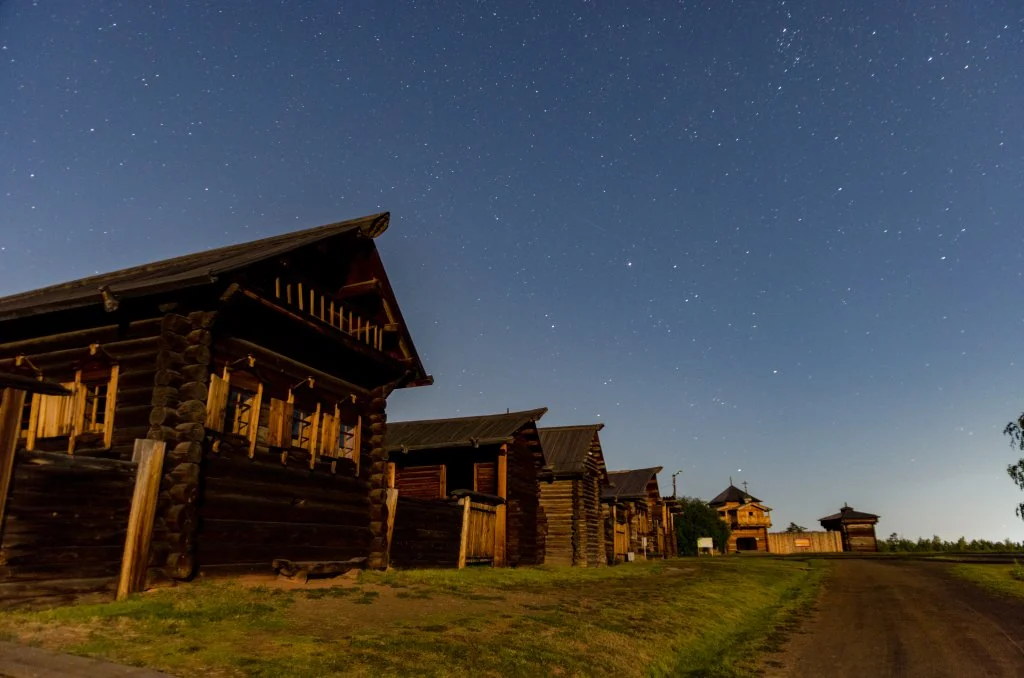
The village street
Wooden buildings in the Russian sector. This is an ensemble assembled on a new site, rather than a single village street preserved in place.
Фотограф не указан / Photographer not named · Братский городской объединённый музей / Bratsk City Museum
© Bratsk City Museum · официальная музейная публикация / official museum publication · Original ↗
Political exile returns to the narrative
Visitors entered the Ryabikov house exhibition in December 1989. Several museums joined an association in early 1990. Alongside construction achievement, longer histories became visible: exile, earlier settlements, Indigenous cultures and ordinary objects.
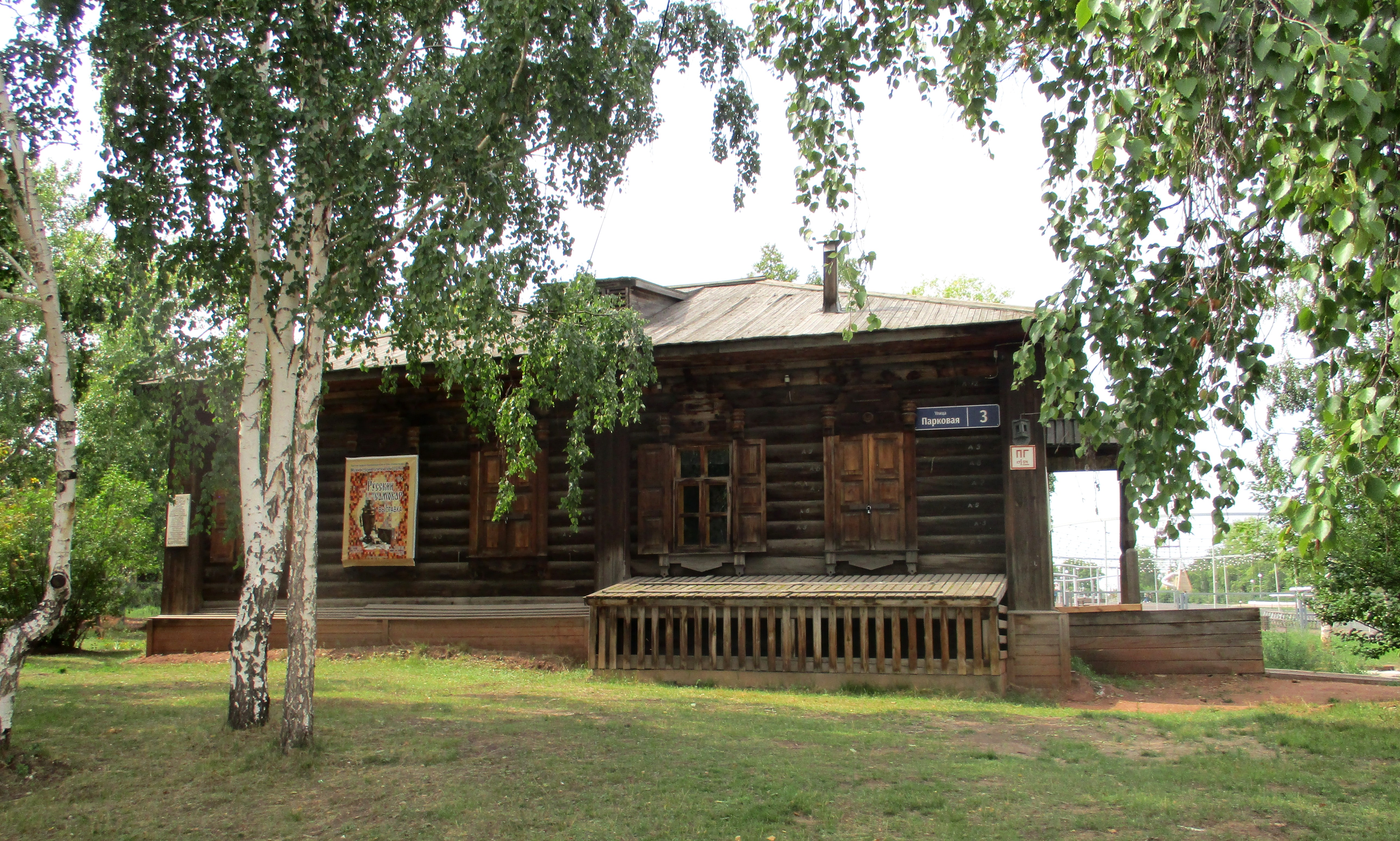
Museum of Political Exile
17 August 2021. Museum of the History of Political Exile. A modern photograph, not an archival image.
Andrijko Z. · Wikimedia Commons
CC BY-SA 4.0 · Original ↗
Residents become keepers
The Bratsk local history society was founded on 26 March 1991. Residents gathered documents, memories and collections, preserving the stories of older settlements and the new city.
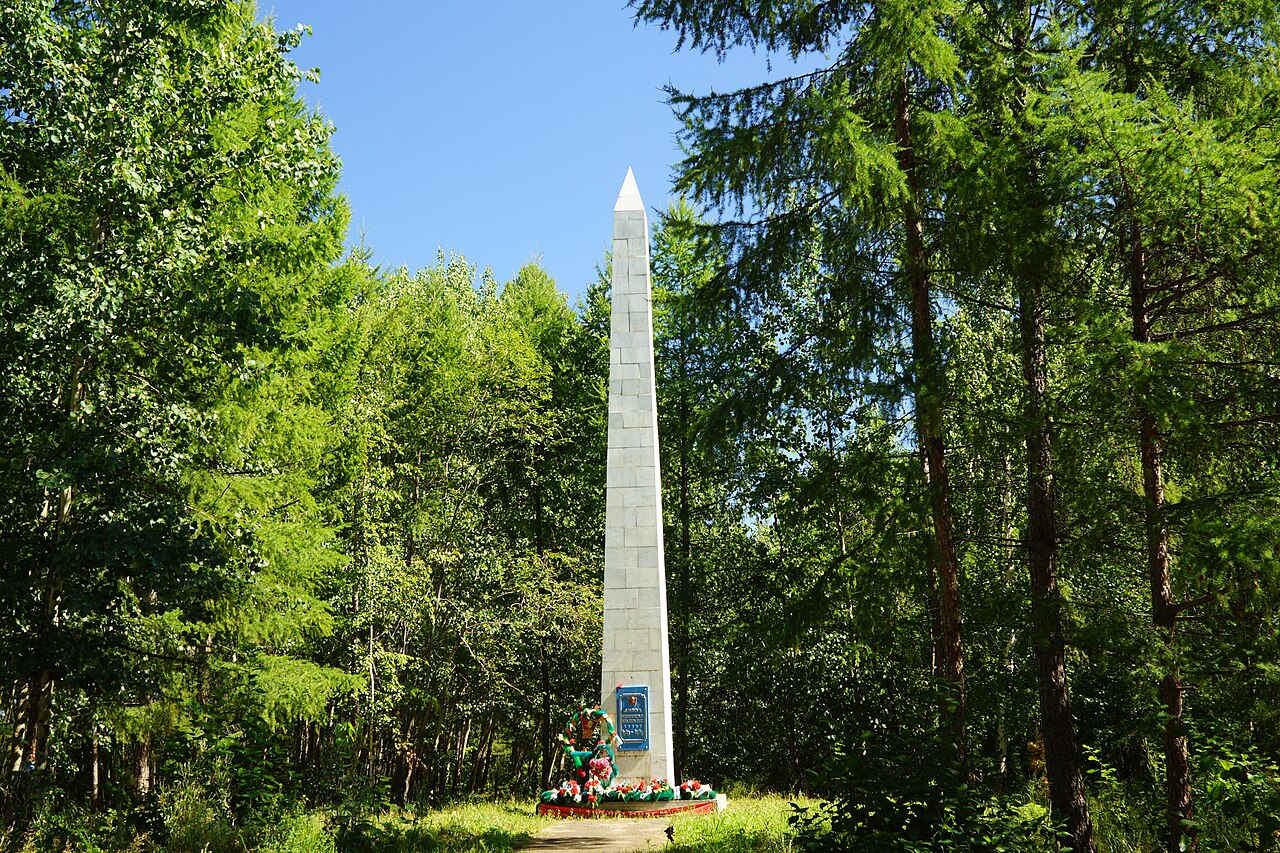
Remembering the builders, Padun
16 August 2020. Memorial to the Komsomol builders of Bratsk HPP in Padun.
Vasily Astanin · Wikimedia Commons
CC BY-SA 4.0 · Original ↗
Memory has an address
The reservoir changed addresses and the surroundings of preserved buildings. A relocated house retains its fabric and structure; plans, photographs and family accounts help reconstruct its former neighbourhood. Museums and libraries give these records a lasting place in the city.
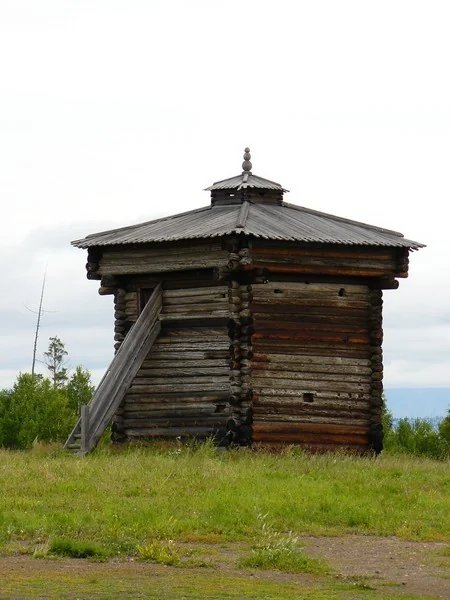
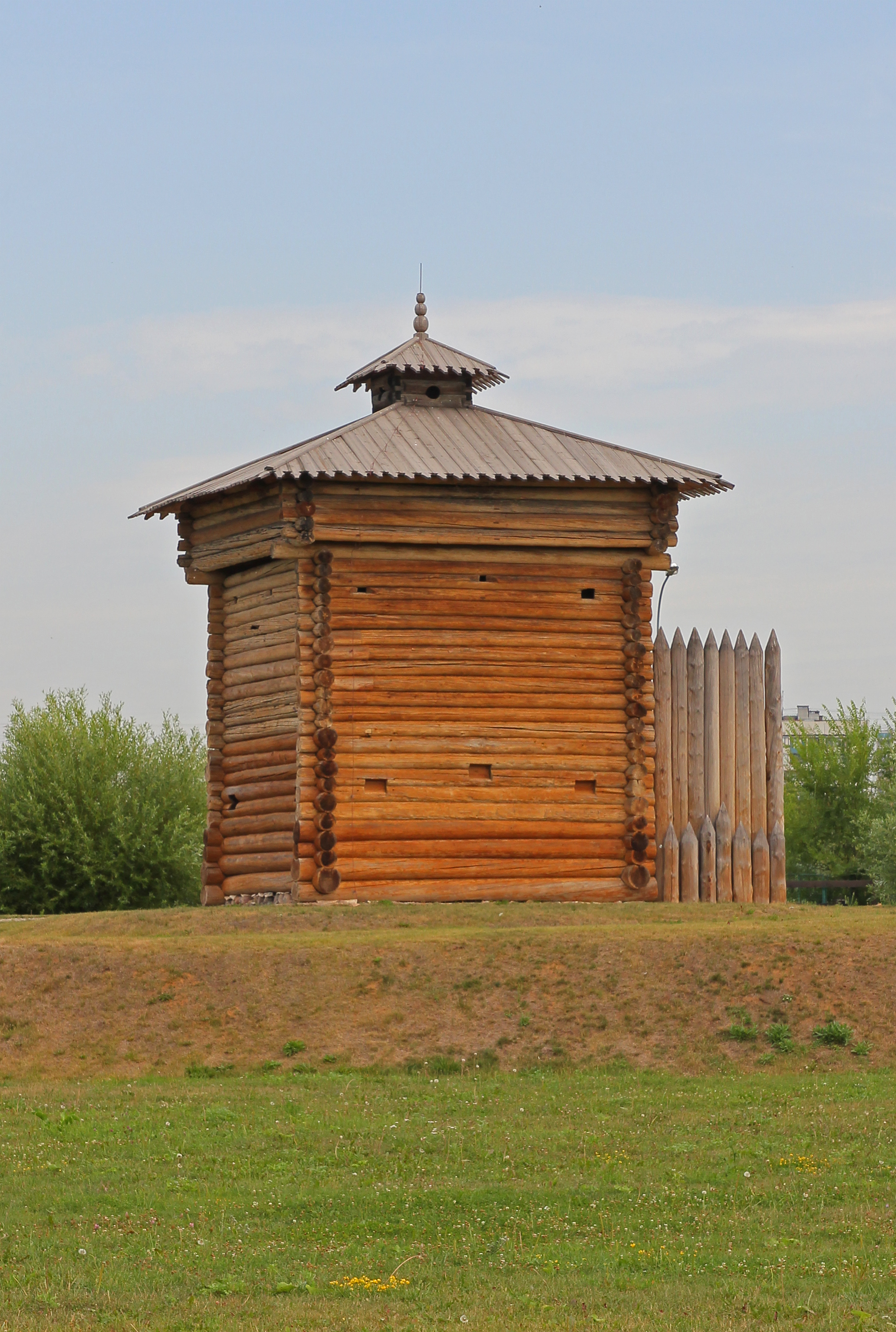
An original Bratsk Ostrog tower
The southwest tower at Angara Village. A 2026 study dates the surviving towers to 1685, revising the traditional museum date of 1654.
Фотограф не указан / Photographer not named · Братский городской объединённый музей / Bratsk City Museum
© Bratsk City Museum · официальная музейная публикация / official museum publication · Original ↗