Confinement and forced settlement
Archpriest Avvakum was confined at Bratsk Ostrog twice in 1656–1658. Almost two centuries later, the Decembrist Pyotr Mukhanov lived here in forced settlement after penal servitude. Remoteness served as a means of punishment and isolation.
Science beside the river
In 1866 the exiled Aleksander Czekanowski was living in Padun and studying the geology of the Angara valley. Alexander Radishchev passed through the fort in 1797 on his return from Siberian exile.
A house survives relocation
The new city preserves a house associated with Valentin Ryabikov and political exile. Its exhibition opened in December 1989. The photograph of the preserved building was taken in 2021.
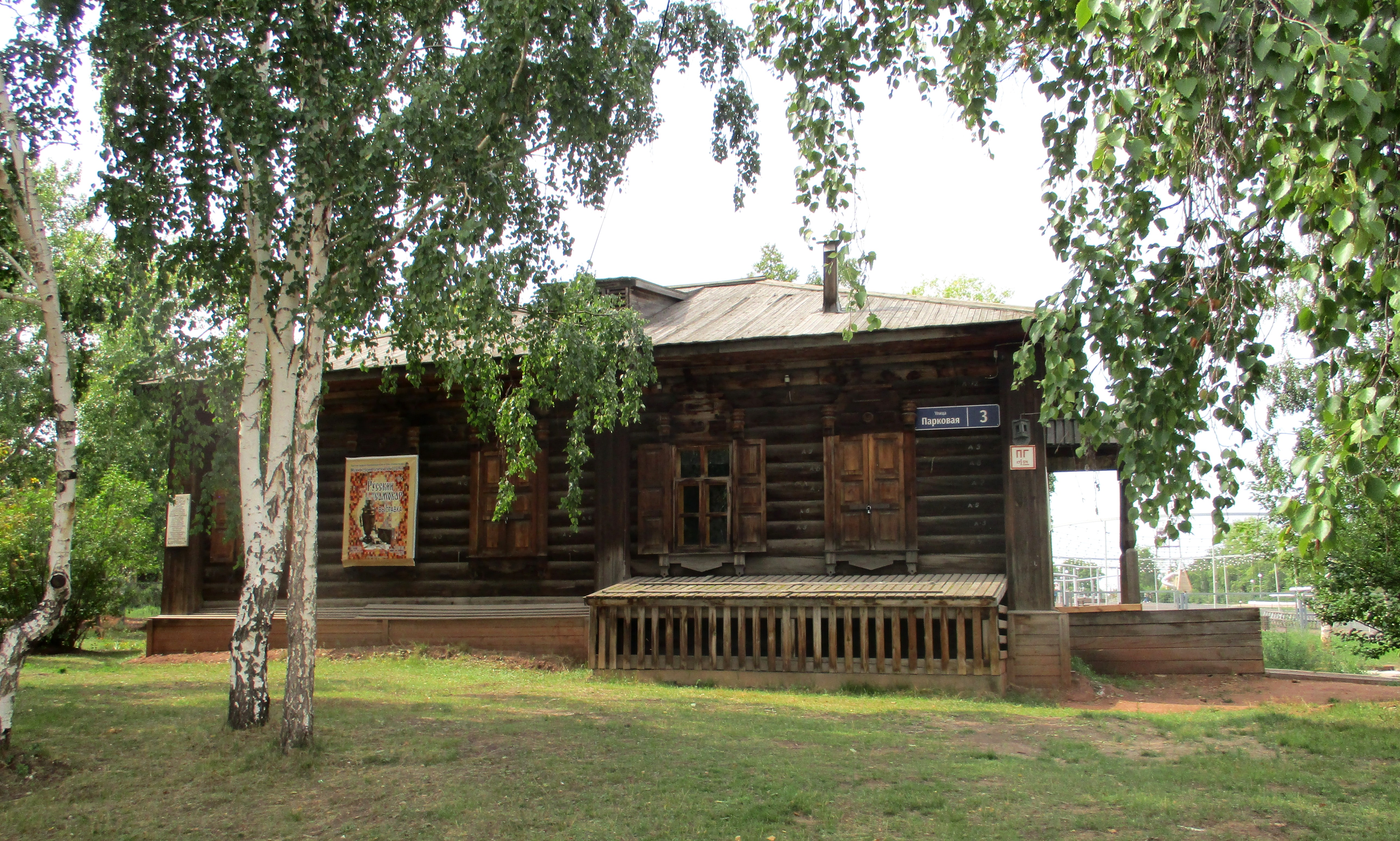
Museum of Political Exile
17 August 2021. Museum of the History of Political Exile. A modern photograph, not an archival image.
Andrijko Z. · Wikimedia Commons
CC BY-SA 4.0 · Original ↗
A surviving house and continuing memory
Museum documents, biographies and objects trace the lives of exiles far from familiar surroundings. The memorial plaque photographed in 2015 shows how the city remembers this part of its past.