← Explore the cityBRATSK / PEOPLE & PLACES

Mayors of Bratsk.

From the transition to municipal government in the 1990s to the current mayor: terms, responsibilities and changing election systems.

Who counts as the first mayor?

A Soviet executive committee chair, a city administration head and a mayor are historically different offices. A mayoral list should therefore not begin with the head of dam construction or a Communist Party secretary. Bratskgesstroy managed a major construction organisation; the executive committee managed municipal executive functions; party leadership held a separate institutional role.

Ivan Nevmerzhitsky became executive committee chair in 1990. The city chronology places the beginning of his work as administration head in January 1992. His Legislative Assembly biography identifies him as mayor following the 1994 election. These dates describe a transition by one leader through different forms of city government.

The entries below cover the post-Soviet municipal system. Brief acting appointments and separate administration-head posts are not presented as additional mayoral terms. This matters particularly during the period when the mayor and the city administration’s chief were different people. Distinguishing the offices makes the chronology clearer than simply assigning every city leader the same modern title.
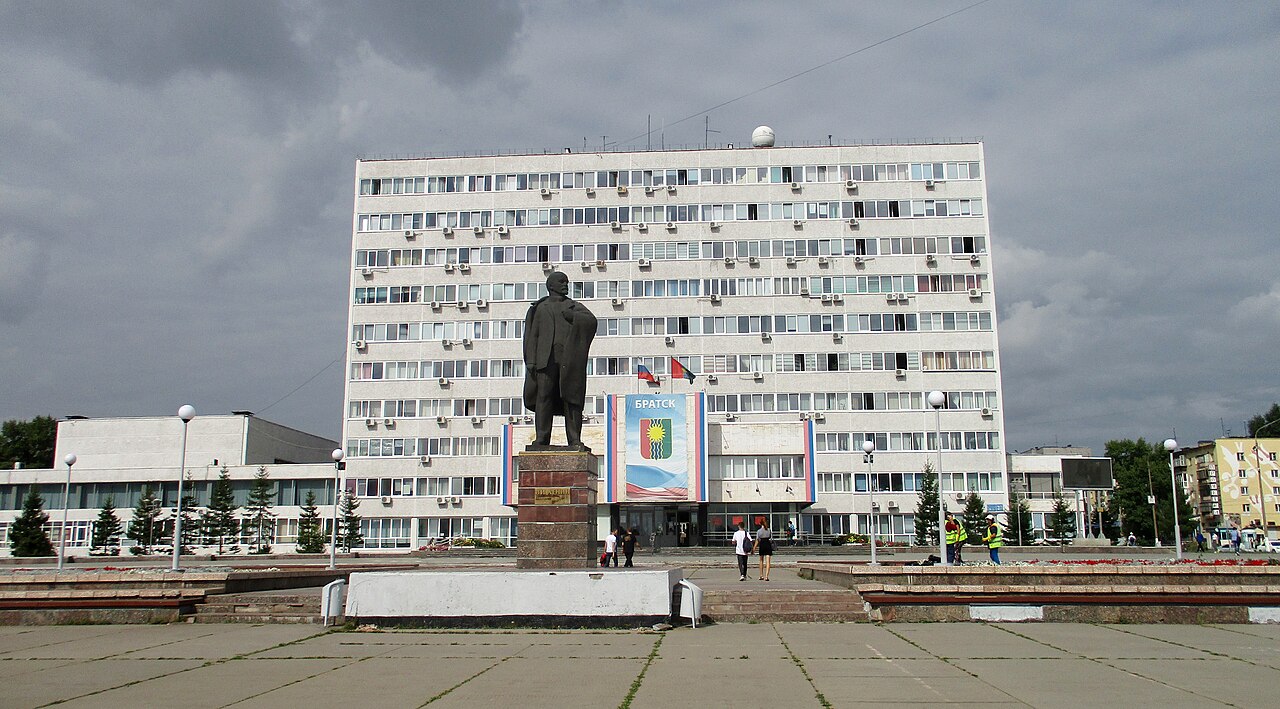
17 August 2021. City administration building in the Central residential area.
2021

City Hall, Centre

17 August 2021. City administration building in the Central residential area.

Andrijko Z. · Wikimedia Commons
CC BY-SA 4.0 · Original ↗

Ivan Pavlovich Nevmerzhitsky

Nevmerzhitsky belonged to the generation of builders who made Bratsk their professional home. His Legislative Assembly biography records arrival in 1959, followed by work in construction and municipal administration. That experience carried into the changing political and economic conditions of the early 1990s.

His period in charge includes appointment as administration head and subsequent election as mayor. The 1994 election represented a new basis for the city mandate. The later office title should not be applied to the whole earlier period without explanation.

His leadership coincided with the transition from Soviet institutions to Russian local government. Specific housing, budget or institutional decisions need dated municipal documents. An anniversary biography describes a career and its author’s assessment, but cannot substitute for examining individual outcomes. Alexander Petrunko became the next elected mayor in 1998. This entry therefore separates a professional biography, the method of taking office and the sequence of municipal leadership.

Alexander Konstantinovich Petrunko

Petrunko was elected mayor on 15 March 1998 and re-elected in 2002. His earlier career included the energy sector and Bratsk HPP. The move from a major enterprise into municipal leadership reflects a feature of industrial Bratsk: city politics intersected closely with large workplaces and their communities.

A mayor’s responsibilities nevertheless differ from a station director’s. Municipal budgets, public spaces, social institutions and relations with the representative body form another system of accountability. Dated decisions and their outcomes provide a firmer basis for assessing a term than merging a management biography with a political portrait.

His leadership ended in 2005. The chronology covers two electoral mandates held by one person, rather than two different mayors. The years are combined in the heading while retaining the fact of re-election. That distinction keeps both the succession and the electoral history visible.

Sergei Serebrennikov: the first period

Sergei Vasilyevich Serebrennikov’s first period followed the 2005 election. He was re-elected in 2009 and left the post early in 2010. He later returned to city leadership, but other mayors held office between those periods.

Describing his tenure as an uninterrupted 2005–2024 span is therefore incorrect. The 2010–2014 interval belongs in the chronology. It involved changes in the organisation of municipal power as well as a change of name.

A. V. Petrov’s research examines the electoral setting. Comparison of sources requires the dates of particular elections and accession to office, since later overviews can contain inaccuracies. A researcher’s political interpretation remains an interpretation; it does not replace the sequence of terms. Separating the two periods makes subsequent changes easier to follow.

Alexander Vasilyevich Serov

Serov won the mayoral election in May 2010, interrupting Serebrennikov’s first period and becoming a significant figure in local electoral history. The voting result should be distinguished from later developments in the administration.

His period was short. In 2011 Bratsk moved towards another model of municipal organisation. The city charter and council decisions are essential to explaining which functions belonged to the mayor, representative body and administration head.

This page provides a leadership chronology. Criminal proceedings, when discussed separately, require their own court records and an identified procedural outcome. A report of detention cannot substitute for a verdict, and a political biography need not automatically become a crime narrative. The succession can be stated accurately without merging those distinct subjects.

Konstantin Valeryevich Klimov

Konstantin Klimov held the mayor’s post in 2011–2014. During this period the mayor also chaired the city council, while a separate administration head managed executive work. Two senior names in contemporary documents therefore do not mean that the city had two mayors.

The December 2011 decision on local-government structure shows the arrangement in a municipal legal document. Comparing this period with earlier and later terms requires attention to the powers attached to the office. A table of years alone would omit an important institutional change.

The period ended in 2014, when Sergei Serebrennikov returned to city leadership. It forms a distinct chapter in Bratsk’s municipal history, involving both a different officeholder and a different distribution of responsibilities between the elected representative body and the administration.

Sergei Serebrennikov: return to office

Serebrennikov returned as mayor in 2014 and received another mandate in 2019. This decade should be considered separately from his first period. Municipal institutions and economic conditions had changed, and a new generation had entered the city’s life.

Research on the 2024 election examines competition for the office in detail. Contested interpretations of participants’ motives are not reproduced here as established facts. For the succession, the essential point is the end of this period following the election and the transfer to Alexander Dubrovin.

Photographs also need dates and context. An image from Serebrennikov’s first period cannot automatically illustrate an event in the second simply because it shows the same person. Municipal programmes and decisions require the same care: each belongs to a document and year, rather than only to an officeholder’s surname.

Alexander Sergeyevich Dubrovin

Alexander Dubrovin won the election on 8 September 2024 and took office on 19 September. He previously headed Bratsk District. The city and the surrounding district are separate municipalities, so this was not simply a change in the name of the same job.

At the page’s check date, 18 October 2026, the Association of Siberian and Far Eastern Cities identifies Dubrovin as the serving mayor of Bratsk. Current leadership is checked separately from the historical list. The word “present” therefore has an explicit verification date.

Official contacts and the administration’s current membership should be consulted on the municipal website. This historical page preserves the succession and election information, while telephone numbers, reception hours and assignments can change during a term. Keeping those functions separate helps the chronology remain useful.

Useful links

Bratsk city administration ↗

Sources & further reading

Checked on 18 October 2026. The main chronology ends in 1991; later events and photographs carry their own dates.