Installed capacity
The station’s present rated capacity.
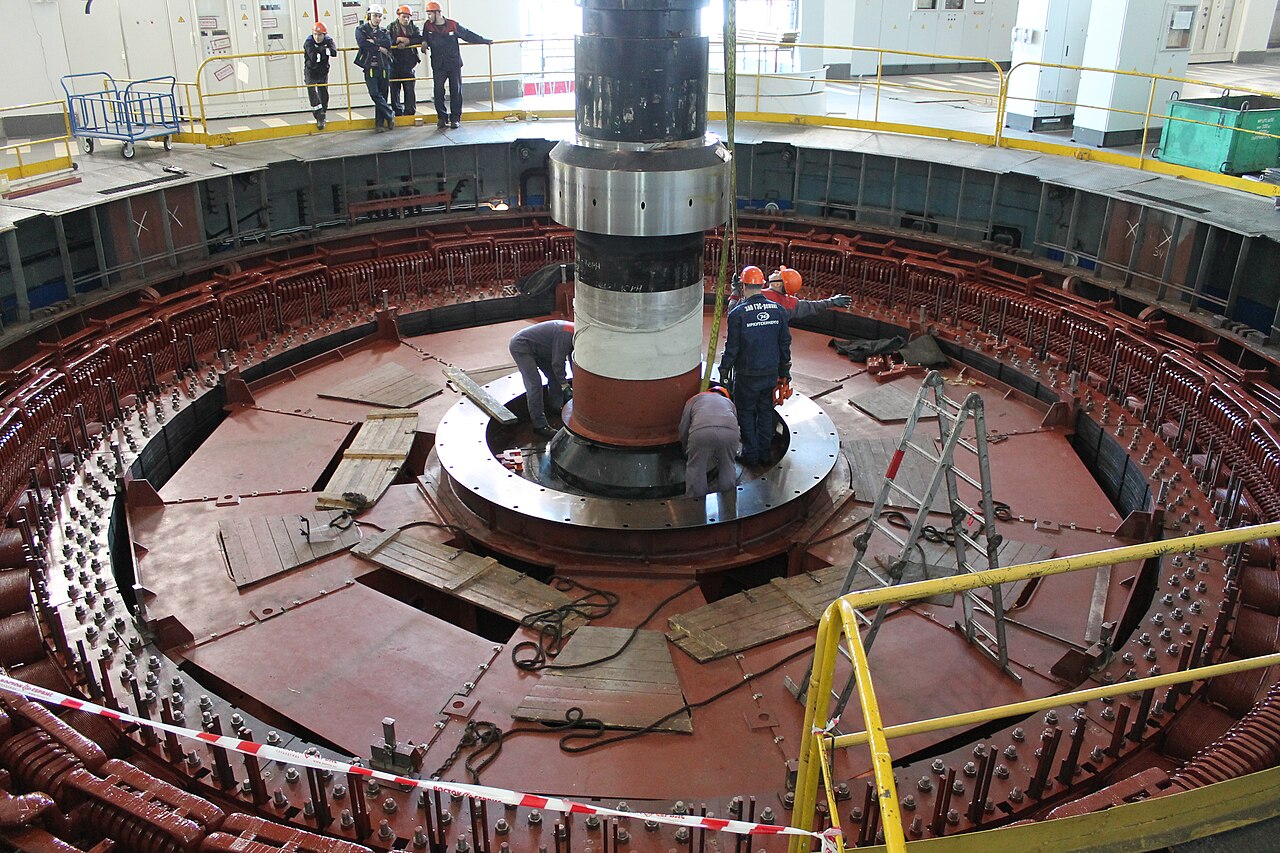
Generator
7 April 2016. Generator. A later photograph of equipment and structures, rather than a construction-era image.
Сайга · Wikimedia Commons
CC BY-SA 4.0 · Original ↗

Capacity, dam dimensions and generation records: what makes Bratsk HPP remarkable.
The station’s present rated capacity.
7 April 2016. Generator. A later photograph of equipment and structures, rather than a construction-era image.
Сайга · Wikimedia Commons
CC BY-SA 4.0 · Original ↗
The last of the eighteen entered service in 1966.
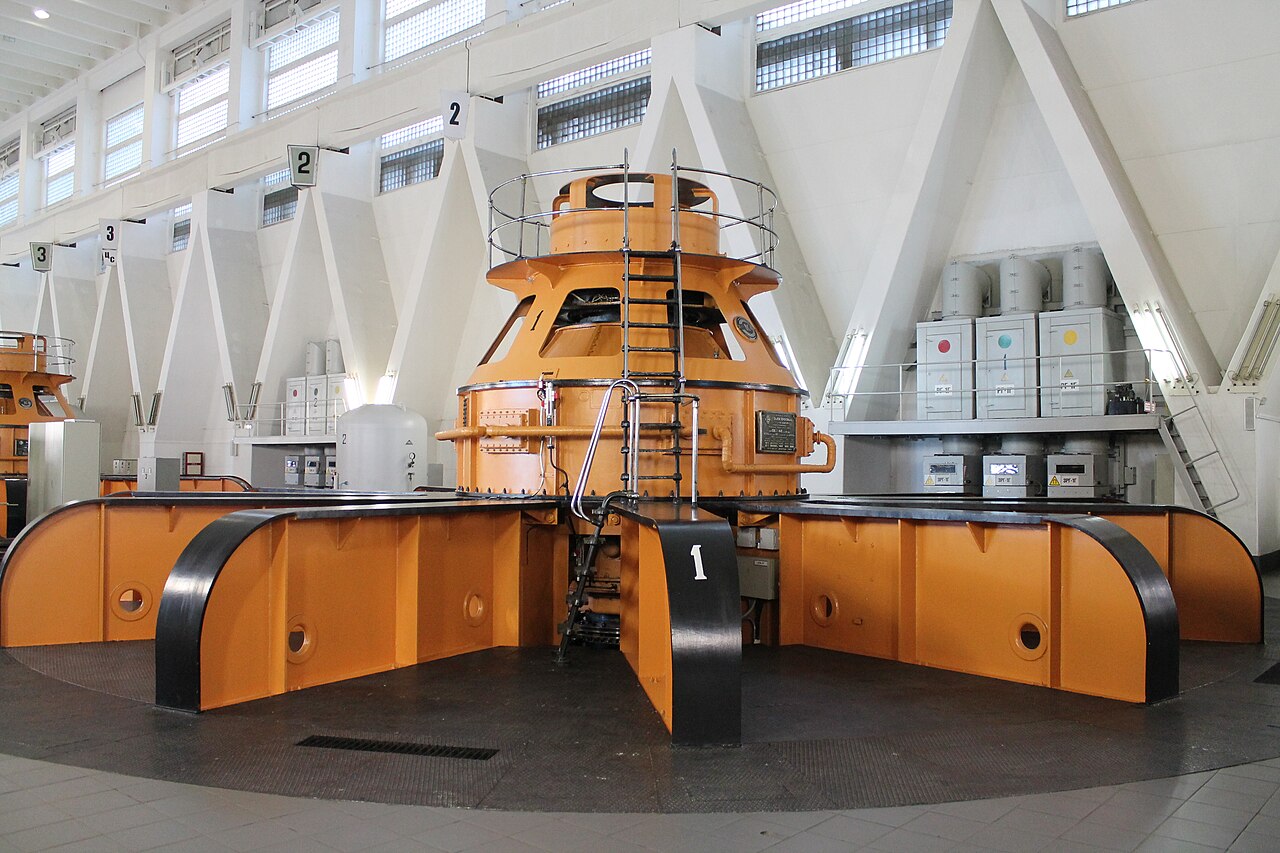
7 April 2016. A generating unit. A later photograph of equipment and structures, rather than a construction-era image.
Сайга · Wikimedia Commons
CC BY-SA 4.0 · Original ↗
The height reported by the station’s operator.
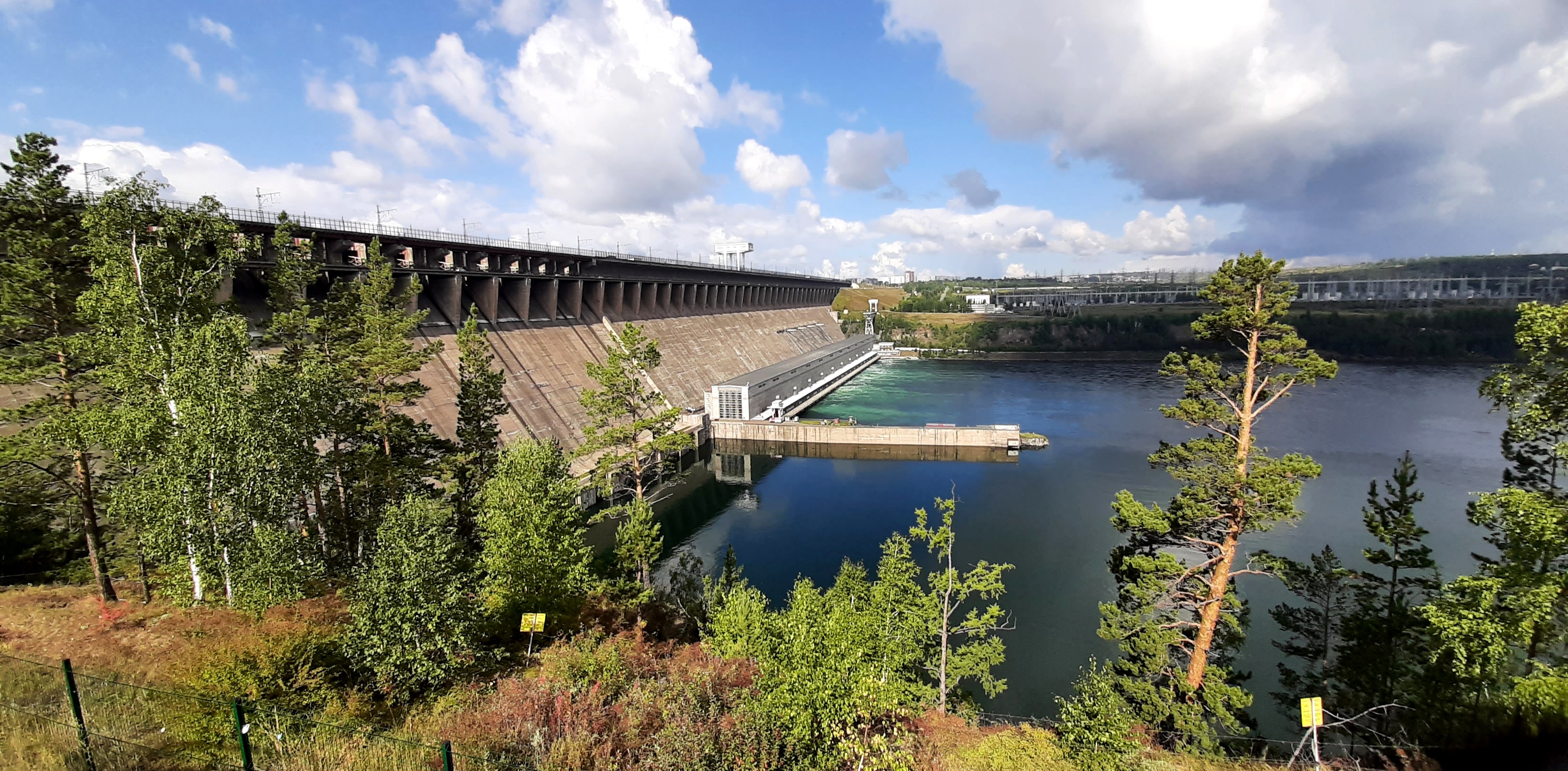
18 August 2021. A modern view of the Bratsk dam; not an archival photograph.
Andrijko Z. · Wikimedia Commons
CC BY-SA 4.0 · Original ↗
Length of the concrete river-channel section, rather than the combined length of the complex’s structures.
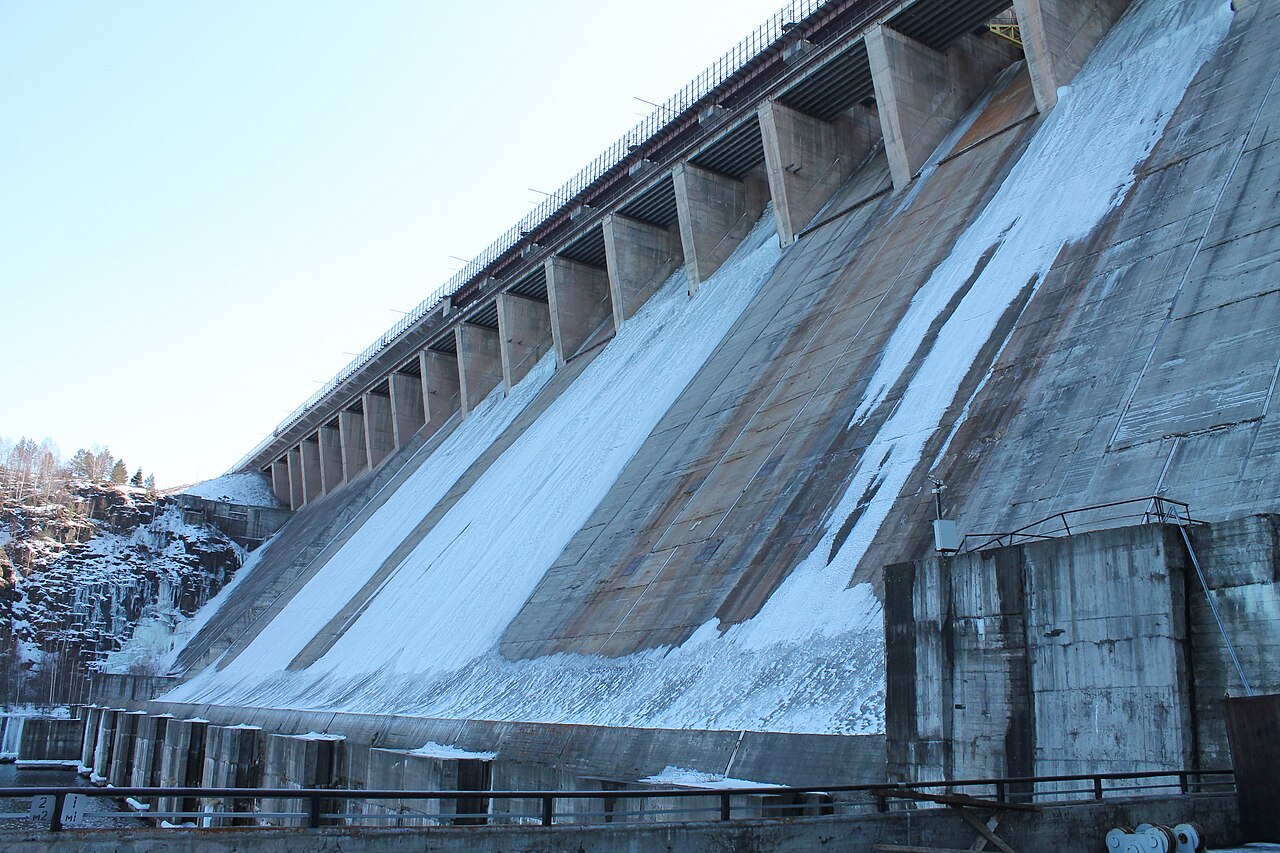
7 April 2016. Spillway dam. A later photograph of equipment and structures, rather than a construction-era image.
Сайга · Wikimedia Commons
CC BY-SA 4.0 · Original ↗
Crest length along the pressure front, as reported by A. N. Semenov. This differs from the length of the river-channel section alone.
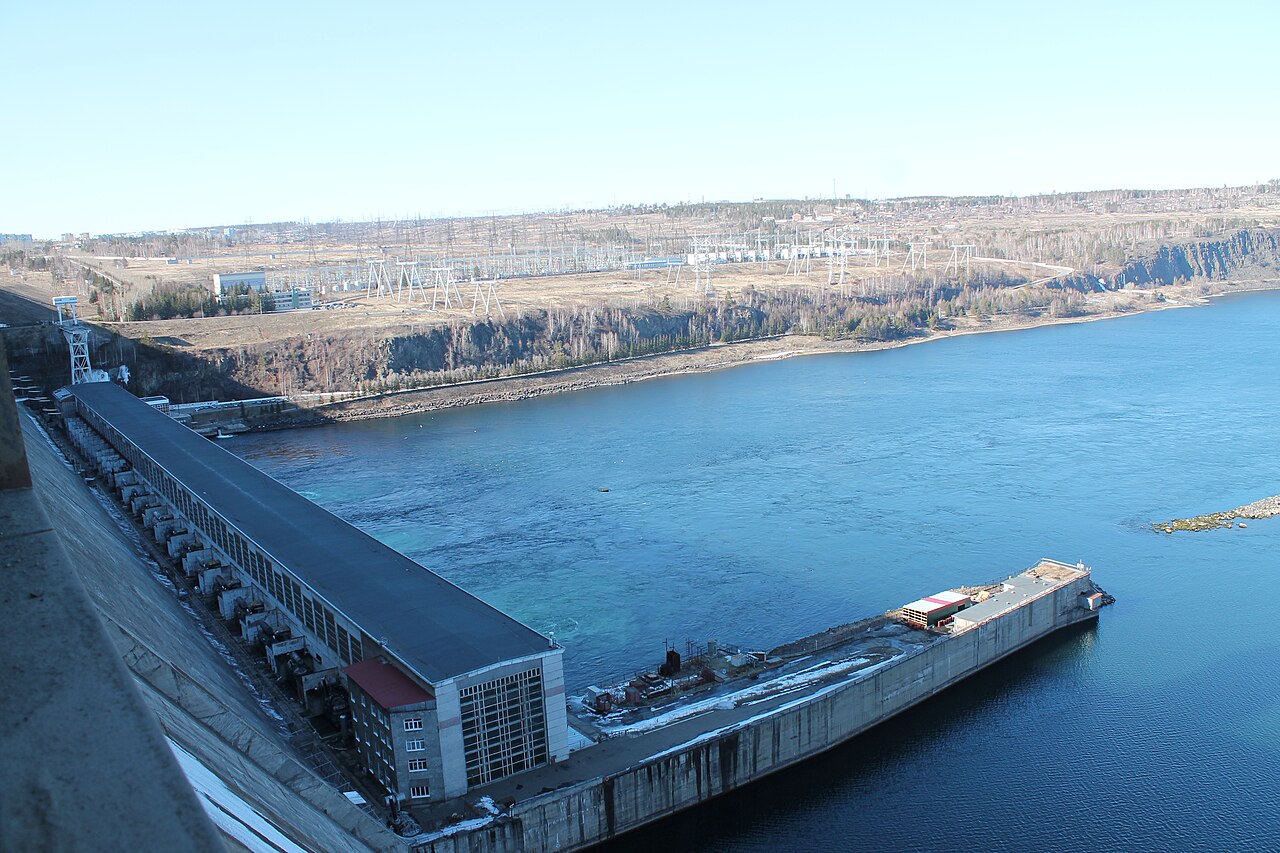
7 April 2016. HPP from the right bank. A later photograph of equipment and structures, rather than a construction-era image.
Сайга · Wikimedia Commons
CC BY-SA 4.0 · Original ↗
Capacity at first commissioning, distinct from the whole station’s capacity today.
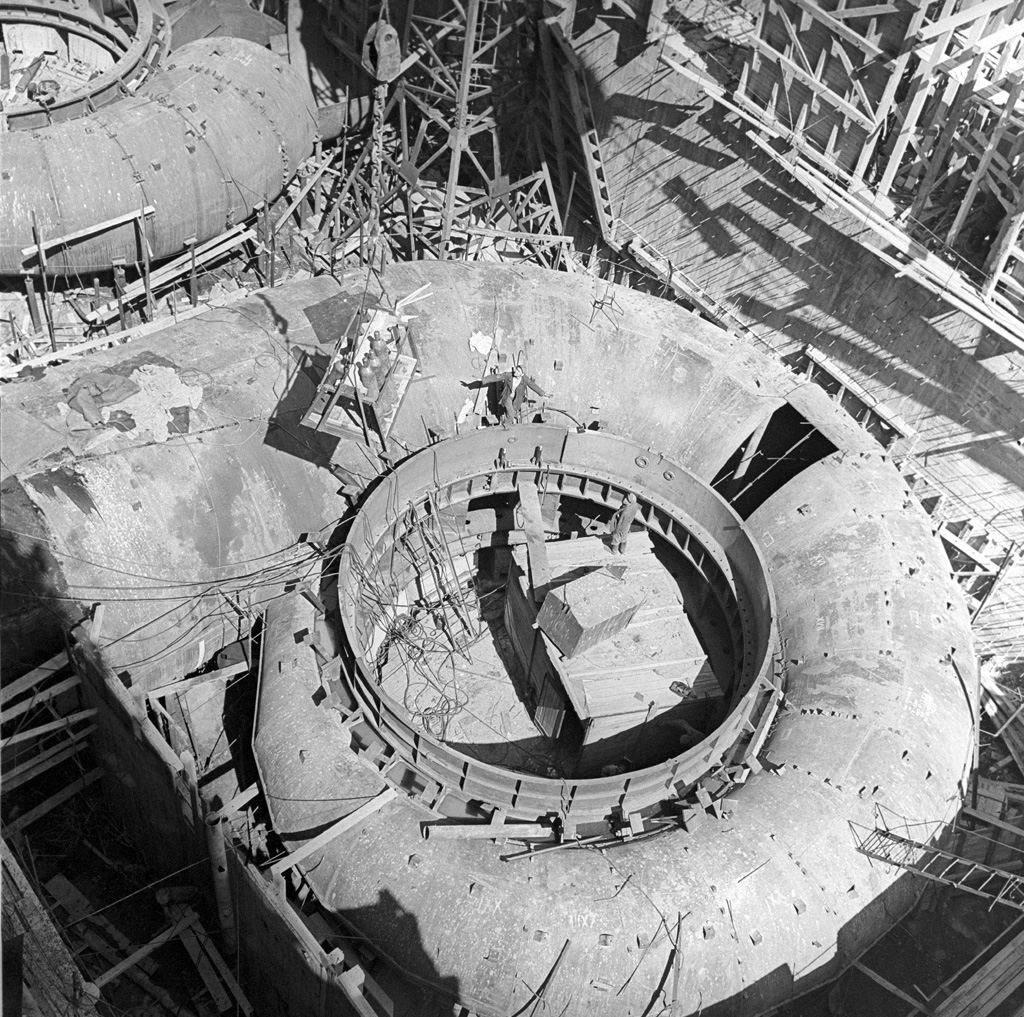
1 March 1961. Equipment installation at Bratsk dam.
Валерий Шустов / Valeriy Shustov · Wikimedia Commons / РИА Новости
CC BY-SA 3.0 · Original ↗
First power came in 1961; acceptance of the whole complex followed in 1967.
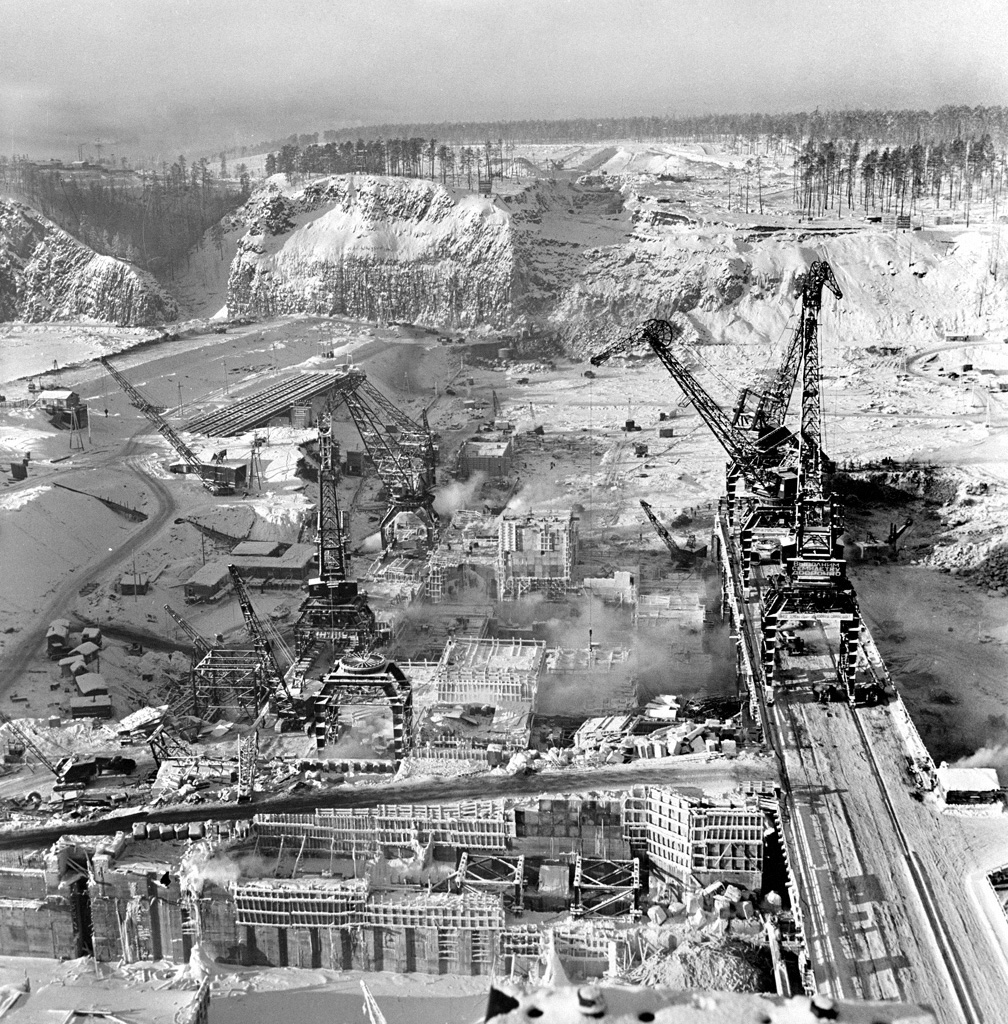
1 February 1960. The Bratsk dam construction site.
Макс Альперт / Max Alpert · РИА Новости / RIA Novosti, № 791507
CC BY-SA 3.0 · Original ↗
A massive concrete dam resists the force of water through its own weight.
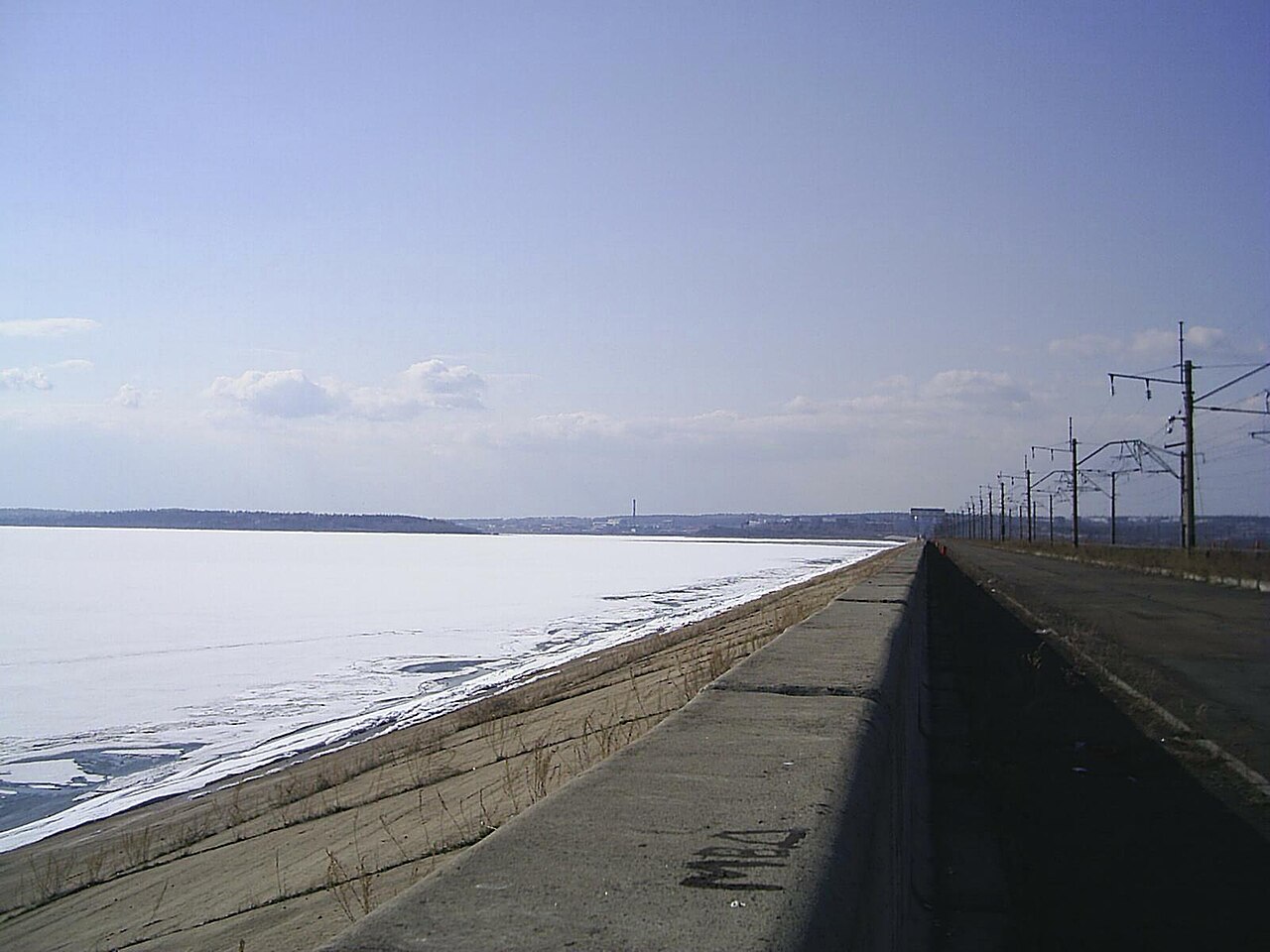
10 May 2005. Bratsk HPP, a view from the crest.
A. L. (loading) · Wikimedia Commons
CC BY-SA 4.0 · Original ↗
Megawatts (MW) measure power: how much the station can supply at a moment. Kilowatt-hours (kWh) measure energy generated over time. The 4,500 MW figure is the station’s power capacity; a trillion kWh is generation accumulated over years of operation.
Following the eighteenth unit’s start on 14 December 1966, Bratsk became the world’s largest hydroelectric station by installed capacity. It retained that position until Krasnoyarsk overtook it in 1971.
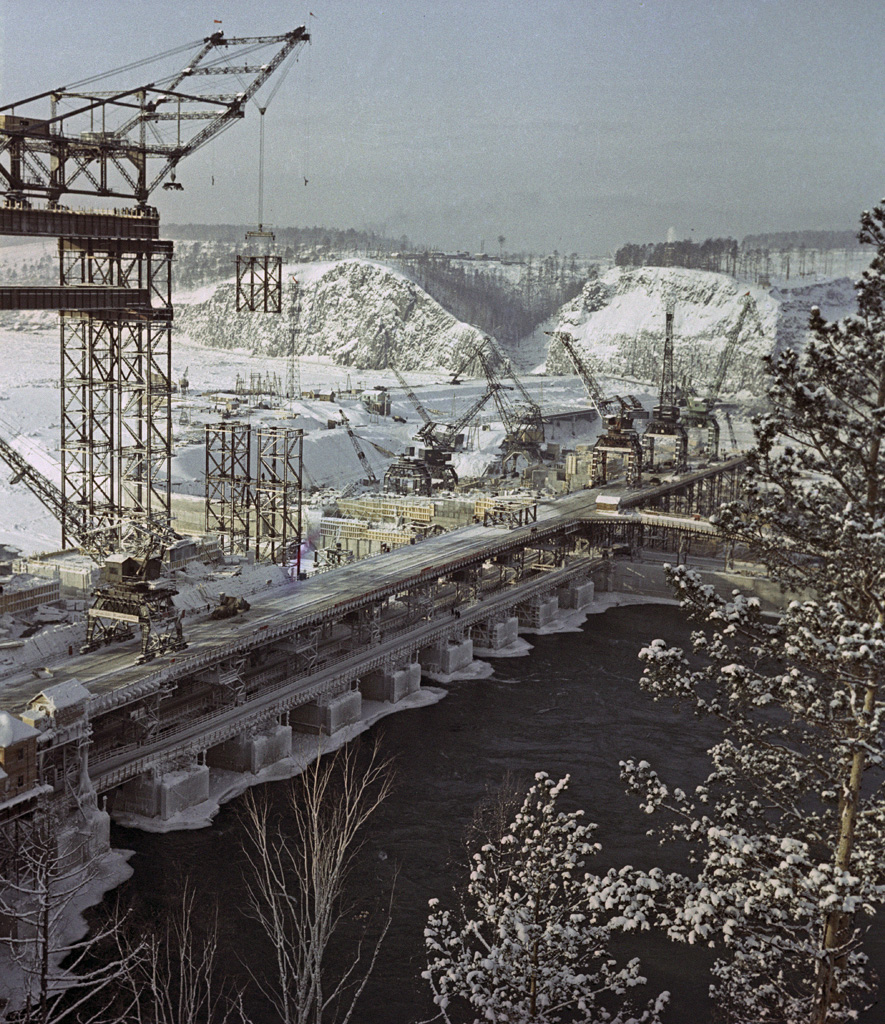
1 March 1960. Building the Bratsk dam.
Макс Альперт / Max Alpert · Wikimedia Commons / РИА Новости
CC BY-SA 3.0 · Original ↗
On 13 January 2010, cumulative generation reached one trillion kWh. Irkutskenergo’s announcement described this as a first for Russia and Eurasia.
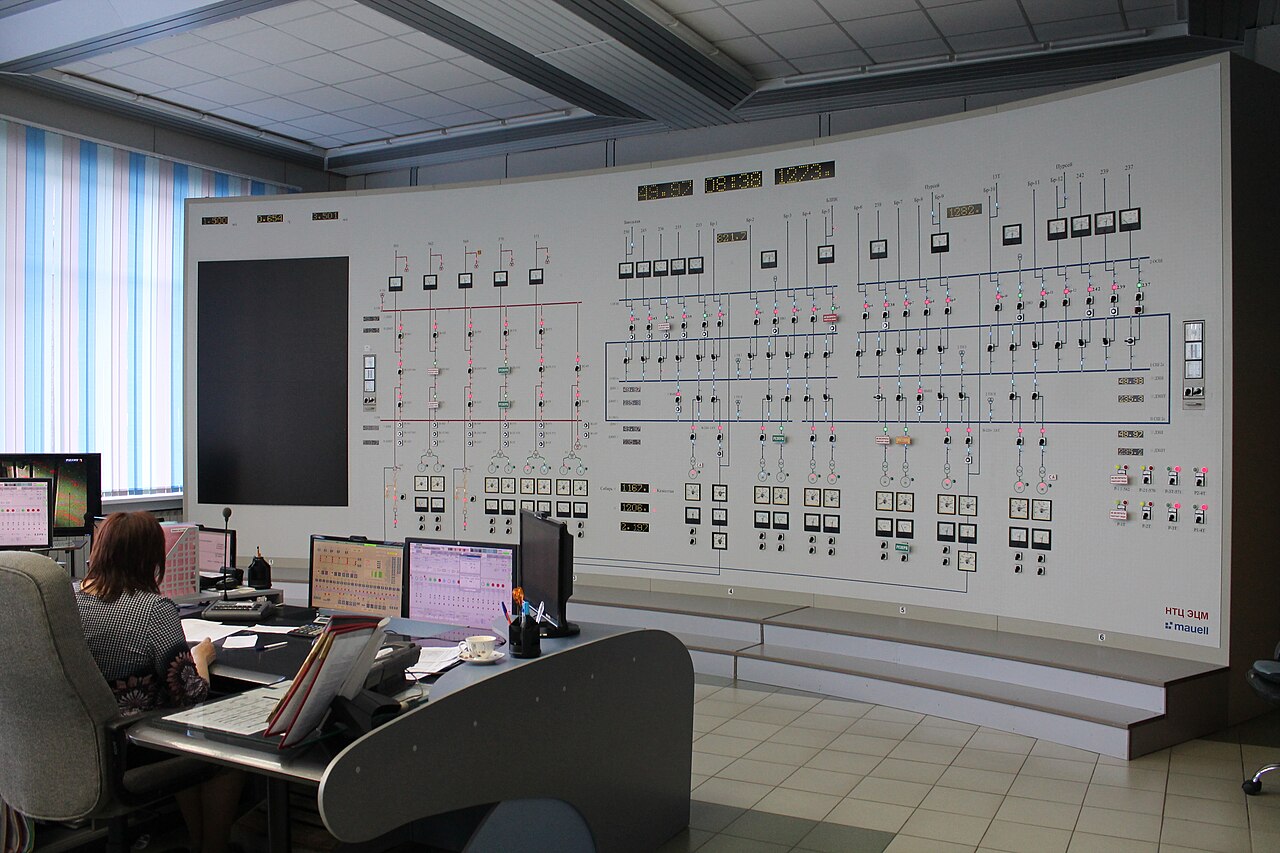
7 April 2016. Central control room. A later photograph of equipment and structures, rather than a construction-era image.
Сайга · Wikimedia Commons
CC BY-SA 4.0 · Original ↗
The Hydropower of Russia Association lists Bratsk as Russia’s third-largest hydroelectric station by installed capacity. Station profile checked on 18 October 2026.
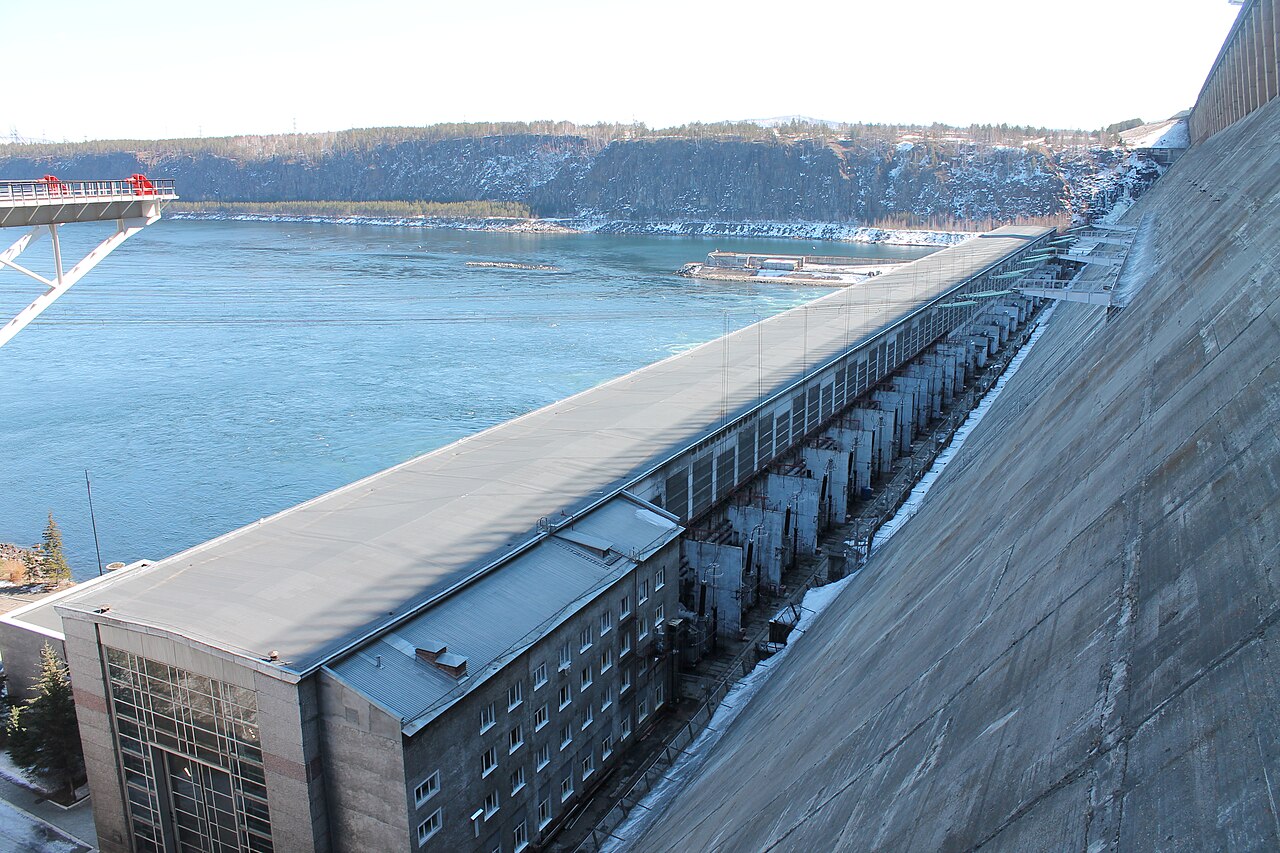
7 April 2016. The powerhouse. A later photograph of equipment and structures, rather than a construction-era image.
Сайга · Wikimedia Commons
CC BY-SA 4.0 · Original ↗
Information checked on 18 October 2026. Photograph dates appear in captions.